Lemlist vs Apollo: Data, Deliverability and the Real Cost

On this page
Pull up a comparison of these two and check the prices against the vendors' own pages. Roughly nine times in ten, they won't match.
The reason is dull but expensive. Apollo publishes annual rates by default. Writers copy the big number off the page, print it as a monthly price, and the bill lands 24% higher than the post promised.
lemlist has a second version of the same problem. It changed how it charges partway through 2026, and a lot of what's written about it describes the old model.
So this comparison starts somewhere unusual: the invoice. What each one bills at one seat, three seats and ten. Then we work backwards into what the gap between those numbers is buying.
Everything below was checked against lemlist's and Apollo's own pricing pages, not against other comparison posts.
The short answer
Every price below is monthly list price on monthly billing. Annual discounts get their own section. Competitor figures are accurate at the time of writing.
Side-by-side comparison
| At the time of writing | lemlist | Apollo | SmartReach.io |
|---|---|---|---|
| Entry paid plan | $69/mo per workspace | $65/seat/mo | $29/mo |
| Mid plan | $109/user/mo | $99/seat/mo | $89 email, $99 multichannel |
| Top plan | Enterprise, custom, 5-seat min | $119/seat/mo, annual only, 3-seat min | $499 email, $599 multichannel |
| Billed by | Workspace (email), seat (multichannel) | Seat | Active prospects |
| Users included | Unlimited on Email plan | Per seat, always | Unlimited from Plus up |
| Lead database | 650M+ leads | 240M+ contacts, 30M+ companies | 300M+ contacts, 50M+ companies |
| Search filters | ~30 | ~65 | Filtered search in Lead Finder |
| Waterfall enrichment | Yes | Yes, from Basic | Yes, in Lead Finder |
| Email verification | 5 credits per email | From the credit pool | Free on every plan |
| Email warmup | lemwarm, every paid seat | Yes, from Basic | WarmupHero, scales by tier |
| Inbox rotation | None, at any tier | Yes | Yes, from Plus |
| ESP matching | No | No | Yes, from Plus |
| Sending addresses | 5 per user | Unlimited mailboxes from Professional | Scales by tier |
| Buy domains + mailboxes | No | Yes, from Basic | Yes, from Plus |
| Channels | Email, LinkedIn, calls, SMS, WhatsApp | Email, LinkedIn, calls | Email, LinkedIn, calls, WhatsApp |
| Built-in CRM | No | Yes | No, syncs to yours |
| Free trial | 14 days, full Multichannel, no card | Free plan, plus 14-day trial | 14 days, 200 prospects, no card |
| G2 rating | 4.6/5 | 4.7/5 | 4.6/5 |
Which problem are you actually solving?
The same comparison gives opposite answers depending on who's reading it. Here are the two situations.
Situation one: you've run out of names. A team six months into selling knows what a good customer looks like and can't find more of them. Their emails do fine when they go out.
The constraint sits upstream of the email. A better sending tool moves nothing. What they need is a database with deep filters and honest enrichment.
Situation two: you have names, but nobody replies. A team two years in has more contacts than it can work. Reply rate slid from 4% to under 1% and nobody's sure why.
Three mailboxes have been sending for eighteen months. Domain reputation is a live worry. Adding 200M more contacts makes this worse, not better.
Those two teams shouldn't buy the same product, and the invoice shows it:
- The first buys per seat and expects to pay for data.
- The second wants sending capacity and resents paying per head.
- Most online arguments about lemlist and Apollo are these two people talking past each other.
What each one bills at 1, 3 and 10 seats
Feature tables don't decide purchases. Invoices do. Same question at three team sizes, all monthly billing.
One seat
- SmartReach.io Email Outreach: $29 Basic, $89 Plus. Basic covers 1,000 prospects, 10,000 emails, one user, ten warmup accounts and free verification. Plus adds rotation, ESP matching, Lead Finder, integrations and unlimited users.
- Apollo Basic: $65. Database, unlimited sequences, warmup, mailbox rotation, CRM, 2,500 credits.
- lemlist Email: $69. lemwarm, 650M+ database, branching sequences, 50,000 sends. Email only.
Be honest about the $29: it's the cheapest way in, and it's deliberately thin. Plus at $89 is the fair like-for-like, and it's still the only one of the three with ESP matching.
At one seat, Apollo's $65 is the best-shaped $65 here. Nothing else gives a solo operator a database, a sequencer and a CRM for that money.
Three seats, email plus LinkedIn
- SmartReach.io Sales Engagement Plus: $99/mo flat for the whole team, or $186/mo with LinkedIn automation on all three at $29 per account
- Apollo Professional: 3 × $99 = $297/mo
- lemlist Multichannel: 3 × $109 = $327/mo
Against Apollo, SmartReach runs about 37% lower. Against lemlist, about 43% lower. The gap is headcount: both rivals charge for the third seat and SmartReach doesn't.
The trade-off, in the same breath: that $186 has no CRM and Apollo's $297 does. If you're already paying per rep for a CRM elsewhere, Apollo's number is doing double duty and the gap narrows fast.
Ten seats, and the stack people actually run
At ten people, teams stop choosing. They buy Apollo for data and lemlist for sending, because each is genuinely better at its half. That stack is the real competitor here.
On a single vendor, the same ten seats cost $1,090 on lemlist Multichannel or $990 on Apollo Professional. Both are four times SmartReach's $249, for one reason: per-seat pricing multiplies and prospect-based pricing doesn't.
The pattern holds at every size. At one seat, per-seat pricing is fine and Apollo wins on value. By the third multichannel seat it stops competing. By ten it isn't an argument.
Why most price comparisons are wrong
Three things go wrong, and they all push the same way.
Apollo's headline is an annual rate
Apollo's published $49, $79 and $119 are annual-billing rates. Month to month, Basic is $65 and Professional is $99.
Organization is stranger. It shows $149 monthly but is sold on annual billing only, at $119 per seat with a three-seat minimum. Its real entry point is $357 a month, committed for a year.
lemlist stopped billing email per seat
lemlist Email is $69 a month for the whole workspace, unlimited users, capped at 50,000 emails. Not per head.
An eight-person email-only team used to be lemlist's worst-case customer. It now pays one flat fee that works out cheaper per person than anything Apollo sells.
Multichannel is still $109 per user with five senders each. That's where LinkedIn, the dialer, SMS and WhatsApp live. The per-seat tax is real, but only if you want channels beyond email.
What annual billing actually saves
Committing annually moves every number down together, so it doesn't change who wins.
| Annual billing | Effective monthly | Saving |
|---|---|---|
| lemlist Email | $55/mo per workspace | ~20% |
| lemlist Multichannel | $87/user/mo | ~20% |
| Apollo Basic | $49/seat/mo | ~25% |
| Apollo Professional | $79/seat/mo | ~20% |
| Apollo Organization | $119/seat/mo | Annual only |
| SmartReach.io Email Outreach Basic | $26/mo | ~10% |
| SmartReach.io Email Outreach Plus | $79/mo | ~11% |
| SmartReach.io Email Outreach Pro | $179/mo | ~10% |
| SmartReach.io Sales Engagement Plus | $89/mo | ~10% |
| SmartReach.io Sales Engagement Pro | $229/mo | ~8% |
Apollo discounts hardest at the entry tier. Full detail on SmartReach's side is on the pricing page.
What you don't get on the cheapest plan
This is where the money actually goes. Seven things the entry tier decides for you.
1. Lead data and how you filter it
lemlist advertises 650M+ leads. Apollo self-reports 240M+ contacts across 30M+ companies. On headline count lemlist wins easily.
Count is the wrong metric. What matters is how precisely you can cut the list, and how fresh the records are.
- SmartReach.io: two routes to a contact, not one. Lead Finder with 300M+ contacts and 50M+ companies, and the LinkedIn Email Finder (ProspectDaddy) for pulling emails off LinkedIn profiles. Verification is free on every plan.
- Apollo: ~65 filters, plus intent topics, job-change tracking and website-visitor identification.
- lemlist: around 30 filters, with waterfall enrichment that tries a stack of providers when an email is missing.
One catch worth knowing: both Apollo and lemlist now run waterfall enrichment, so that's no longer a lemlist-only trick.
Verdict: Apollo, outright. If the database is the job, it's the better buy and we'd say so to your face.
2. Warmup and deliverability reporting
Correction worth making loudly, because plenty of comparison posts get this wrong. Apollo does have warmup. It pulled its original pool in 2024 over a Gmail policy conflict, but its plans now list a Deliverability Suite and Email Warmup from Basic up.
So the real question isn't who has warmup. All three do. It's who tells you where your mail landed.
- SmartReach.io: WarmupHero with accounts scaling by tier, plus the piece neither rival has: blacklist monitoring that auto-pauses an affected inbox before it burns the domain.
- lemlist: lemwarm on every paid seat, plus a Deliverability Hub that reports inbox placement rather than just sends.
- Apollo: warmup bundled into the deliverability suite, with less placement reporting alongside it.
Whichever you pick, the rules are set elsewhere. Google publishes its sender guidelines and they're worth reading once properly.
Verdict: lemlist, on reporting depth rather than on having the feature at all.
3. Inbox rotation
Rotation spreads a campaign's sends across several mailboxes so no single sender carries the whole volume. It's the mechanism that makes higher volume survivable.
- SmartReach.io: yes, from the Plus tier, and it's the only one here that runs rotation and ESP matching together.
- Apollo: yes, across connected mailboxes. Chosen when you add contacts to a sequence, and it can't be changed once they're enrolled.
- lemlist: none, at any tier.
lemlist having zero rotation is its single clearest gap here, and it compounds with the five-sender cap.
Verdict: Apollo and SmartReach.io. lemlist loses this one outright.
4. ESP matching
Different feature, often confused with rotation. ESP matching routes a message through a provider that matches the recipient's, so Google talks to Google and Microsoft talks to Microsoft.
Rotating across mismatched providers only solves half the problem. Neither lemlist nor Apollo offers ESP matching.
Verdict: SmartReach.io, and it's the one thing here nobody else sells. Inbox rotation and ESP matching run together from Plus.
5. Where the mailboxes come from
Once you're rotating, you need mailboxes to rotate through. This has changed, and the old answer is now wrong.
- SmartReach.io: sells authenticated domains and mailboxes through Maildoso, ZapMail and Azure, with SPF, DKIM, MX and redirection pre-configured. Azure runs $35 a month for a domain and 50 mailboxes, and you can spin up Google and Microsoft mailboxes from inside the product.
- Apollo: sells Domain & Mailbox Purchasing on every paid plan, plus unlimited Gmail and Microsoft mailboxes from Professional.
- lemlist: sells neither. You buy the domain elsewhere and configure SPF, DKIM, DMARC and MX yourself.
For anyone who hasn't set up DNS before, this is the step that quietly kills cold email programs before they send anything.
Verdict: Apollo and SmartReach.io are level. lemlist is third, and it isn't close.
6. Verification and what credits really cost
Sticker prices mislead on all three, in different directions.
- SmartReach.io: email verification is free on every plan, including the $29 entry tier, and it isn't metered. Credits go to AI features and Lead Finder reveals only, with an allowance of 1,000 to 5,000 by tier.
- lemlist: 5 credits per verified email, 20 per phone number, at 1 credit for $0.01. So 10,000 verifications is another $500.
- Apollo: credits bundled by tier (2,500 a month on Basic), but verification, exports and enrichment all draw from the same pool.
Verdict: SmartReach.io on the verification line. lemlist's model is the most transparent of the three, and transparent isn't the same as cheap.
7. How many people can log in
Easy to miss, and it compounds every month.
- SmartReach.io: one user on Basic, then unlimited from Plus up, across email and multichannel. Adding the fourth rep costs nothing on either product line.
- lemlist Email at $69: unlimited users on one flat fee, but email only. Multichannel goes back to per seat.
- Apollo: per seat, always, with no flat option at any tier.
Verdict: lemlist, for email-only teams. That flat $69 is the best value in this comparison if email is genuinely your only channel.
What the higher plans actually add
Above the entry tier, the three products stop overlapping almost entirely.
Channels you can actually run
lemlist Multichannel covers email, LinkedIn, calls, SMS, and WhatsApp as an add-on. SmartReach.io runs email, LinkedIn, calls and WhatsApp on the multichannel platform, with WhatsApp included rather than added on.
Apollo covers three: email, LinkedIn and calls. Its dialer is the strongest of the three, though it's US-focused and consumes credits.
Verdict: lemlist and SmartReach.io level on count, SmartReach.io ahead on what's included.
Sequence logic and personalization
lemlist's builder branches on behaviour. Opened but didn't reply goes one way, replied within three days goes another, no engagement routes to LinkedIn.
Add liquid syntax, dynamic images and personalized video and you can run one campaign that behaves differently for every segment.
Apollo's sequences are strong on volume and AI drafting, thinner on true branching inside a sequence. You can build a good cadence, not one that reroutes a prospect mid-flight.
Verdict: lemlist, outright. Nobody here builds a better sequence.
Mailbox capacity at scale
This is the sharpest technical divide in the whole comparison, and it runs the opposite way to the deliverability story people usually tell.
- SmartReach.io: warmup accounts scale by tier, from 10 on Basic to unlimited on Scale, with rotation and ESP matching across the pool from Plus.
- Apollo Professional: unlimited Gmail and Microsoft mailboxes, with rotation across them.
- lemlist Multichannel: five sending addresses per user, no rotation.
If your plan is a large mailbox pool, lemlist's seat model limits you twice: once on senders, once on rotation.
Verdict: Apollo, outright.
CRM and the rest of the funnel
Apollo ships deal stages, inbound lead capture and routing, meeting scheduling, call recording and transcription. For a team under about twenty people it can plausibly be the whole stack.
Some companies buy Apollo specifically to stop paying for a separate CRM seat. Price that in and a $99 Professional seat is competing with two subscriptions.
lemlist doesn't attempt this. Neither does SmartReach.io. Both sync into HubSpot, Salesforce, Pipedrive and Zoho instead.
Verdict: Apollo, outright, and nobody else is even trying.
The shared inbox
lemlist ships a Unified Inbox on every plan. SmartReach.io ships a shared inbox on all plans, with replies sorted by sentiment and out-of-office detection.
Apollo's inbox is built around the record, not the conversation. Right design if your team lives in the CRM, wrong one if three reps need to work a shared reply queue.
Verdict: lemlist and SmartReach.io level, Apollo third.
Integrations
Apollo has the deepest native surface here: mature two-way CRM sync, a well-documented API, and the partner ecosystem of the biggest product in the category.
lemlist covers the essentials with around 33 integrations. SmartReach.io does native two-way sync with HubSpot, Salesforce, Pipedrive and Zoho, and reaches 8,000+ apps through Zapier. Full list on the integrations page.
Verdict: Apollo, on depth and maturity.
What it costs to add the next rep
Apollo charges per seat with no exceptions, and Organization needs three seats minimum on an annual commitment. There's no agency construct, so five clients means five workspaces.
lemlist splits: unlimited users on Email, back to per seat on Multichannel.
SmartReach.io charges by active prospects with unlimited users from Plus, and gives agencies per-client dashboards with their own members and permissions.
Verdict: SmartReach.io. Headcount is free above Plus, and that's the one difference that compounds monthly rather than showing up once.
The three tools up close
lemlist
Quick facts
- G2
- 4.6/5 ★
- From
- $69/mo per workspace for email, unlimited users
- Free trial
- 14-day free trial, full Multichannel, no card
- Best for
- Teams who know exactly who to email and need the message to land and get read.
What it is. A multichannel sequencer with the deepest personalization tooling in the category and a large lead database attached.
Best for. Teams selling where a generic email won't cut through, and email-only teams big enough to make the flat workspace fee pay.
Key features. 650M+ lead database with email and phone finding. Email, LinkedIn, SMS and calling in one branching sequence, WhatsApp as an add-on. Liquid syntax, dynamic images, personalized video. lemwarm plus a Deliverability Hub with placement reporting. Unified Inbox on every plan.
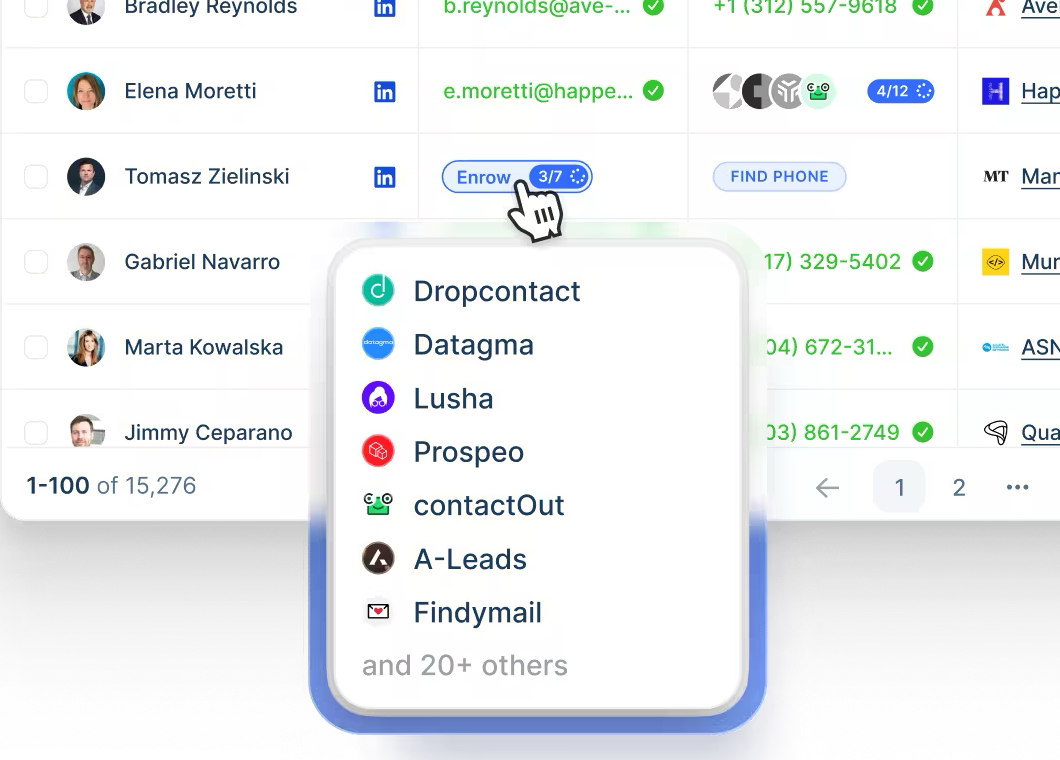
lemlist's answer to a missing email is to try a stack of providers in turn. Apollo runs waterfall enrichment too, so this is table stakes now rather than a lemlist-only advantage.
Pricing. Email at $69 a month per workspace, unlimited users, 50,000 sends. Multichannel at $109 per user with five senders each. Enterprise is custom from five seats. Verification is 5 credits per email, phone numbers 20 credits, at 1 credit for $0.01. Annual runs about 20% lower.
Limitations. No inbox rotation at all, which is the serious one. No ESP matching. Five sending addresses per user caps mailbox-pool strategies. Multichannel per-seat pricing compounds past three people. No CRM. Can't buy domains or mailboxes in-platform. Fewer filters than Apollo.
Pros
- lemwarm on every paid seat, with real placement reporting
- Best branching sequence logic in this comparison
- Personalized images and video that neither rival matches
- Email plan covers unlimited users on one flat fee
- Unified Inbox on the entry tier
- Published, transparent credit rates
Cons
- No sender or inbox rotation, at any tier
- No ESP matching
- Only five sending addresses per user on Multichannel
- Multichannel is still per seat and scales badly
- Verified emails cost 5 credits each on top of the plan
- No CRM, and no way to buy domains or mailboxes
Apollo
Quick facts
- G2
- 4.7/5 ★
- From
- $65/seat/mo on monthly billing
- Free trial
- Free plan, plus a 14-day trial on paid tiers
- Best for
- Teams whose bottleneck is knowing who to contact, and smaller companies consolidating CRM and outreach.
What it is. A B2B data platform with sequencing, dialing, inbound routing and a CRM built around it.
Best for. Teams without a list yet, and companies under about twenty people who'd rather run one platform than a CRM plus an outreach tool.
Key features. 240M+ contacts and 30M+ companies with roughly 65 filters, waterfall enrichment, intent topics and job-change tracking. Unlimited sequences from Basic. Deliverability Suite and email warmup. Domain and mailbox purchasing on every paid plan, with unlimited Gmail and Microsoft mailboxes from Professional. Native dialer with recording and transcription. Built-in CRM. Free plan.
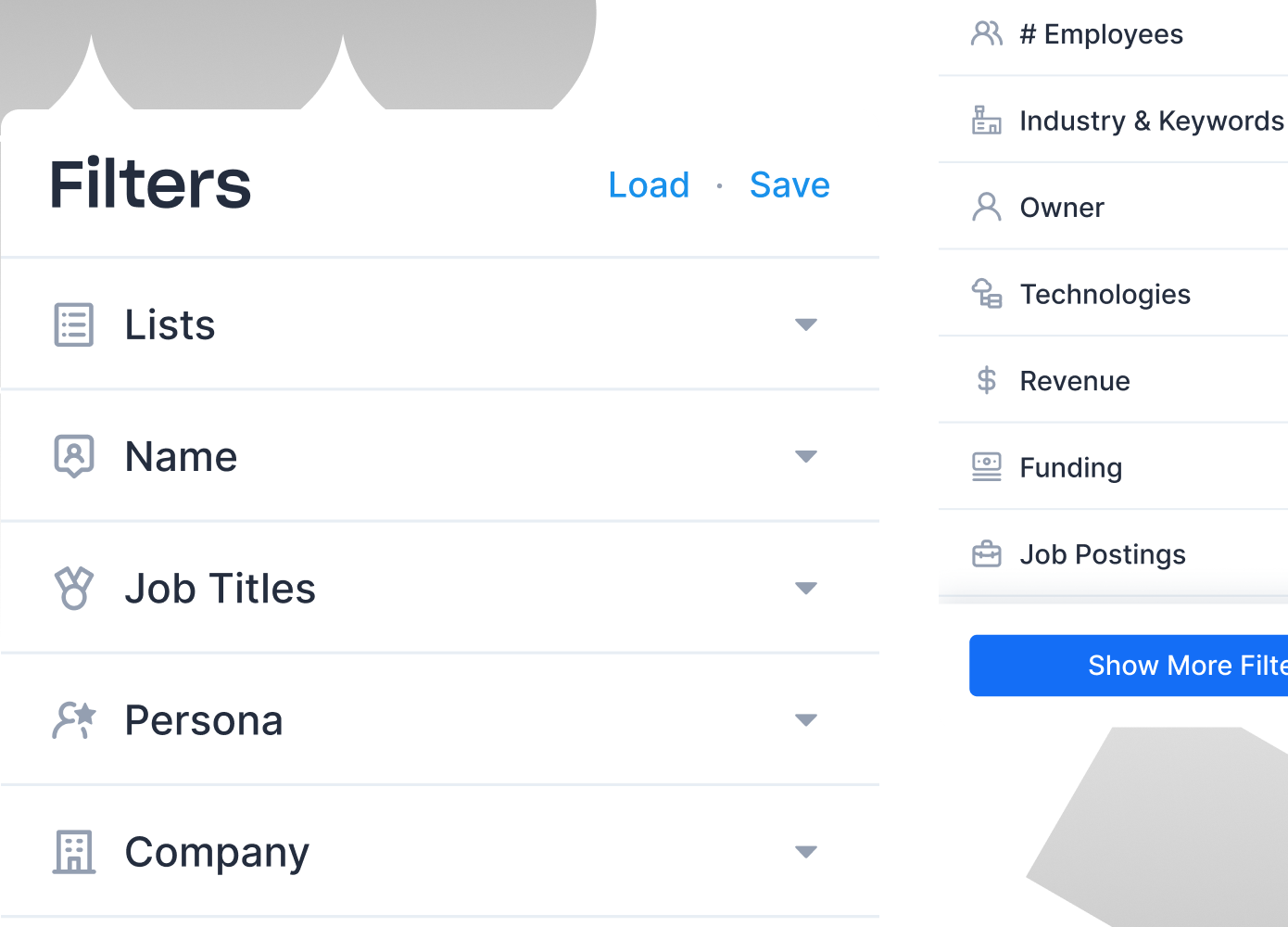
This panel is Apollo's actual product, and "Show More Filters" is the point. It's the screen that justifies the per-seat price, and neither rival has a real answer to it.
Pricing. Free at $0. Basic $65 and Professional $99 per seat a month on monthly billing. Organization is annual only at $119 per seat with a three-seat minimum. Annual brings Basic to $49 and Professional to $79. Credits are bundled by tier and cover enrichment, exports and verification from one pool.
Limitations. No ESP matching. No personalized images or video. Thin conditional branching inside sequences. Data accuracy is the most consistent complaint in its reviews, which matters more when data is what you're paying for. The dialer is US-focused and consumes credits. Interface complexity slows new reps down. No agency multi-client construct. Rotation settings can't be changed for contacts already enrolled in a running sequence.
Pros
- The best B2B data here, with ~65 filters and intent topics
- A genuine built-in CRM that can replace a separate subscription
- Unlimited Gmail and Microsoft mailboxes from Professional
- Domain and mailbox purchasing on every paid plan
- Deepest integration ecosystem and the most mature API
- A free plan that's genuinely usable for evaluation
Cons
- No ESP matching
- No personalized images or video
- Thin conditional logic inside sequences
- Data accuracy complaints are frequent and consistent
- Per seat always, and the top tier is annual-only with a 3-seat minimum
- Dialer is US-focused and draws on credits
SmartReach.io
Quick facts
- G2
- 4.6/5 ★
- From
- $29/mo email outreach, $39/mo multichannel
- Free trial
- 14-day free trial, 200 prospects, no card
- Best for
- Teams running several channels who want ESP matching and rotation without paying per head.
What it is. SmartReach.io is a cold email software that on its Sales Engagement plans works as a sales engagement platform covering email, LinkedIn, calls and WhatsApp, with deliverability tooling and lead data on the same bill.
Best for. Growing teams past the point where per-seat multichannel pricing makes sense, and agencies running several clients from one login.
Key features. Email, LinkedIn, calling and WhatsApp in one branching sequence. Inbox rotation and ESP matching together from Plus, plus blacklist monitoring with auto-pause and deliverability tooling. Authenticated domains and mailboxes via Maildoso, ZapMail and Azure. Lead Finder at 300M+ contacts and 50M+ companies, and ProspectDaddy. Free email verification on every plan. Warmup through WarmupHero. Shared inbox on all plans. 99.99% uptime, 5,000+ customers.
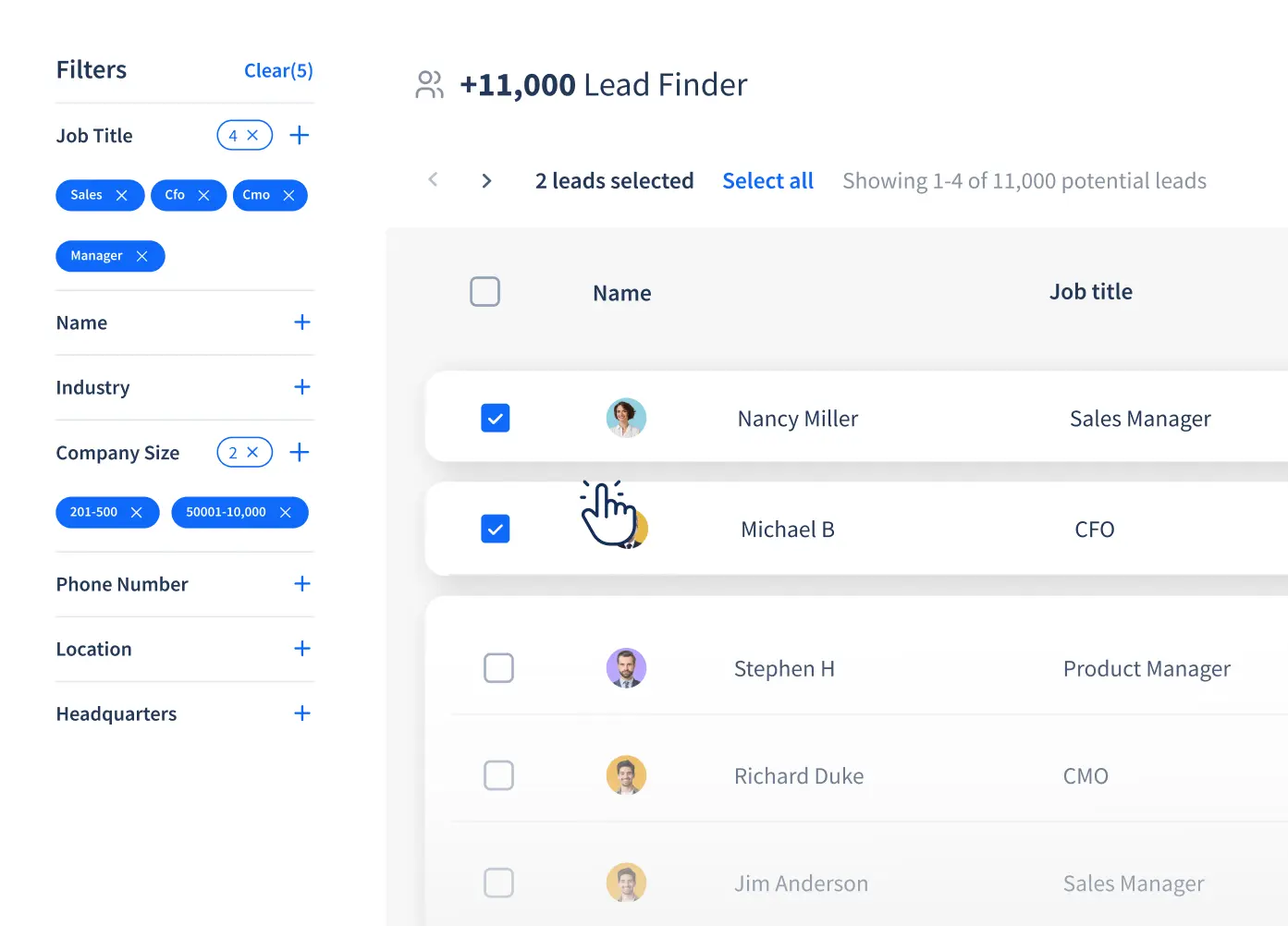
Lead Finder inside the plan from the Plus tier up, with filters on the left and leads pushed straight into a campaign. Fewer filters than Apollo, and no second subscription.
Pricing. Email Outreach at $29, $89, $199 and $499. Sales Engagement at $39, $99, $249 and $599. Billed by active prospects, unlimited users from Plus. LinkedIn automation is $29 a month per account.
Limitations, plainly. The database is 300M+ against lemlist's 650M+, with fewer filters and less enrichment depth than Apollo. There's no CRM, so it can't consolidate the way Apollo does. Lead Finder, rotation, ESP matching, credits and integrations all start at Plus, which makes the $29 and $39 entry plans deliberately thin. Apollo now sells domains and mailboxes too, so that's a level playing field rather than an advantage. LinkedIn automation is a per-account add-on.
Pros
- ESP matching, which neither rival sells at all
- Rotation and ESP matching paired from the Plus tier
- Five channels in one sequence that branches on behaviour
- Unlimited users from Plus, so headcount stops affecting the bill
- Free email verification on every plan, not metered
- Blacklist monitoring that auto-pauses an affected inbox
- Real agency construct with per-client dashboards
Cons
- Smaller database than lemlist, fewer filters than Apollo
- No built-in CRM, so it can't consolidate the way Apollo can
- Lead Finder, rotation and ESP matching all start at Plus
- Entry plans are thinner than the price suggests
- LinkedIn automation is a per-account add-on, not bundled
- No free plan, only the 14-day trial
Which one should you buy?
Buy Apollo
You don't have a list, and that's the whole problem. You want ~65 filters, intent topics and enrichment on one bill.
Or you're under twenty people and would rather run Apollo as CRM plus outreach than pay for both. That changes the per-seat math completely.
Skip it if you need ESP matching, personalized images or video, or agency multi-client management.
Buy lemlist
You know exactly who to email and they're not replying. You want lemwarm, placement reporting that names the folder, and sequences that branch on behaviour.
Or the underrated case: you're an email-only team of four-plus, where $69 flat for unlimited users beats everything here.
Skip it if you're spreading volume across a mailbox pool. No rotation at all, and five senders per seat is a hard ceiling.
Buy SmartReach.io
You want ESP matching and rotation together, which neither rival pairs, plus five channels in one sequence.
You're past three multichannel seats, so per-seat pricing has started to hurt. Or you're an agency wanting per-client dashboards.
Skip it if the deepest database is the single thing you're buying, or if you were counting on replacing your CRM.
The verdict
One warning that applies to all three, including where we come off well. If your bounce rate is above 5%, switching tools fixes nothing, because the problem is your list.
Fix the data first, then pick the tool. Teams routinely migrate three times before working out the tool was never the variable.
It also helps to know the actual rules. The FTC publishes a plain-English CAN-SPAM compliance guide and it takes ten minutes.
Whatever you shortlist, test it the same way. Take 200 real prospects, run a real sequence for two weeks, and measure inbox placement and reply rate rather than counting features.
These tools look interchangeable on a table and behave nothing alike on your domain, with your list. Two weeks of your own data beats every comparison post on the internet, this one included.
Want a longer look at either one? There's a full lemlist review and an Apollo.io review, plus roundups of the best lemlist alternatives and the best Apollo alternatives. If Instantly is also on your list, we've compared lemlist vs Instantly and Instantly vs Apollo.
Questions people actually ask
Is lemlist or Apollo better for cold email in 2026?
lemlist, if writing and sending the email is the job. You get lemwarm, a Deliverability Hub that reports inbox placement, sequences that branch on behaviour, and personalized images and video. Apollo is the better buy if the hard part is working out who to email, because the database, the filters, the enrichment and a real CRM sit on one bill. They solve different halves: Apollo finds the person, lemlist gets the message read.
How much do lemlist and Apollo cost per month?
On monthly billing at the time of writing, lemlist Email is $69 a month for the whole workspace with unlimited users, and lemlist Multichannel is $109 per user a month. Apollo Basic is $65 per seat a month and Professional is $99. Apollo Organization is sold on annual billing only, at $119 per seat a month with a three-seat minimum. Most comparison posts quote Apollo's annual rates as if they were monthly, which understates the bill by roughly 20% to 25%.
Does Apollo have email warmup?
Yes. Apollo lists a Deliverability Suite and Email Warmup on every paid plan, starting at Basic. This is worth flagging because Apollo pulled its original warmup pool in 2024 over a Gmail policy conflict, and a lot of comparison content still says Apollo has no warmup at all. That's out of date. lemlist's lemwarm is still the deeper tool, mostly because of the placement reporting next to it, but the flat "Apollo has no warmup" claim is wrong.
Is lemlist still priced per user?
Only for multichannel. lemlist Email is priced per workspace at $69 a month with unlimited users and a 50,000 email monthly cap, so an email-only team of any size pays one flat fee. Multichannel is still $109 per user a month with five senders each. That split matters because it flips the answer for email-only teams above about two people.
Which has the better B2B database, lemlist or Apollo?
Apollo, despite the smaller headline number. lemlist advertises 650M+ leads against Apollo's self-reported 240M+ contacts and 30M+ companies, but Apollo carries roughly 65 search filters against lemlist's 30-odd, plus intent topics, job-change tracking and waterfall enrichment. Raw count is close to the least useful metric here. If the database is the thing you're buying, Apollo is the better buy and we'd say so to your face.
Does lemlist have inbox rotation?
No. lemlist offers no sender or inbox rotation at any tier, which is its clearest gap in this comparison. Apollo spreads sequence sends across connected mailboxes and gives unlimited Gmail and Microsoft mailboxes from the Professional plan. lemlist also caps you at five sending addresses per user on Multichannel, so a mailbox-pool strategy runs into the seat model twice.
Can you buy domains and mailboxes inside these tools?
Apollo and SmartReach.io both sell them, lemlist doesn't. Apollo lists Domain & Mailbox Purchasing on every paid plan. SmartReach.io sells authenticated secondary domains and mailboxes through Maildoso, ZapMail and Microsoft Azure, including an Azure option at $35 a month for a domain and 50 mailboxes. With lemlist you buy the domain elsewhere and configure SPF, DKIM, DMARC and MX yourself.
Do lemlist or Apollo replace your CRM?
Apollo can, for a lot of smaller teams. It ships deal stages, inbound lead routing, call recording and transcription, and meeting scheduling, which is why some companies run Apollo instead of paying for a separate CRM seat. lemlist doesn't try, and neither does SmartReach.io. Both sync into HubSpot, Salesforce, Pipedrive and Zoho and expect the CRM to live somewhere else.
Stop juggling tools
Book more meetings on every channel
Join 5,000+ teams running multichannel outreach from one sequence, with deliverability built in.