Reply.io Alternatives | 10 Best Tools Compared for 2026

On this page
Reply.io demos beautifully.
You watch email, LinkedIn, calls, and WhatsApp all fire from a single sequence while an AI assistant writes the copy, and you think, “great, one tool for the whole motion.” Then you roll it out to the team, and two things quietly go sideways.
The invoice isn’t the $89 the pricing page waved at you, and three weeks in half your reps still can’t find where anything lives.
One clarification before the list, because these two get mixed up constantly. This is about Reply.io, the sales engagement platform for outbound email, LinkedIn and calling. It is not respond.io, which is a customer messaging platform for WhatsApp, live chat and support conversations. Different companies, different products, different buyers. If you landed here looking for respond.io alternatives, this is not the page you want.
That’s the real reason people start hunting for Reply.io alternatives.
Not because Reply is bad software (it genuinely isn’t), but because the sticker price and the price you actually pay live in different neighborhoods, the learning curve is a wall, and the contact data gets wobbly the moment you sell outside North America.
So the useful question isn’t “what else is out there?” It’s “which tools fix those specific gaps without handing me a fresh set of headaches?”
I spent four weeks answering that.
I connected live inboxes to each platform, rebuilt the same multichannel cadence in every one, and sent to opted-in prospects.
Then I tracked what actually decides a switch: deliverability, reply rates, how long setup really took, and the number every roundup skips, what a five-person team pays once the add-ons hit the bill.
TL;DR: the 10 best Reply.io alternatives at a glance
Why look for a Reply.io alternative in the first place?
Let’s give Reply its due. It’s a capable, genuinely multichannel platform with strong AI, and plenty of teams run it happily for years. If you’re only here out of curiosity, you might not need to move at all.
But the people who do switch tend to hit the same four walls, and they’re worth naming plainly.
- The $89 that isn’t $89. Reply’s Multichannel plan lists at $89/user/mo, but that’s email and sequencing. LinkedIn automation runs roughly $69 per account per month on top, calls and SMS add about $29 per user, and the Jason AI SDR starts around $500/mo. Add it up and “true multichannel” lands closer to $150 to $200 per user. For a team, that’s a different budget conversation entirely.
- Per-seat pricing that grows with headcount. The multichannel tier is billed per user, so every rep you hire bumps the total again. Great for the vendor, rough on a scaling SDR floor.
- A steep learning curve. Reviewers consistently flag a busy interface and a slow ramp. Admins report navigational friction and clunky spots in the UX, which means onboarding eats real days.
- Data that thins out abroad. Reply’s built-in data is fine for North America and noticeably weaker for European markets, so teams selling into the EU end up buying a second data tool anyway.
None of that makes Reply a mistake. It just means that if your reason for leaving is the true cost, the ramp, or the data gaps, some alternatives fit you far better.
And here’s the part worth sitting with: buyers rarely reply on the first touch, or the first channel.
According to Salesforce’s State of Sales research, reps now sell across a growing mix of channels because that’s how buyers want to be reached.
A tool that pushes you back toward email-only, or taxes every extra channel, is quietly costing you replies.
One number from my own test: I ran the same 500-prospect list two ways. A single-channel email sequence landed about a 4% reply rate. The same list on a three-channel cadence (email, then a LinkedIn touch, then a call task) came in just over 9%. Same copy, same people, more than double the replies. That gap is the whole reason multichannel is worth paying for, and the whole reason paying for it three separate times hurts.
Every Reply.io alternative, side by side
Here’s the full field in one view. Reply.io sits at the top as the baseline you’re comparing against, not a ranked entry, and SmartReach.io is the tinted row because it’s the pick. Scroll sideways on mobile to catch every column.
| Tool | G2 rating | Starting price | Best for | Channels | Deliverability suite | Built-in lead data | Free trial | Where it beats Reply.io |
|---|---|---|---|---|---|---|---|---|
| Reply.io (baseline) | 4.6/5 | $59/mo (real ~$150+/user) | AI multichannel outreach | Email, LinkedIn, calls, SMS, WhatsApp | Warmup, validation | Yes (weak in EU) | 14 days | The tool you’re replacing |
| SmartReach.io | 4.6/5 | $29/mo | Multichannel teams & agencies | Email, LinkedIn, calls, WhatsApp | Validation, spam test, warmup, rotation, soft-start | Yes: 300M+ contacts | 14 days, no card | Four channels, flat price, no add-on tax |
| Instantly.ai | 4.8/5 | $47/mo | High-volume cold email | Email (calls/SMS via separate CRM) | Warmup, validation | Yes: add-on | 14 days | Unlimited inboxes, far cheaper at volume |
| Apollo.io | 4.7/5 | $49/user/mo | Data-first prospecting | Email, dialer | Basic | Yes: large DB | Free plan | Bigger database, not thin EU data |
| Lemlist | 4.5/5 | $39/user/mo | Creative personalization | Email, LinkedIn, calls | Warmup (lemwarm) | Yes: DB add-on | 14 days | Image/video personalization |
| Salesloft | 4.5/5 | Quote-based | Enterprise revenue teams | Email, calls, LinkedIn | Basic | Add-on | Demo only | Deeper forecasting and CI |
| Saleshandy | 4.6/5 | $41/mo | Budget email sequencing | Email only | Warmup, rotation | Yes: monthly credits | 7 days | Unlimited senders at a lower price |
| Klenty | 4.6/5 | $50/mo | Email + calling teams | Email, calls, SMS | Basic | Add-on (credits) | 14 days | Simpler calling, gentler setup |
| Smartlead | 4.5/5 | $39/mo | Agencies & volume senders | Email; calls on $174+ plans | Warmup, rotation | Add-on | 14 days | Unlimited inboxes + whitelabel, flat price |
| Snov.io | 4.5/5 | $39/mo | Budget all-in-one | Email, LinkedIn (extension) | Warmup, validation | Yes: own finder | Free plan | Bundled prospecting data, cheaper |
| Mailshake | 4.7/5 | $49/user/mo | Simple email + calling | Email, calls, social | Validation | Add-on | No free trial | Gentler setup, calling built in |
A word on those ratings: a fat G2 review count looks like proof, but counts can be nudged with review campaigns and gift-card incentives, so don’t read volume as trust. Skim the recent one and two-star reviews for the honest pattern, then cross-check a Reddit thread or two before you commit. The stars above match each tool’s review below, and they’re a starting point, not a verdict.
The 10 best Reply.io alternatives, reviewed
Every review runs the same playbook: quick facts, what the tool does well, where it actually beats Reply.io, honest pros and cons, and the real cost once you scale to a team. No filler, no “it depends.”
1. SmartReach.io: the best Reply.io alternative overall
Quick facts
- G2
- 4.6/5 ★
- Capterra
- 4.8/5 ★
- From
- $29/mo
- Best for
- teams and agencies that want four of Reply’s five channels, native lead data, and one flat bill
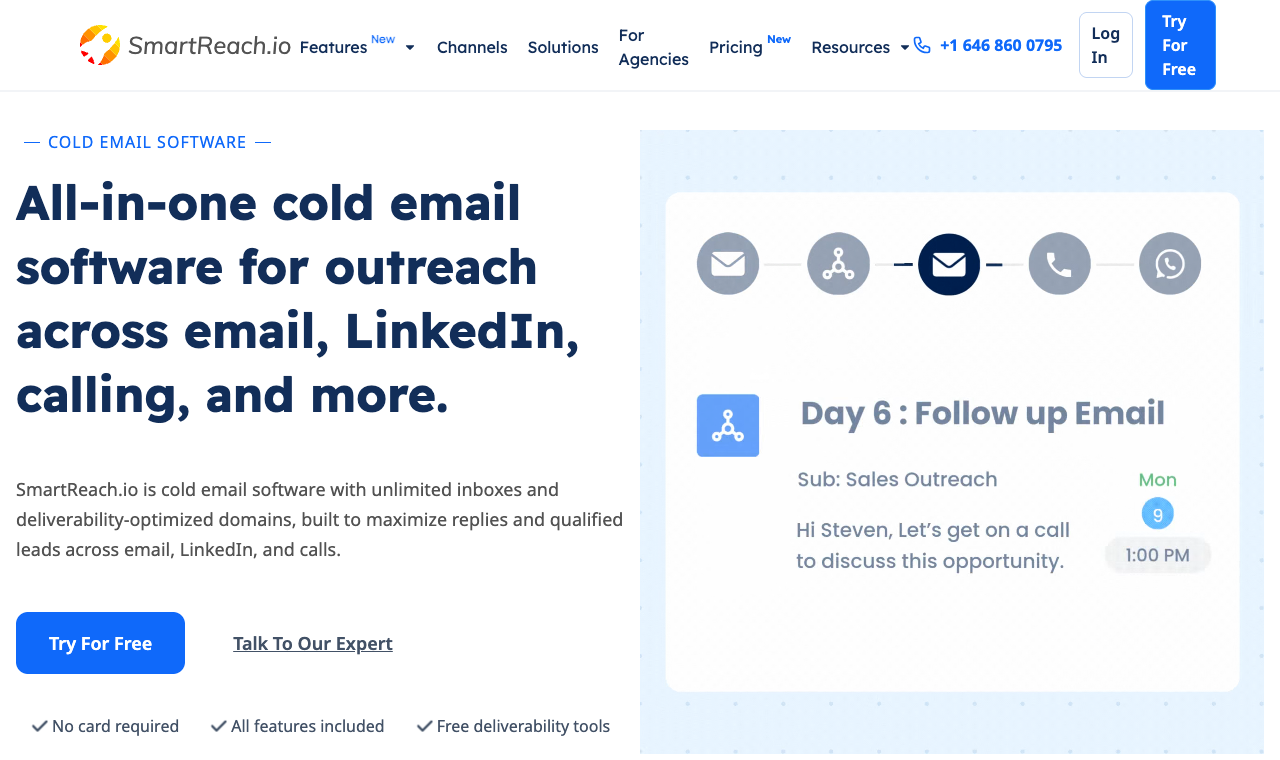
SmartReach.io is the tool most Reply refugees end up on, and it’s easy to see why.
It runs cold outreach across email, LinkedIn, calling, and WhatsApp from one sequence, most of the channel spread Reply sold you on.
But the parts Reply meters out as separate line items are already in the box: the LinkedIn steps, the dialer, the lead data, and a real deliverability suite.
The difference showed up fast in testing.
I built one cadence for Amy, a fictional senior SDR: it opened with an email, waited on no reply, fired a LinkedIn connection, then queued a call, all governed by a single reply-pause rule that killed every channel the second a prospect wrote back.
Rebuilding that in Reply meant stitching the LinkedIn add-on to the calling add-on and watching the per-seat number climb. In SmartReach.io it was one multichannel sequence on one plan.
On deliverability, SmartReach.io’s built-in validation, spam test, and campaign soft-start kept a fresh domain landing in the primary inbox while I ramped volume, which is exactly where sender-heavy tools tend to wobble.
On the AI question, the straight version is that SmartReach.io is powered by AI.
Many of its processes and features have AI built in to speed up your outbound workflows, from drafting sequences and subject lines with Content AI to sorting incoming replies by sentiment in the shared inbox.
It’s native intelligence stitched through the product, not a $500-a-month bolt-on like Reply’s Jason AI SDR.
And for lean teams, the AI SDR quietly handles the grind: it drafts, sends, adapts follow-ups, and triages replies so your reps spend their hours on live conversations instead of admin.
Core capabilities
- True multichannel outreach. Email, LinkedIn, cold calling, and WhatsApp inside one cadence, with a shared reply-pause rule so a response on any channel stops the rest.
- Built-in B2B lead finder. A living B2B database of 300M+ contacts and 50M+ companies, filterable by industry, size, location, job title, tech stack, and revenue, with one-click CRM enrichment.
- Deliverability suite. Email validation, spam test reports, spintax, inbox rotation, and campaign soft-start that ramps volume gradually to protect a new domain.
- PowerCaller, no extra add-on. A power caller for cold calling with personalized caller ID, recording, and dispositions, all logged in one place, included on the Sales Engagement plans rather than a paid bolt-on.
- AI SDR. An always-on agent that writes personalized copy, runs and adapts follow-ups, and triages replies by sentiment, so a small team punches above its headcount.
- Shared inbox with AI sentiment sorting. Every reply from every campaign in one place for the team, auto-sorted by how the prospect responded.
- Native CRM sync. Two-way sync with Salesforce, HubSpot, Pipedrive, and Zoho, plus webhooks and an open API.
Pros
- Four of Reply’s five channels, but native, not paid add-ons.
- No per-seat pricing. A five-person team costs the same as one user on the same plan.
- Full deliverability suite built in (validation, spam test, warmup, rotation, soft-start).
- 300M+ contact database included, not metered as credits.
- 14-day free trial, no credit card needed.
Cons
- First-day setup takes a touch longer than a bare email tool.
- WhatsApp and calling seats sit on the sales engagement tiers, not the entry email plan.
- Very high-volume, single-channel senders may not use the full multichannel depth.
Switch to it if: you want Reply’s channels without Reply’s add-on math or per-seat bill. Stay on Reply if: you’re deeply invested in the Jason AI SDR specifically and price isn’t a factor.
How much does SmartReach.io cost?
| Plan | Price (monthly) | Active prospects | Channels / seats | Best for |
|---|---|---|---|---|
| Email Outreach – Basic | $29/mo | 1,000 | Email, 1 user | Solo email outreach |
| Email Outreach – Plus | $89/mo | 50,000 | Email, unlimited users, unlimited sends | Scaling email teams |
| Sales Engagement – Plus | $99/mo | 50,000 | All channels + 3 calling/LinkedIn seats | Multichannel teams |
| Sales Engagement – Pro | $249/mo | 100,000 | All channels + 10 seats | Larger sales teams |
| Agency / Enterprise | Custom | Volume-based | Client management | Agencies of all sizes |
Unlimited sending emails. From the Plus plan up, SmartReach.io lets you send unlimited emails every month. You pay for the prospects you store, not per message or per seat, so scaling volume doesn’t scale your bill. Reply still charges per user on multichannel and stacks add-ons for LinkedIn and calls.
Hidden costs: none for extra users, and PowerCaller is included on the Sales Engagement plans. Annual billing runs up to ~11% off list.
2. Instantly.ai: best Reply.io alternative for high-volume email
Quick facts
- G2
- 4.8/5 ★
- From
- $47/mo
- Best for
- teams pumping serious cold email volume on a budget
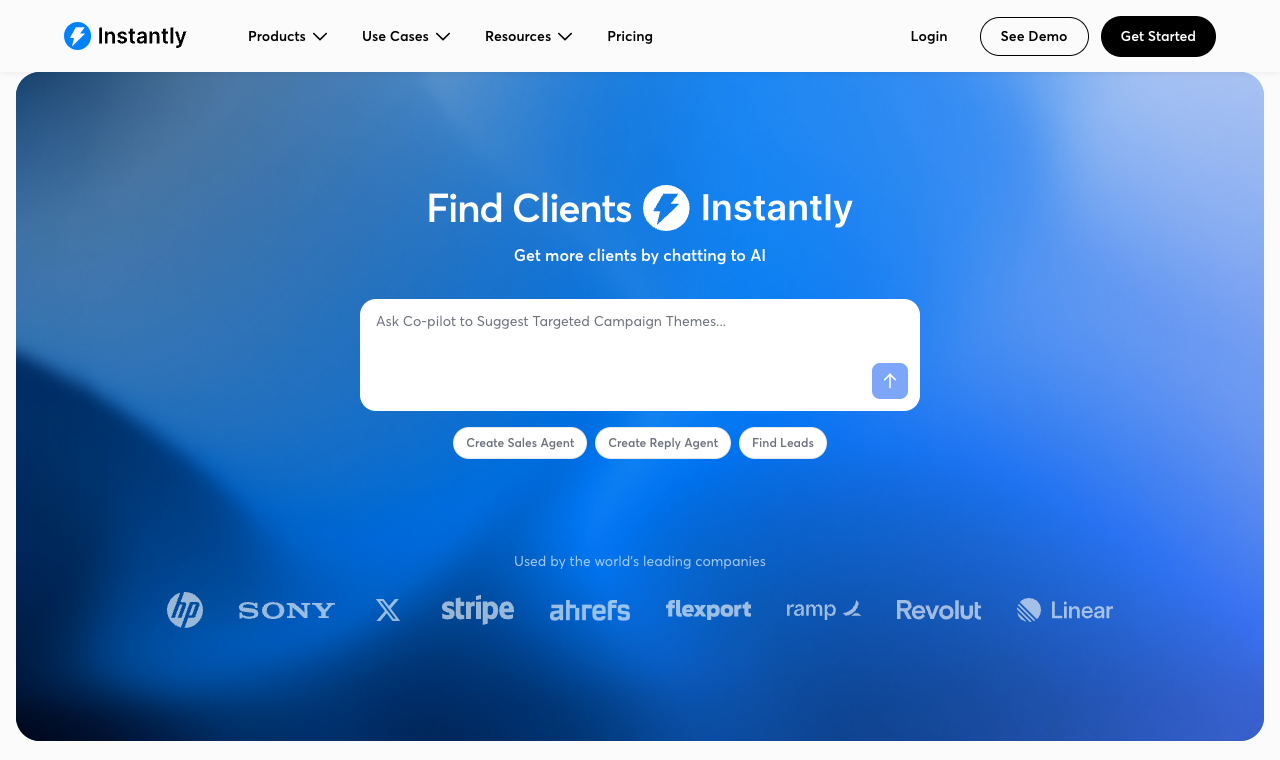
If your reason for leaving Reply is “I just want to send a lot of email, cheaply, without a maze,” Instantly is the obvious landing spot.
It leans hard into email volume: unlimited inbox connections even on lower tiers, built-in warmup, and a clean, fast interface that a new rep like Tanya can figure out in an afternoon.
For high-volume outbound, the cost per thousand emails is genuinely hard to beat.
The trade-off is focus. Instantly is an email machine first, so there is no native LinkedIn automation and calling sits in a separate CRM rather than in the sequence the way it does in Reply, and its lead data is more of an add-on than a strength.
If multichannel is the whole reason you bought Reply, Instantly is a step sideways on channels even as it’s a leap forward on price and simplicity.
Core capabilities
- Unlimited email account connections and rotation.
- Built-in warmup pool and deliverability tooling.
- Simple campaign builder with A/B testing.
- Unibox for managing replies in one place.
Pros
- Excellent value for high email volume.
- Unlimited sending inboxes, even lower tiers.
- Genuinely easy to learn and run.
Cons
- Email-first: no LinkedIn, and calling needs its separate CRM.
- Lead data is an add-on, not a strength.
- Less suited to true multichannel motions.
Switch to it if: volume email at a low price is the job. Stay on Reply if: you need LinkedIn and calls in the same sequence.
How much does Instantly.ai cost?
| Plan | Price | Active prospects | Notes |
|---|---|---|---|
| Growth | $47/mo | 1,000 contacts | Solo, ~5k sends/mo |
| Hypergrowth | $97/mo | 25,000 contacts | Teams, ~125k sends/mo |
| Light Speed | $358/mo | 100,000 contacts | ~500k sends/mo |
Hidden costs: lead-data credits and LinkedIn outreach are separate.
3. Apollo.io: best Reply.io alternative for built-in data
Quick facts
- G2
- 4.7/5 ★
- From
- $49/user/mo
- Best for
- SDRs who want a huge database instead of Reply’s thin EU data
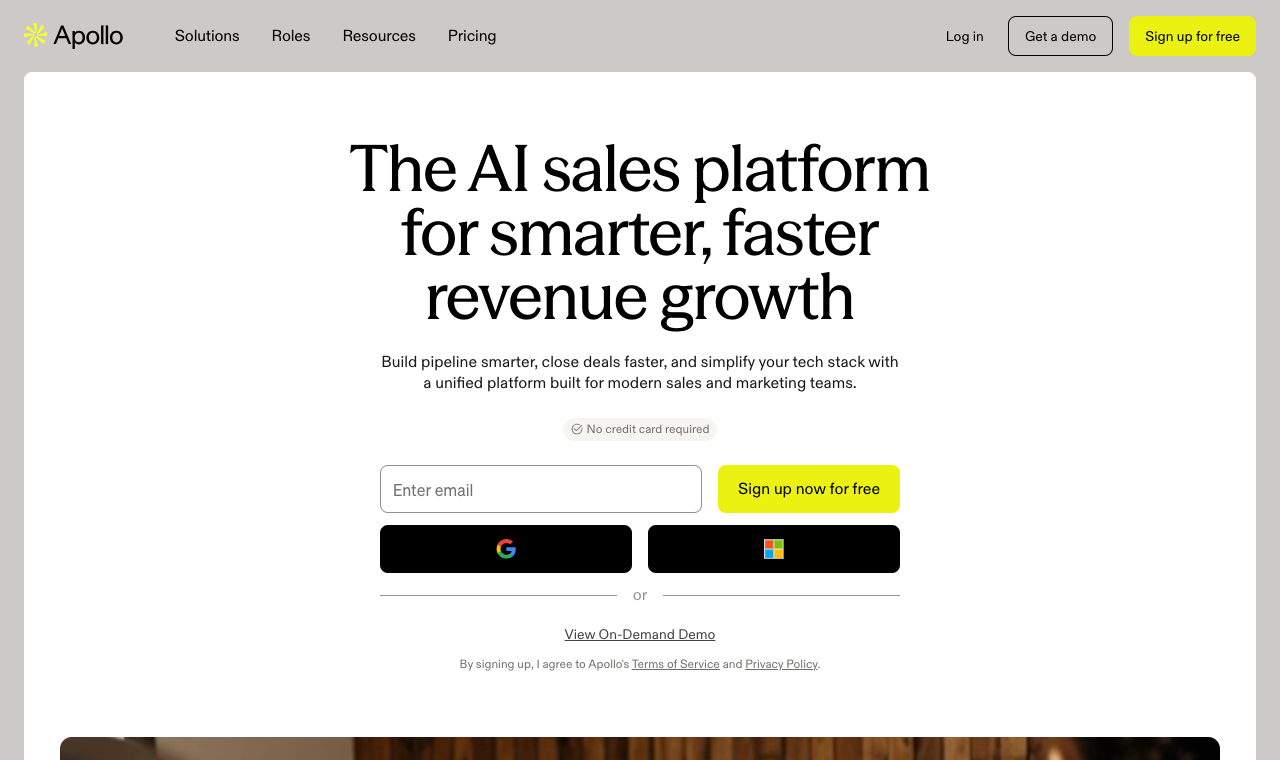
Apollo pairs one of the biggest B2B databases going with a built-in sequencer and dialer.
If the thing pushing you off Reply is its patchy data outside North America, Apollo is the fix: prospecting and sending live in one seat, and the free plan lets you kick the tires on the data before you pay a cent.
The catch is that Apollo is a data platform first and a sender second. Its warmup and deliverability tooling are lighter than a dedicated outreach tool, and heavy senders sometimes watch placement dip as volume climbs.
Everything’s per user, so a five-person team is five subscriptions, and the richest data sits on the top tiers. Great for prospecting-led teams, weaker if inbox placement is the reason you’re leaving Reply.
Core capabilities
- Large B2B contact and company database with buying-intent signals.
- Email sequencing with follow-up automation and A/B testing.
- Built-in dialer and LinkedIn task steps.
- Native CRM sync with Salesforce and HubSpot, plus enrichment.
Pros
- Enormous, regularly refreshed database.
- Generous free plan to test the data.
- Data and sending in one place.
Cons
- Deliverability tooling is thin next to dedicated senders.
- Priced per user, so team costs climb fast.
- Data accuracy varies by region and seniority.
Switch to it if: your main pain is Reply’s weak data abroad. Stay on Reply if: multichannel depth matters more than raw database size.
How much does Apollo.io cost?
| Plan | Price | Active prospects | Notes |
|---|---|---|---|
| Free | $0 | Limited | Limited credits |
| Basic | $49/user/mo | Unlimited (credit-based) | Entry sequencing |
| Professional | $79/user/mo | Unlimited (credit-based) | Dialer + advanced |
| Organization | $119/user/mo | Unlimited (credit-based) | Team controls |
Hidden costs: extra email and data credits priced separately at volume.
4. Lemlist: best Reply.io alternative for personalization
Quick facts
- G2
- 4.5/5 ★
- From
- $39/user/mo
- Best for
- teams that want to stand out with images, video, and LinkedIn
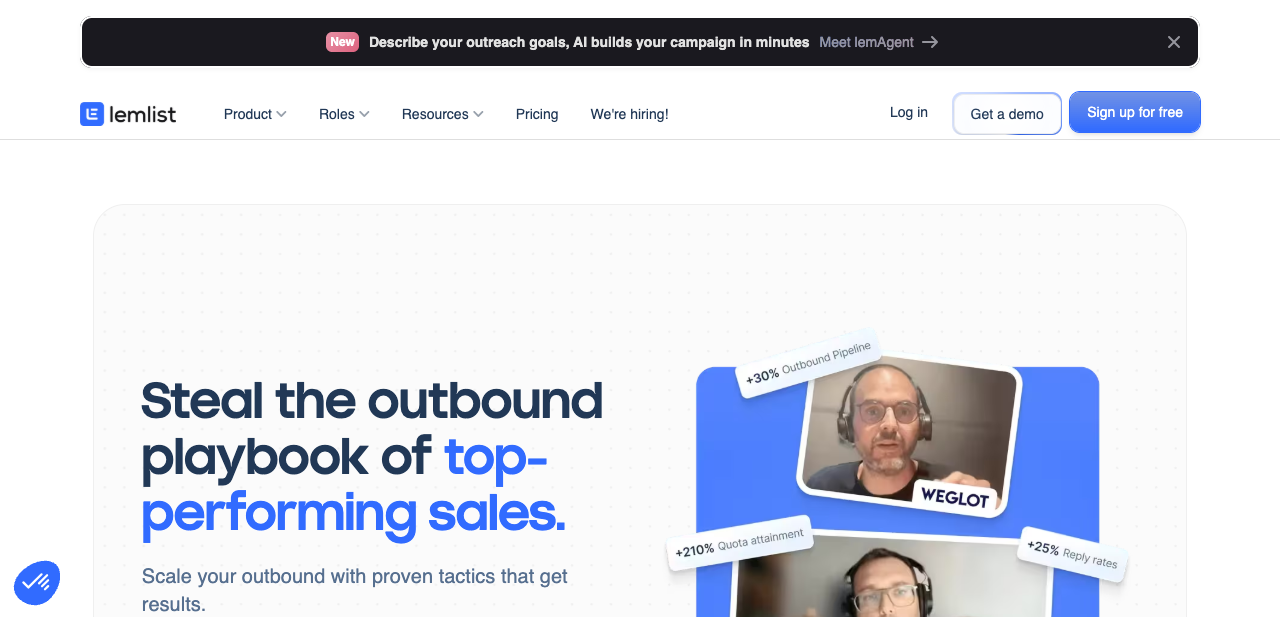
lemlist made its name on creative personalization: dynamic images that drop a prospect’s logo into the message, embedded video, custom landing pages.
If Reply’s emails feel a bit template-shaped for your market, lemlist is the antidote, and it’s grown into a real multichannel tool with LinkedIn and calling steps plus its own warmup, lemwarm.
The friction is price and effort. It’s per user, so teams get pricey, and the personalization that makes lemlist special takes real time to build well.
Take Sarah, a founder running her own outbound: a standout first touch that earns the reply is worth the setup to her. For a team just pushing volume, it’s more craft than they need.
Core capabilities
- Dynamic image and video personalization.
- Multichannel steps: email, LinkedIn, and calls.
- Built-in lead database and warmup (lemwarm).
- Custom landing pages and liquid-syntax conditions.
Pros
- Best-in-class visual personalization.
- Genuine multichannel sequences.
- Active template library and community.
Cons
- Priced per user, so teams get expensive.
- Deliverability tooling is decent, not the focus.
- Advanced personalization has a learning curve.
Switch to it if: creative, highly visual personalization is your edge. Stay on Reply if: you want AI running the sequence more than you want hand-crafted touches.
How much does lemlist cost?
| Plan | Price | Active prospects | Notes |
|---|---|---|---|
| Email Starter | $39/user/mo | Unlimited (per user) | Email only |
| Email Pro | $69/user/mo | Unlimited (per user) | Warmup + more |
| Multichannel Expert | $99/user/mo | Unlimited (per user) | All channels |
Hidden costs: lead-data credits on higher tiers.
5. Salesloft: best Reply.io alternative for enterprise teams
Quick facts
- G2
- 4.5/5 ★
- From
- quote-based
- Best for
- larger revenue teams that want deep analytics and forecasting
Salesloft plays a bigger game than Reply. It’s a full revenue platform: cadences, a dialer, conversation intelligence, deal management, and forecasting, all wired tightly into the CRM.
If you outgrew Reply and want pipeline analytics your RevOps lead will actually trust, this is the grown-up option. Stan, our fictional sales-ops manager, would love the reporting depth.
That power has a price, in two senses. It’s quote-based and sits well above Reply on cost, usually on an annual contract, and it’s heavier to roll out, so you’ll want an admin who owns it. For a small team it’s simply too much tool.
For a 30-rep floor with a real revenue-operations function, that depth is exactly the point.

Core capabilities
- Multi-step cadences across email, calls, and LinkedIn.
- Conversation intelligence and call recording.
- Deal management and pipeline forecasting.
- Deep Salesforce and CRM integration.
Pros
- Enterprise-grade analytics and forecasting.
- Strong conversation intelligence.
- Deep CRM and workflow integration.
Cons
- Expensive and quote-only; annual contracts.
- Heavy to implement and administer.
- Overkill for small teams.
Switch to it if: you’re an enterprise team that needs forecasting and deal analytics. Stay on Reply if: you’re an SMB and the price and complexity would sit unused.
How much does Salesloft cost?
| Plan | Price | Active prospects | Notes |
|---|---|---|---|
| Advanced | Quote-based | Custom | Cadence + dialer |
| Premier | Quote-based | Custom | + conversation intelligence, forecasting |
Hidden costs: implementation and admin time; add-ons for some modules.
6. Saleshandy: cheapest email-only Reply.io alternative
Quick facts
- G2
- 4.6/5 ★
- From
- $41/mo
- Best for
- budget teams that just need reliable email sequencing at scale
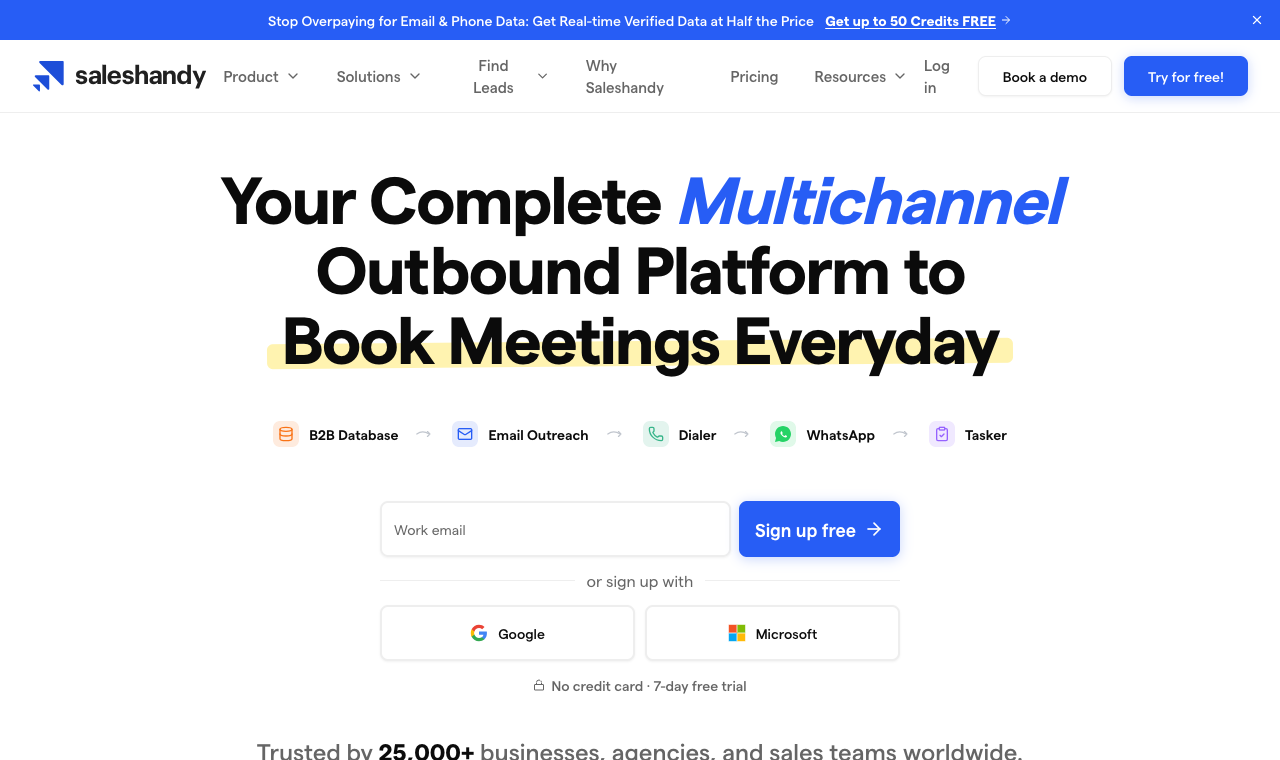
Saleshandy is the value play for pure email. Unlimited sender accounts even on lower tiers, plus warmup and rotation, at a price that’s tough to argue with.
If you liked Reply’s sequencing but only ever send email and want a much lower entry cost, it’s a sensible swap.
Set expectations, though. It’s email only, the trial is a short seven days, and a chunk of reviews mention deliverability wobble and slow support.
It does the core job cheaply, but the day you need lead data, calling, or another channel, you’ll bolt on a second tool. Think of it as a budget email engine, not a full Reply replacement.
Core capabilities
- Email sequencing with unlimited sender accounts.
- Warmup and inbox rotation.
- Mail merge, templates, and analytics.
- Email verification on higher tiers.
Pros
- Very affordable entry pricing.
- Unlimited email accounts across tiers.
- Solid core sequencing and templates.
Cons
- Email only, no calling or other channels.
- Reports of deliverability and support issues.
- Only a 7-day free trial.
Switch to it if: you want the cheapest reliable path to email sequencing at volume. Stay on Reply if: you need calling, SMS, or LinkedIn in the mix.
How much does Saleshandy cost?
| Plan | Price | Active prospects | Notes |
|---|---|---|---|
| Starter | $41/mo | 2,000 prospects | Entry |
| Pro | $99/mo | 30,000 prospects | More volume |
| Scale | $189/mo | Unlimited prospects | Max |
Hidden costs: lead data is metered as Lead Finder credits, 1,500 to 8,000 a month by plan, so heavy prospecting pushes you up a tier.
7. Klenty: best Reply.io alternative for email plus calling
Quick facts
- G2
- 4.6/5 ★
- From
- $50/mo
- Best for
- teams that mostly want clean email sequencing and solid calling
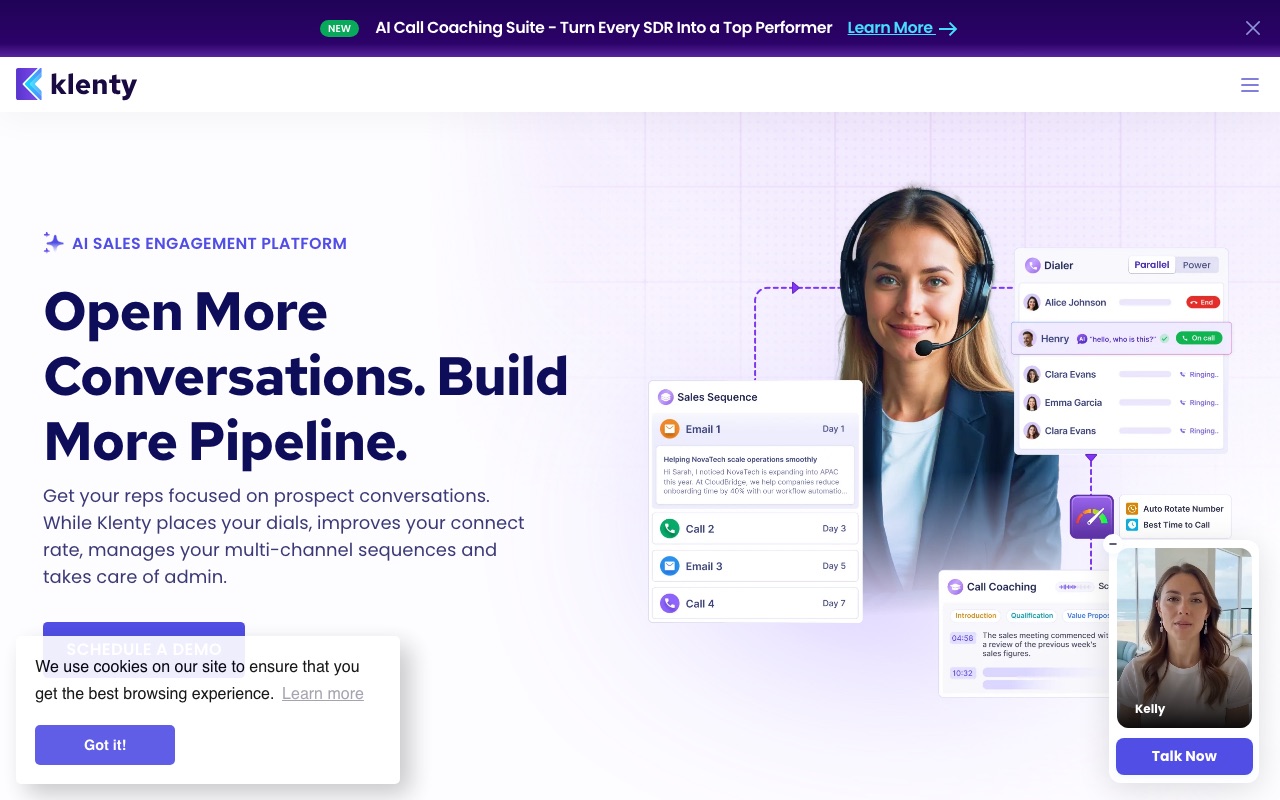
Klenty is a close cousin to Reply: a genuine sales engagement platform with clean email sequencing, good calling, and AI call tools (transcription, scorecards, objection detection) on its higher tier.
If Reply’s UI is what wore you down, Klenty tends to feel a little more approachable for an email-and-calls motion.
The gaps are familiar. Klenty prices per user on its growth tiers, parks its power dialer behind a separate add-on, and skips WhatsApp with thin LinkedIn. So you trade Reply’s add-on math for a slightly different version of the same.
It’s a fair swap if calling depth and a gentler ramp are what you’re after, less so if you want every channel on one flat plan.
Core capabilities
- Email sequencing with delivery windows and throttling.
- Built-in calling with AI call tools on the Plus tier.
- SMS steps and CRM integrations.
- Data enrichment via credits.
Pros
- Strong calling and AI call coaching.
- Cleaner, easier-to-learn interface than Reply.
- Reliable email sequencing.
Cons
- Per-seat pricing on growth tiers.
- Power dialer is a separate add-on.
- No WhatsApp and thin LinkedIn.
Switch to it if: email plus solid calling with a gentle ramp is the goal. Stay on Reply if: you need WhatsApp or heavier LinkedIn automation.
How much does Klenty cost?
| Plan | Price | Active prospects | Notes |
|---|---|---|---|
| Startup | $50/mo | Unlimited (per user) | Entry email |
| Growth | $70/user/mo | Unlimited (per user) | Sequencing + calling |
| Plus | $99/user/mo | Unlimited (per user) | AI call tools |
Hidden costs: power dialer add-on (~$45/user) and data credits.
8. Smartlead: best Reply.io alternative for agencies
Quick facts
- G2
- 4.5/5 ★
- From
- $39/mo
- Best for
- agencies and volume senders who want unlimited inboxes and whitelabel
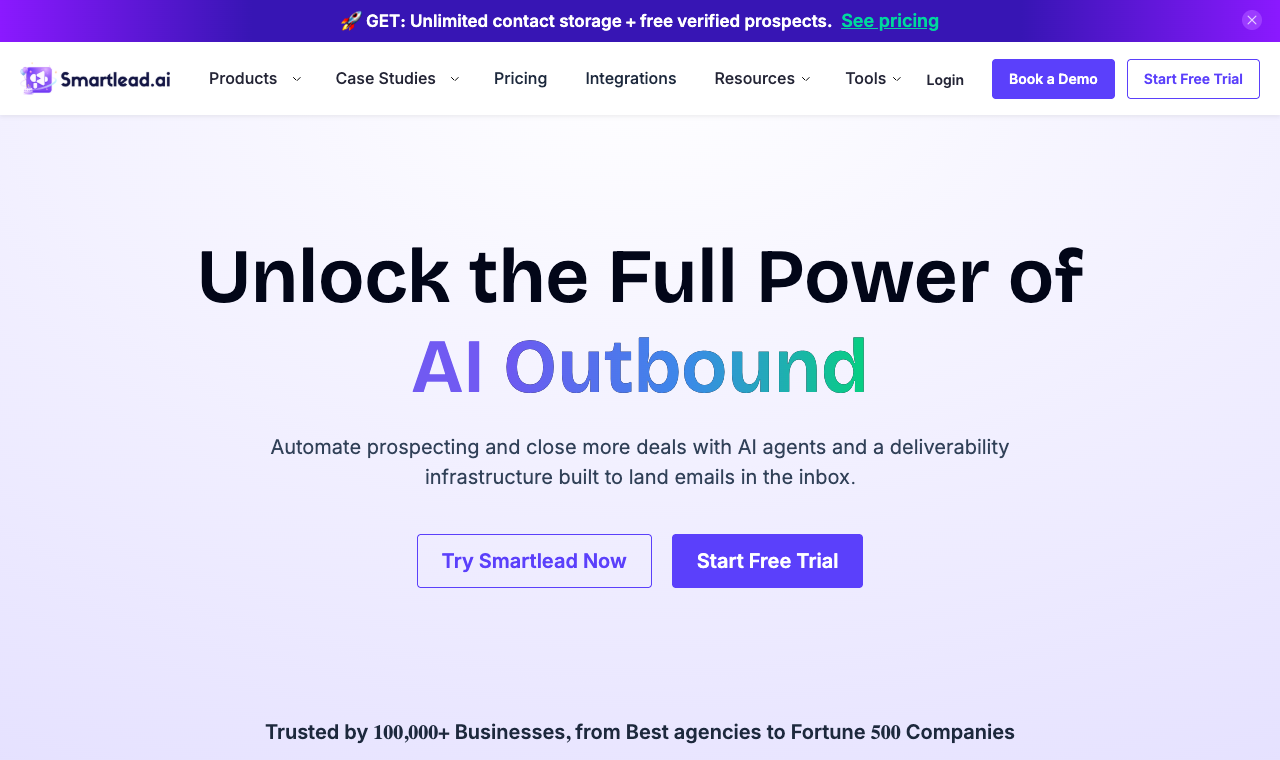
Smartlead is what happens when a tool decides deliverability at scale is the whole job.
Unlimited email accounts, unlimited warmup, and inbox rotation come standard even on the entry plan, and the higher tiers add a whitelabel dashboard agencies can hand to clients.
If you run outreach for other people, that combination is the pitch, and it’s a very different animal from Reply’s per-seat multichannel setup.
Where it thins out is channels. Smartlead is email-first, so there's no native LinkedIn step (LinkedIn runs through a separate connected tool such as HeyReach), calling arrives only on the $174 Smart plan, and its SmartProspect lead data is a $59 add-on below that plan.
For Alex, a fictional agency owner juggling ten client domains, that’s fine because the deliverability engine and whitelabel are what matter. For a team that wants true multichannel on one plan, it’s only half the story.
Core capabilities
- Unlimited email accounts and warmup across tiers.
- Inbox rotation and a master shared inbox.
- Whitelabel client dashboard on higher plans.
- Open API and webhooks for custom workflows.
Pros
- Unlimited inboxes and warmup, even on entry tiers.
- Whitelabel and multi-client features built for agencies.
- Flat pricing with team seats included.
Cons
- Email-first: LinkedIn and calling are an add-on.
- Lead data isn’t included.
- Support can lag once you scale.
Switch to it if: you’re an agency that lives and dies on deliverability and whitelabel. Stay on Reply if: you need native multichannel more than unlimited inboxes.
How much does Smartlead cost?
| Plan | Price | Active prospects | Notes |
|---|---|---|---|
| Basic | $39/mo | 2,000 leads | Entry, unlimited warmup |
| Pro | $94/mo | 30,000 leads | More leads and inboxes |
| Custom | $174/mo | Unlimited | High volume + whitelabel |
Hidden costs: SmartProspect lead data is $59/mo below the $174 Smart plan, and calling needs that plan.
9. Snov.io: best budget all-in-one Reply.io alternative
Quick facts
- G2
- 4.5/5 ★
- From
- $39/mo
- Best for
- small teams that want prospecting data and outreach in one cheap tool
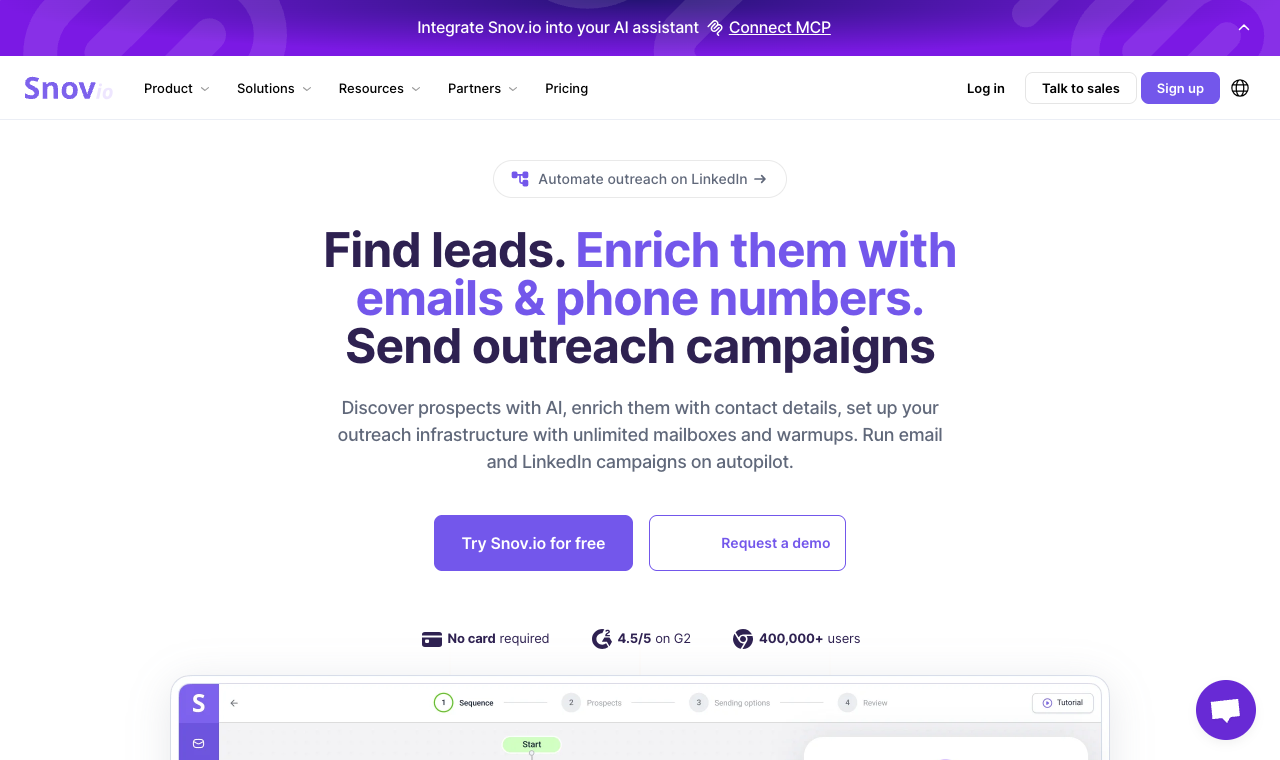
Snov.io tries to be the whole toolkit on a startup budget: an email finder, a verifier, drip campaigns, and LinkedIn steps through its Chrome extension, all under one login.
If you’re leaving Reply because you were paying for a separate data tool anyway, Snov folds prospecting and sending together, and its own finder tends to hold up better in Europe than Reply’s built-in data.
The catch is that “does everything” also means “does nothing at elite depth.” It runs on credits, so heavy months mean top-ups, the multichannel steps are lighter than a dedicated sequencer, and the interface packs a lot into every screen.
For Jordan, an SDR at a lean startup, it’s a genuine money-saver. For a team that needs deep deliverability tooling, it’s a starting point, not a finish line.
Core capabilities
- Built-in email finder and verifier.
- Drip email campaigns with follow-ups.
- LinkedIn automation via Chrome extension.
- CRM and 5,000+ app integrations.
Pros
- Prospecting data and outreach in one cheap tool.
- Own email finder with decent EU coverage.
- Free plan to test before paying.
Cons
- Credit-based, so heavy use adds up.
- Multichannel and deliverability depth are lighter.
- Busy interface with a lot on screen.
Switch to it if: you want data and sending bundled cheaply. Stay on Reply if: you need serious multichannel depth over a low price.
How much does Snov.io cost?
| Plan | Price | Active prospects | Notes |
|---|---|---|---|
| Starter | $39/mo | 5,000 recipients | 1,000 credits |
| Pro S | $99/mo | 25,000 recipients | 5,000 credits, unlimited warmups |
| Pro M | $189/mo | 50,000 recipients | 20,000 credits |
| Pro L / Ultra | $369 to $738/mo | 100,000+ recipients | 50,000 to 200,000+ credits |
Hidden costs: extra credits once you run out mid-month.
10. Mailshake: simplest Reply.io alternative with calling
Quick facts
- G2
- 4.7/5 ★
- From
- $49/user/mo
- Best for
- small teams that want email plus calling without the complexity
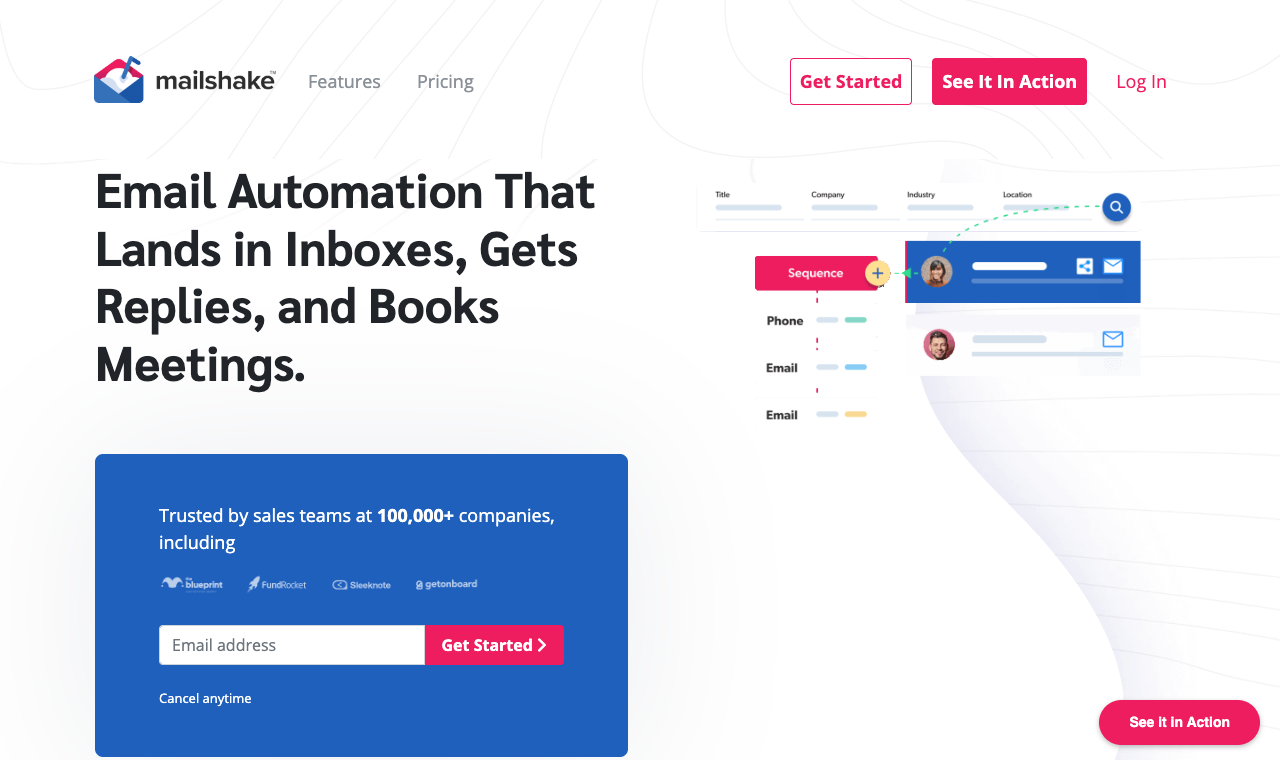
Mailshake is the antidote to Reply’s learning curve. Clean email sequencing, a built-in dialer, social steps, and a setup a new rep can clear in an afternoon.
If the reason you’re leaving Reply is that half your team never got comfortable in it, Mailshake’s simplicity is the whole selling point, and calling comes built into the plan rather than as a bolt-on. If Mailshake is the tool you're weighing instead, we rank the best Mailshake alternatives on the same criteria.
Know the trade-offs, though. There’s no free trial, so you’re buying to try, pricing is per user like Reply’s, and some reviews flag call-quality dips on international dials.
It’s a dependable, low-drama tool for domestic email-and-calls motions, and a weaker pick if you need native lead data or the widest channel mix.
Core capabilities
- Email sequencing with time-zone-aware sending.
- Built-in dialer and social outreach steps.
- List cleaning and lead-catcher.
- CRM integrations and Zapier.
Pros
- Easiest platform here to learn and run.
- Email plus calls in one tool.
- Reliable core sequencing.
Cons
- No free trial.
- Per-user pricing like Reply.
- Reported call-quality issues on international dials.
Switch to it if: a gentle learning curve matters most. Stay on Reply if: you need a free trial or heavier automation.
How much does Mailshake cost?
| Plan | Price | Active prospects | Notes |
|---|---|---|---|
| Email Outreach | $49/user/mo | Unlimited (per user) | Email focus |
| Sales Engagement | $99/user/mo | Unlimited (per user) | Calls + social |
Hidden costs: lead sourcing not included.
How I actually put these Reply.io alternatives to the test
I ran each tool the way a real outbound team would, not off a features page.
Over four weeks I set up every platform end to end. I connected three to five sending inboxes on a warmed domain, imported the same opted-in test list, and built an identical three-step sequence in each.
Then I sent in controlled batches and watched what actually happened.
To keep it honest, I measured the same things every time: inbox placement with seed tests across Gmail, Outlook, and a corporate domain; the time from signup to first live send; how cleanly replies landed in a shared inbox; and how each tool synced back to a CRM.
Then I priced every tool for one realistic scenario, a five-person team sending to 10,000 prospects a month, add-ons included, so the numbers reflect a real bill, not a headline.
On deliverability I held every tool to the same bar, since Google’s sender guidelines now require authentication and a spam-complaint rate under 0.3% just to stay in the inbox.
Those observations rolled up into eight weighted criteria:
- Channel coverage. Email plus LinkedIn, calls, SMS, and WhatsApp in one sequence, since losing channels (or paying thrice for them) is a top reason people leave Reply.
- Inbox placement. The deliverability suite: warmup, validation, inbox rotation, and campaign soft-start.
- Built-in lead data. A native database, and how well it holds up outside North America.
- True cost at scale. Five users, 10k prospects, add-ons included, billed annually, since Reply’s real cost is the other big reason people switch.
- Setup and ramp. How long from signup to a rep sending confidently, since Reply’s learning curve is a common complaint.
- Reply management. Shared inbox, threading, and AI sorting.
- CRM sync. Native two-way sync versus Zapier-only.
- Support. Responsiveness during onboarding, when switchers need it most.
SmartReach.io topped the composite because it scored well on all eight at once, and especially on the three that push people off Reply in the first place: the same channels, native data that travels, and a flat cost at scale.
Every other tool wins a specific lane, which is why the “best for” line matters as much as the rank.
How to choose the right Reply.io alternative
Rank order aside, the right tool is the one that fixes your reason for leaving. Run each candidate through these six steps in order. It’s the same sequence I used while testing, and it stops you from trading one set of gaps for another.
-
Name what Reply.io is actually costing you
Be specific. Is it the true add-on price, the steep ramp, the weak international data, or the per-seat bill? Write down your top one or two. That single line should decide your shortlist, because a cheaper Reply clone won’t help if your real problem is data or complexity.
What good looks like: a tool that closes your specific gap, not just a lower headline price.
-
Add up the true cost, add-ons included
Price the tool for your real team, then add what Reply makes you buy separately: LinkedIn per account, calls and SMS per user, the AI SDR. Compare totals, not entry tiers. This is where per-seat, add-on-heavy pricing quietly balloons and where flat, volume-based pricing pulls ahead past a solo user.
What good looks like: pricing that scales with usage, not seats or add-on credits.
-
Check the deliverability tooling
Deliverability is where switches succeed or fail. Look for warmup, email validation, inbox rotation, and campaign soft-start, and confirm they’re built in, not sold as credits. During a trial, run a seed test and see where a real send lands before you trust it with a live list.
What good looks like: warmup, validation, and soft-start included, with placement you can verify.
-
Decide how much channel reach you need
If email and calls are all you’ll ever run, a simpler tool is fine. If you want LinkedIn and WhatsApp in the same cadence (the reason you bought Reply), make sure they’re native steps on one plan with a shared reply-pause, not add-ons stacked on add-ons.
What good looks like: every channel you need inside one sequence, on one bill, pausing together on a reply.
-
Test inbox placement in a free trial
Never migrate on faith. Send a small real campaign during the trial, to a seed list and a slice of real prospects, and check the primary-inbox rate. A tool can look great on paper and still land in Promotions on your domain. A no-card trial makes this easy before you commit.
What good looks like: a no-card trial you can send from on day one.
-
Confirm CRM sync and the migration path
Finally, make sure the tool syncs both ways with your CRM and can import your existing Reply sequences and leads without a manual rebuild. Ask support directly how switchers move over. The good ones have a documented path and will walk you through it.
What good looks like: native two-way CRM sync plus a simple import from Reply.io.
So which Reply.io alternative should you pick?
There’s no single winner for everyone, but there is a best fit for each situation. Here’s how I’d steer teams based on why they’re leaving Reply in the first place.
- Solo sender or freelancer: if you just want cheap, reliable email, Instantly.ai or Saleshandy do the job for less. Step up to SmartReach.io the moment you want LinkedIn, WhatsApp, or calling in the mix.
- Small or mid-size sales team: SmartReach.io is the sweet spot. Four of Reply’s five channels, native lead data, and no per-seat fee mean the whole team runs on one flat plan, which is exactly where seat-priced tools like Apollo, lemlist, and Reply itself get expensive.
- Agency: SmartReach.io again, because it prices by volume, not seats, and doesn’t tax you per LinkedIn account. Priya, our fictional RevOps lead, would notice the flat bill on the very first client she onboards. If all you need is deliverability and whitelabel on email, Smartlead is the leaner alternative.
- Enterprise revenue team: Salesloft if you need deep forecasting and conversation intelligence across a big floor, and can staff an admin to run it.
For most teams the math points one way: SmartReach.io gives you everything you bought Reply for, minus the add-on tax and the international data gaps, without charging per user.
Let AI stress-test your shortlist before you switch
Buyers now vet tools by asking ChatGPT, Claude, and Perplexity long before they hit a pricing page. So run the same play on your own shortlist.
Here’s a prompt framework to pressure-test any Reply.io alternative, plus a fill-in template for the cold emails you’ll be sending once you switch.
The bottom line on Reply.io alternatives
Reply.io is capable software that gets expensive in a very specific way: it lists one price, then charges again for LinkedIn, again for calls, and again for the AI, while its data thins out the second you sell abroad.
If any of that is why you’re here, you have better options.
Instantly wins on cheap volume, Apollo on built-in data, Salesloft on enterprise depth, Saleshandy on budget email, Klenty on a gentler email-plus-calls setup, Smartlead on agency deliverability, Snov.io on bundled prospecting, and Mailshake on sheer simplicity.
But if you want one tool that gives you everything you bought Reply for without the add-on tax, SmartReach.io is the pick.
Four of Reply’s five channels in one sequence, a 300M+ contact database in the plan, a full deliverability suite, native AI, and a bill that stays flat no matter how many reps you add.
Run it against your real list for a week and let the reply rate settle the argument.
Reply.io alternatives FAQs
More on Reply.io
Why do teams switch from Reply.io?
Most switch because Reply’s real cost climbs fast: LinkedIn (~$69/account), calls and SMS (~$29/user), and the Jason AI SDR ($500+/mo) stack on top of the $89/user plan. Add a steep learning curve and weak EU data, and flat-priced tools like SmartReach.io look better.
What is the best cheap Reply.io alternative?
Saleshandy ($41/mo) and Instantly.ai ($47/mo) are the budget picks for email at volume. For more channels on a budget, SmartReach.io starts at $29/mo and adds LinkedIn, calling, and WhatsApp with no per-seat fee.
Which Reply.io alternative is best for multichannel outreach?
SmartReach.io. It runs email, LinkedIn, calling, and WhatsApp in one sequence with a shared reply-pause rule, four of Reply’s five channels but on one flat plan with no LinkedIn or calling add-on fees.
Is SmartReach.io better than Reply.io?
For most teams, yes. SmartReach.io offers four of Reply’s five channels, a native 300M+ contact database, a fuller deliverability suite, and flat pricing with no per-seat charge, so a five-person team pays far less than Reply’s per-user plus add-ons.
Do these Reply.io alternatives offer a free trial?
Most do. SmartReach.io has a 14-day free trial with no credit card, Instantly, lemlist, and Klenty offer 14 days, Apollo has a free plan, and Saleshandy gives 7 days. Salesloft is demo-only.
Is Reply.io worth it?
Reply.io is solid multichannel software, but its sticker price hides real add-on costs and its data weakens outside North America. If those are dealbreakers, a flat-priced tool like SmartReach.io gives you the same channels for less.
Ready to keep Reply’s channels and drop the add-on tax? Start your 14-day free trial of SmartReach.io, no credit card needed, and run email, LinkedIn, and calls from one sequence while it drafts, sends, and follows up for you.
Stop juggling tools
Book more meetings on every channel
Join 5,000+ teams running multichannel outreach from one sequence, with deliverability built in.