How to write business collaboration emails for B2B?

On this page
Amy had a list of 40 software companies whose customers looked a lot like hers. A joint webinar with any one of them could fill a quarter's pipeline. She sent 40 polite emails asking for "a quick call to explore a partnership" and got two replies. Both were no.
So what went wrong? Her targets weren't the problem. The email was. It asked a stranger for 30 minutes before saying what they'd get.
Here's how to write a business collaboration email a busy partner manager answers, with seven templates and the 2026 inbox rules.
What is a business collaboration email?
A business collaboration email is a one-to-one message that proposes a specific joint project between two companies, such as a co-hosted webinar, an integration, a guest article or a referral deal. It's built like a cold email with a different ask. You aren't selling a product. You're offering a trade where both sides get something they can measure.
That changes the tone. The other person is weighing your idea against their own roadmap, so show you've already done some of the thinking for them.
These are the collaborations B2B teams pitch most often, and what each one has to promise the other side.
| Collaboration type | What you propose | What the partner gets |
|---|---|---|
| Integration or technology partnership | Connecting the two products | A feature their customers ask for, plus a listing in your marketplace |
| Co-marketing webinar | One session for both audiences | Registrations from your list, not just theirs |
| Guest post | An article written for their readers | A finished piece on a topic their audience searches for |
| Podcast guest | An episode built around your expertise | A prepared guest with a clear angle |
| Affiliate or referral program | Commission on customers they send | Recurring revenue for a recommendation they'd make anyway |
Who should you pitch a B2B partnership to?
Send it to the one person who owns the outcome you're proposing, at a company whose customers overlap with yours but who doesn't compete with you. A webinar pitch goes to whoever runs webinars, not to a generic partners@ inbox.
Start with fit. Look for companies selling something different to your best customers. A payroll tool and a scheduling app share buyers. Two payroll tools don't.
- Integrations go to a partnerships or product manager.
- Webinars, guest posts and co-marketing go to a content or demand generation manager.
- Podcasts go to the host or the producer, who often screens guests.
- Affiliate programs go to whoever writes or runs the audience, often the founder at a small company.
Before you write, find one thing they did in the last 90 days, like a launch, a report or a post. That becomes your first line. Amy cut her list from 40 companies to 12 this way, because for 28 of them she couldn't find a reason they'd care right now.
Here's my strong view. If you can't say what the partner gets in one sentence, don't send the email yet. Expect plenty of silence even when you get this right. A no often means a launch, a partner freeze or an existing deal, not a bad email.
What should a collaboration email include?
A collaboration email needs five parts in this order. A plain subject line, an opening line about the recipient, the idea in one sentence, the benefit to their side, and one small ask, followed by a short signature.
| Part | Its job | Strong | Weak |
|---|---|---|---|
| Subject line | Say what the email is about | Webinar idea for Acme's RevOps audience | Exciting collaboration opportunity!! |
| Opening line | Prove you wrote it for them | Your onboarding churn report changed how our team runs week one | I hope this email finds you well |
| The idea | One project, one sentence | A 30-minute joint session on onboarding churn in March | Explore ways we could work together |
| Their benefit | What they get, in their terms | Our list reaches 12,000 RevOps leaders you don't email today | A mutually beneficial partnership |
| The ask | Small and easy to say yes to | Want me to send a one-page outline? | Can we jump on a 30-minute call this week? |
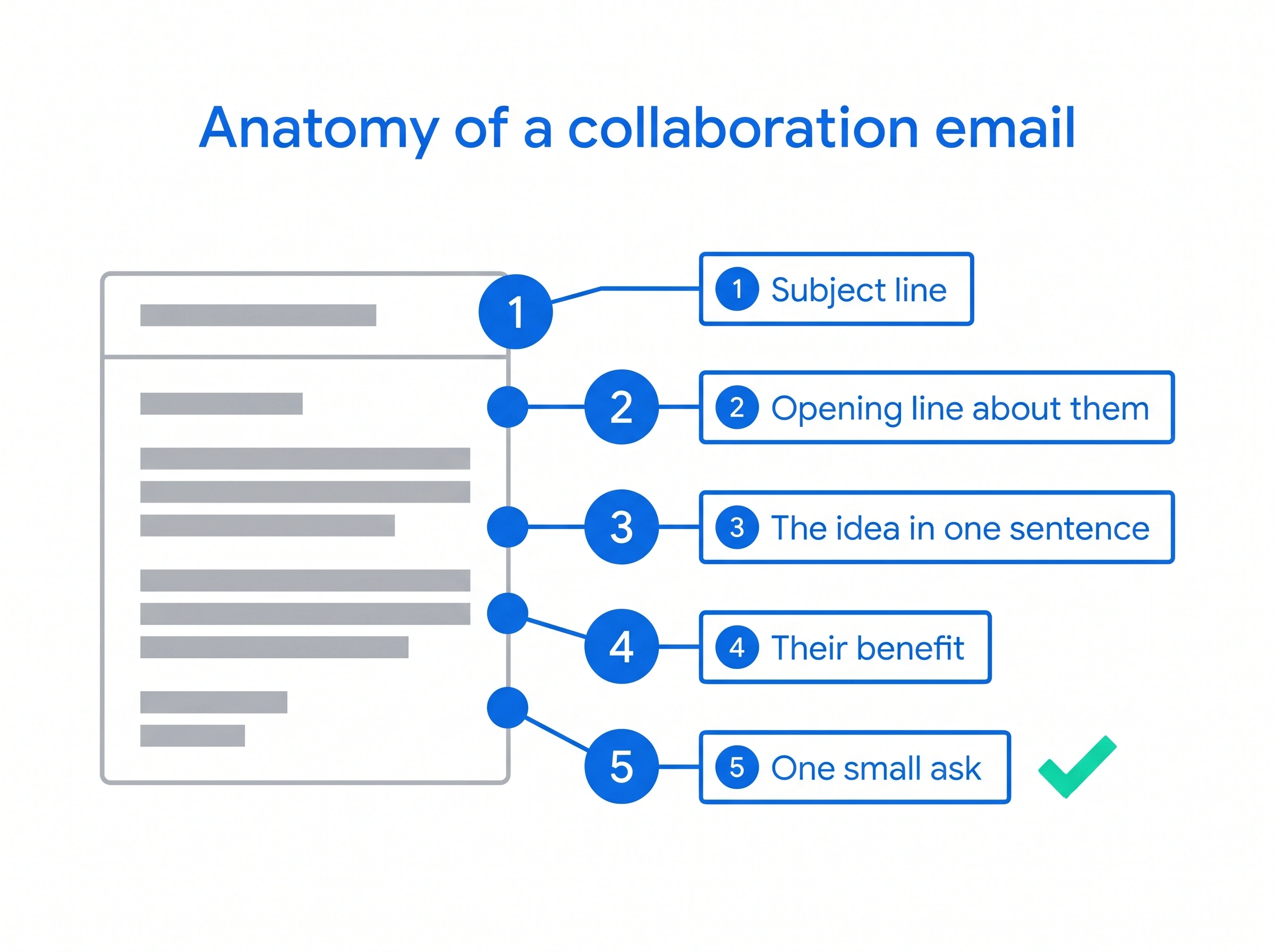
Two details carry most of the weight. The subject line should read like a note from a colleague, so name the project and skip capitals, exclamation marks and words like "opportunity" (more in our guide to B2B cold email subject lines). The opening line shows up as preview text, so spend it on their work, not your introduction. Close with your name, role, company and one link, in a professional email format with a plain sign-off.
How long should all of this be? Honestly, I don't know of a clean public study on partnership emails specifically, since most length research looks at sales mail. My working rule is under 150 words for the first email, as a starting point to test, not a law.
How do you keep partner outreach out of the spam folder?
Authenticate your sending domain, warm it up and keep volume low, because B2B email often passes two filters, the company's email host and a corporate security gateway in front of it.
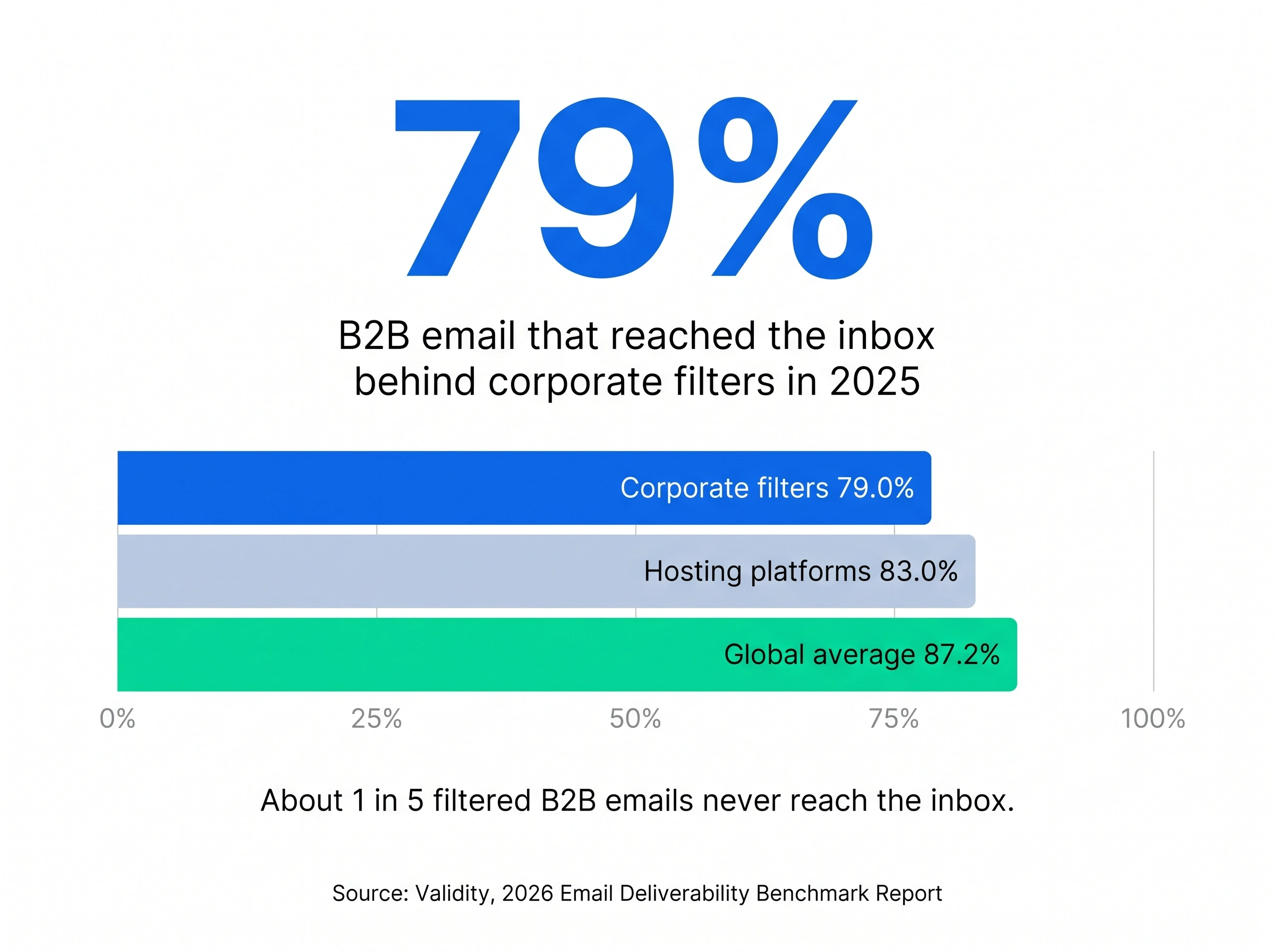
That second layer costs real reach. Validity's 2026 Email Deliverability Benchmark Report found that in 2025, B2B mail screened by corporate filtering companies reached the inbox 79.0% of the time. Mail measured at hosting platforms reached it 83.0% of the time, against a global average of 87.2%. Put plainly, about one in five B2B emails that passes through a corporate filter never lands in the inbox.
The same report shows how concentrated the market is. Office 365 and Google's business mail hold more than 95% of the hosting market between them, and Proofpoint holds 50.5% of corporate filtering. Your partner email will almost certainly be judged by one of those three.
Stan, who runs sales ops for a 12-person outbound team, checks four things before any partner campaign goes out.
- Authentication. SPF, DKIM and DMARC pass, tested with the free email authentication checker.
- A warmed-up domain. A brand-new domain sending pitches looks like a spammer (see the email warmup guide).
- Clean copy. A spam word checker flags phrases filters weight against you.
- Low volume per inbox. Partner lists are small, so don't rush them out of one mailbox.
Which collaboration email templates can you copy?
Pick the template that matches your project, then rewrite the opening line and the benefit line for every recipient, because those two lines make a template read as one-to-one. Fill in everything in square brackets.
Partnership email template
For integration partnerships, where the hook is something their customers already ask for.
Hi [Name],
I noticed [Their Company]'s community forum has a thread asking for a [Your Product] integration. It's had [number] votes since [month].
We'd like to build it. We'd handle the build and the docs, and list [Their Product] in our marketplace, which [number] customers browse each month.
Can I send a one-page scope for your product team?
[Your Name], [Title] at [Your Company]
Affiliate program email template
For someone who already recommends tools like yours, so the commission rewards what they'd do anyway.
Hi [Name],
Your post on [topic] lists [number] tools for [use case], and a few of our customers told us that's how they found us.
Our affiliate program pays [commission] per referred customer for [duration], with a personal link, a dashboard and ready-made copy.
Want the program details?
[Your Name]
Brand ambassador collaboration pitch template
For a customer who already talks about your product in public. In B2B the best ambassadors are users, not influencers.
Hi [Name],
Your post last month about how your team uses [Your Product] for [use case] got shared around our office twice.
We're starting an ambassador group of [number] customers. Members get early access, a direct line to our product team and [perk]. We'd ask for one honest post or talk a quarter.
Would you like the one-page details?
[Your Name]
Guest post pitch template
For an article on a blog your buyers read. Lead with the topic, not your credentials.
Hi [Name],
Your recent post on [topic] ended with an open question about [specific gap]. I'd like to answer it in a guest article for your readers.
Working title "[title]", covering [point one], [point two] and [point three], with examples from [number] teams. No product pitch.
Would you like a short outline?
[Your Name], [Title] at [Your Company]
Webinar invitation template
For a co-hosted session. Make the split of work clear so it doesn't read as a request to do your marketing.
Hi [Name],
Our audiences overlap a lot. Both of us sell to [audience], but we cover different halves of [problem].
How about a 30-minute session on [topic] in [month]? We'll handle the platform, slides and follow-up email, you'd bring [their expertise], and both lists get every registrant.
Want me to send two or three possible dates?
[Your Name]
Podcast guest pitch template
Hosts care about the episode, so pitch the episode, not yourself.
Hi [Name],
Your episode with [guest] on [topic] stopped short of [specific question], and I've spent the last [number] years working on exactly that.
I could walk your listeners through [three concrete things], with real numbers, and share the episode with our [number]-person list.
Would a short topic outline help you decide?
[Your Name]
How do you follow up on a collaboration email?
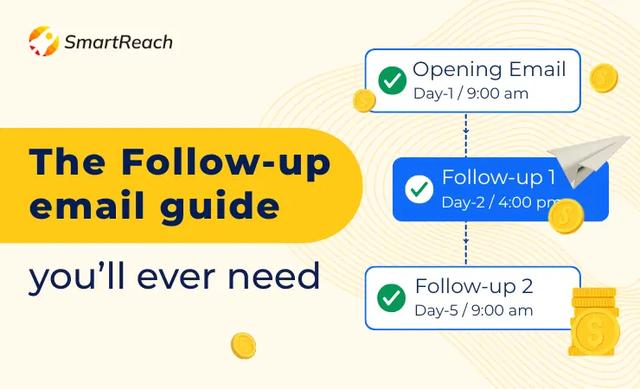
Send one or two follow-ups, a few business days apart, each adding something new, and then stop. "Just bumping this up" gives the reader nothing to say yes to.
There's also a hard limit on how hard you can push. Google's email sender guidelines tell senders to keep the spam rate reported in Postmaster Tools below 0.1% and never to reach 0.3%. That's one complaint per 1,000 emails as the target. Senders who mail Gmail more than 5,000 times a day also need DMARC and one-click unsubscribe for marketing messages.
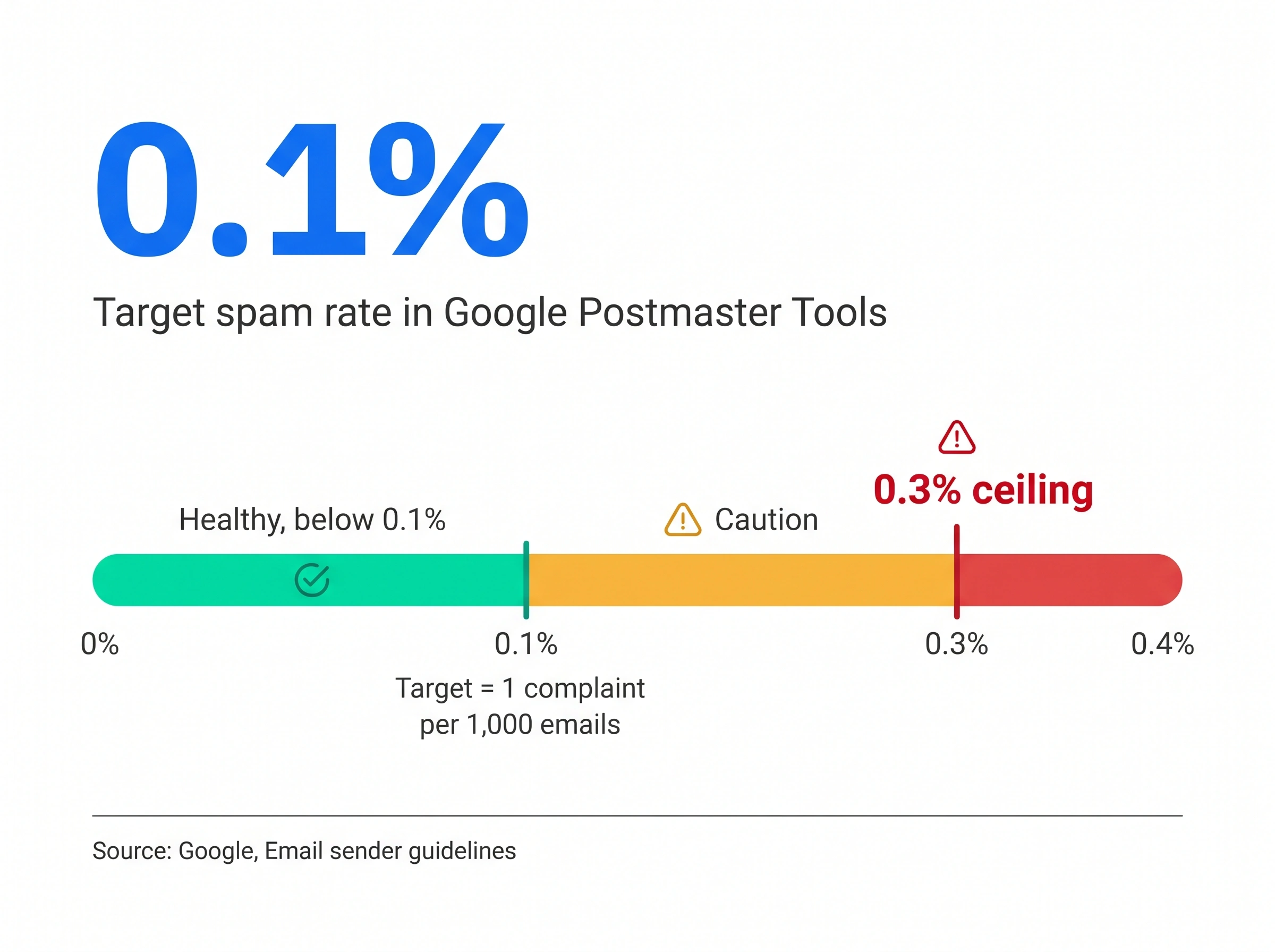
A partner list won't reach those volumes, but the complaint rule covers everything your domain sends. The spam complaint rate calculator shows where you sit. Here's a follow-up that adds a reason to reply.
Hi [Name],
We drafted an outline for the session on [topic], with three talking points for your team.
[Link to outline]
If [month] is busy, [later month] works just as well for us. And if it's not a fit right now, a one-word no is completely fine.
[Your Name]
More timing ideas are in our guide on how to write a follow-up email.
Conclusion
A good collaboration email is short, specific and generous. It offers one person one project, asks for something small, and comes from a domain the filters trust. Twelve well-chosen partners will beat 200 generic ones.
For partner outreach, SmartReach.io is a cold email software that keeps a quiet thread moving, and its Sales Engagement plans add LinkedIn, calls and WhatsApp steps to the email sequence. On those plans it also works as a sales engagement platform, with no per-seat pricing and unlimited users on every plan above Basic.
To run your next partner list that way, start your 14-day free trial of SmartReach.io.
Frequently asked questions
How do you write a collaboration email to a brand?
Open with one specific thing the brand did recently, then propose a single project in one sentence, such as a joint webinar, a guest article or an integration. State what the brand gets in concrete terms, like audience size or finished work, and close with a small ask, such as permission to send an outline. Keep the first email under about 150 words and save the call request for later.
How long should a collaboration email be?
Aim for under 150 words in the first collaboration email. That leaves room for a personal opening line, the idea in one sentence, the benefit to the partner and a small ask, and nothing else. Most published length research covers sales and marketing mail rather than partner outreach, so treat 150 words as a starting point and test shorter versions against your own reply rates.
What is a good subject line for a collaboration email?
A good collaboration email subject line names the project and, where it fits, the recipient's company or audience, such as Webinar idea for Acme's RevOps audience. It reads like a note from a colleague, with no capitals, exclamation marks or words like opportunity that signal a pitch before the email is opened. Keep it short enough to read in full on a phone screen.
How many times should you follow up on a collaboration email?
Follow up once or twice, a few business days apart, and make each follow-up add something new, such as an outline, a date or a relevant result. Then stop. Every unwanted email risks a spam report, and Google's sender guidelines ask senders to keep the spam rate in Postmaster Tools below 0.1% and never reach 0.3%, a limit that applies to the whole sending domain.
How do you write a collaboration proposal by email?
Put the proposal in the email body, not an attachment. Start with one line about the recipient, state the project, then give the details a decision needs, which are the format, the timeline, who does what and what each side gets. Keep it to a few short paragraphs and offer a one-page document as the next step, so the first email stays easy to read and easy to answer.
Can you send collaboration emails at scale without hurting deliverability?
Yes, if each email stays personal and the sending domain is protected. Authenticate with SPF, DKIM and DMARC, warm the domain and spread sends across inboxes. SmartReach.io is a cold email software that handles this with email warmup and inbox rotation, and its Sales Engagement plans add LinkedIn, calls and WhatsApp steps to the same sequence. SmartReach.io offers a 14-day free trial.
Stop juggling tools
Book more meetings on every channel
Join 5,000+ teams running multichannel outreach from one sequence, with deliverability built in.