How Healthcare Companies Sign More Clients through Cold Email | Full Guide

Healthcare lead generation is a make-or-break process for companies looking to expand their client base and grow revenue.
While traditional methods like running ads and relying on clinic walk-ins still have a role, they often fall short when it comes to scaling. Ads can burn through budgets without reaching the right buyers, and clinic visits are limited by geography and capacity.
That is where outbound lead generation steps in. A targeted, multichannel outbound approach lets you reach healthcare decision-makers directly – on their terms, through the channels they actually respond to.
If you are looking for a reliable way to generate healthcare leads through outbound outreach, you are in the right place.
At SmartReach, we regularly work with healthcare companies that face the same set of challenges:
- Finding the right decision-makers inside healthcare organizations
- Breaking through a crowded, competitive market
- Building a scalable and repeatable lead generation process
Sound familiar?
About 68% of B2B organizations report difficulties with lead generation, and in the healthcare sector, the challenge runs even deeper. Long sales cycles (6-18 months on average), multiple stakeholders, and strict regulatory requirements like HIPAA compliance make it harder to convert prospects into paying customers.
The good news: with the right approach, tools, and process, you can turn your healthcare lead generation from guesswork into a structured, data-backed system.
This guide walks you through a step-by-step process for setting up outbound healthcare lead generation using SmartReach.io – from defining your ideal customer to running multichannel campaigns and tracking results.
Let’s get started.
Why healthcare companies rely on outbound lead generation
Before getting into the step-by-step outbound strategy, let’s look at the core challenges that make healthcare lead generation uniquely difficult:
✅ Highly specialized market: Your Serviceable Available Market (SAM) is limited and niche. Every lead counts. Companies offering healthcare software, custom medical devices, or enterprise solutions face steep entry barriers – making it even harder for smaller providers to compete.
✅ Long sales cycles: Average sales cycle in medical industry lasts for 6-18 months. You need to start conversations early and maintain engagement over time with automation and consistent follow-ups.
✅ Complex decision-making processes: Purchasing decisions in healthcare rarely sit with one person. IT directors, clinical staff, compliance officers, and C-suite executives all have a say. Your outreach has to address multiple stakeholders.
✅ Stringent regulatory requirements: HIPAA compliance and data security are non-negotiable. Every message, data source, and tool in your outreach process needs to meet these standards.
These factors make it essential to have a robust and efficient outbound lead generation strategy tailored specifically to the healthcare industry.
For providers focused on medical transport, comparing NEMT software pricing helps determine the most cost-effective way to streamline dispatching, routing, and billing.
Setting up a healthcare lead generation process using SmartReach.io
Let’s set-up a an effective outbound lead generation process from scratch.
Step 1) Define your ideal customers
In this step, you need to define what your ideal customer looks like. For that, you will use these two concepts – ICP and buyer personas.
You’ll need to think strategically about who would benefit most from your product and who has the authority to make purchasing decisions.
Let’s break this down step-by-step:
1. Ideal Customer Profile (ICP)
Your ICP describes the type of organization most likely to buy from you. Define it using these parameters:
- Organization type (hospital, clinic, health system, private practice)
- Company size (number of beds, staff count, number of locations)
- Location (region, urban vs. rural)
- Annual IT or procurement budget
- Technology adoption level (early adopter vs. legacy systems)
- Specific pain points your product or service solves
Example: 350-bed urban hospital in a healthcare network, with $1M+ IT budget, seeking to upgrade aging EHR systems.
Note: You may have more parameters depending on your how niche problems your software/service/hardware solves. These are some general parameters applicable to almost any business.
2. Healthcare Buyer Persona
Your buyer persona describes the individual decision-makers you need to reach inside those organizations:
- Build detailed profiles for 2-3 key decision-makers (e.g., CMIO, CIO, CFO, Director of IT)
- Include their goals, daily challenges, and decision-making criteria
- Identify their preferred communication channels (email, LinkedIn, phone)
- Understand where they consume industry information
Example Buyer Persona: Dr. James Carter, 52-year-old CMIO at a regional hospital network. He evaluates new health-tech solutions, prioritizes interoperability, and prefers email communication with detailed ROI documentation attached.
💡 Some additional insights
- Use data from current customers to refine your ICP and personas.
- Consider the buying committee dynamics in healthcare organizations.
- Align your product features and marketing messages with the specific needs outlined in your ICP and personas.
- Regularly update these profiles as the healthcare industry evolves.
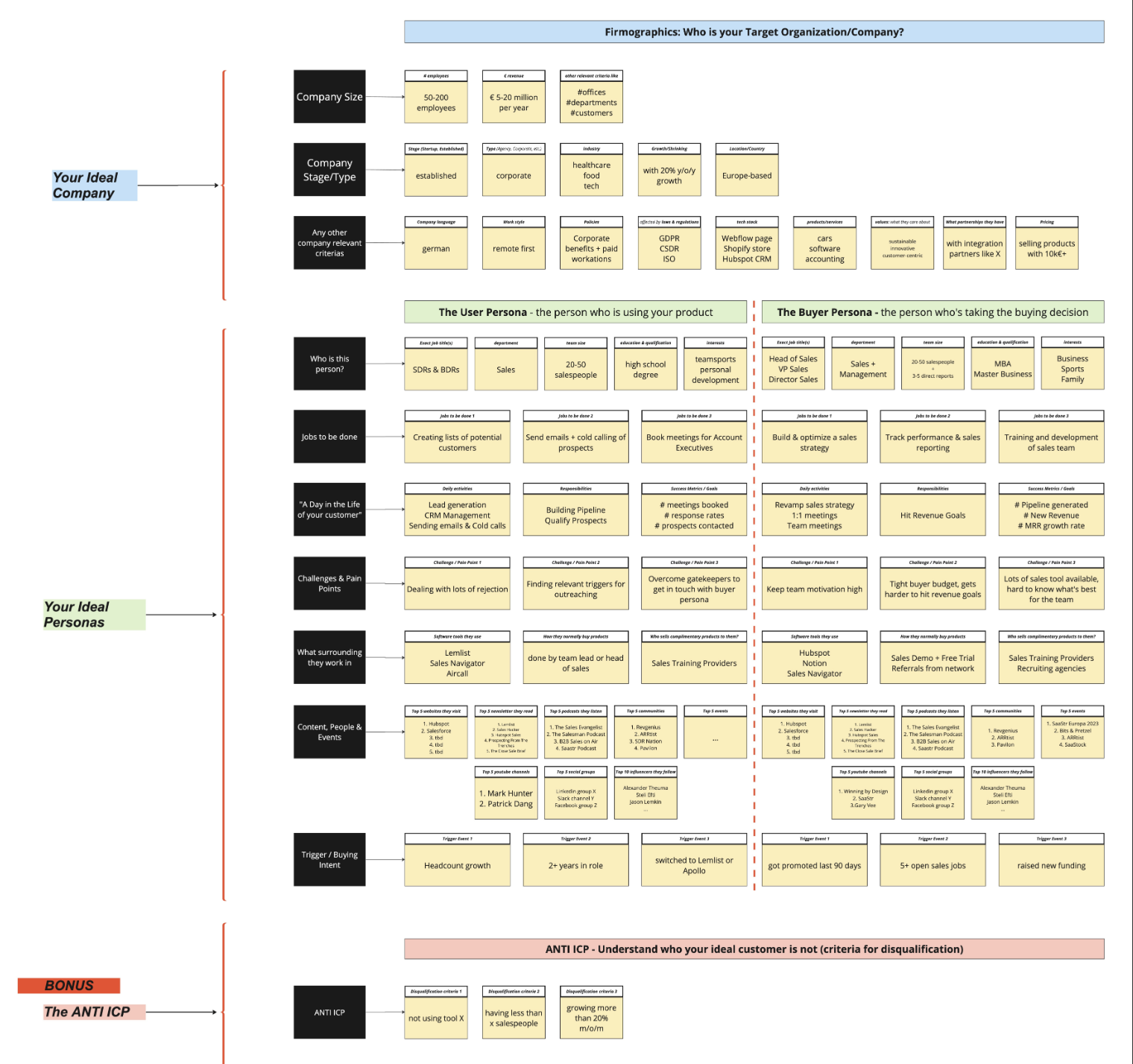
If you are still unsure about who your target customers are, you can follow this detailed ICP framework created by the OG Alexander Estner.
Step 2) Build a targeted healthcare prospect list
With your ICP and buyer personas defined, the next step is finding accurate contact information for the people who match them.
You need these data points for each prospect:
- Organization details (name, location, size, HQ)
- Professional email address (not personal)
- Phone number (business line)
- Job title and role within the organization
You can follow two different approaches here –
Approach 1 ➡️ Use your Marketing Qualified Leads (MQL). If you already generate leads from ads, website sign-ups, webinars, or social media, you can feed those MQLs directly into your outreach campaigns. This is the fastest route if you have an active inbound funnel.
Approach 2 ➡️ Build a prospect list from scratch. If you don’t have a steady flow of inbound leads, you’ll need to build your list manually or with prospecting tools.
In this article, we will be following the approach 2.
So, let’s start it from scratch.
For running successful outreach process you need some essential prospect information such as –
- Professional email addresses,
- Contact number (avoid personal contact number),
- Designation details in the organization,
- Organizational details (location, HQ, name etc.)
You can find all these information by either prospecting from a platform like LinkedIn or sourcing the lead information directly from a lead finder tool.
Prospecting healthcare professionals from LinkedIn to find contact information
Search for your buyer personas in LinkedIn with all the details selected such as location, industry and anything else you want specifically.
It would return the result like this –
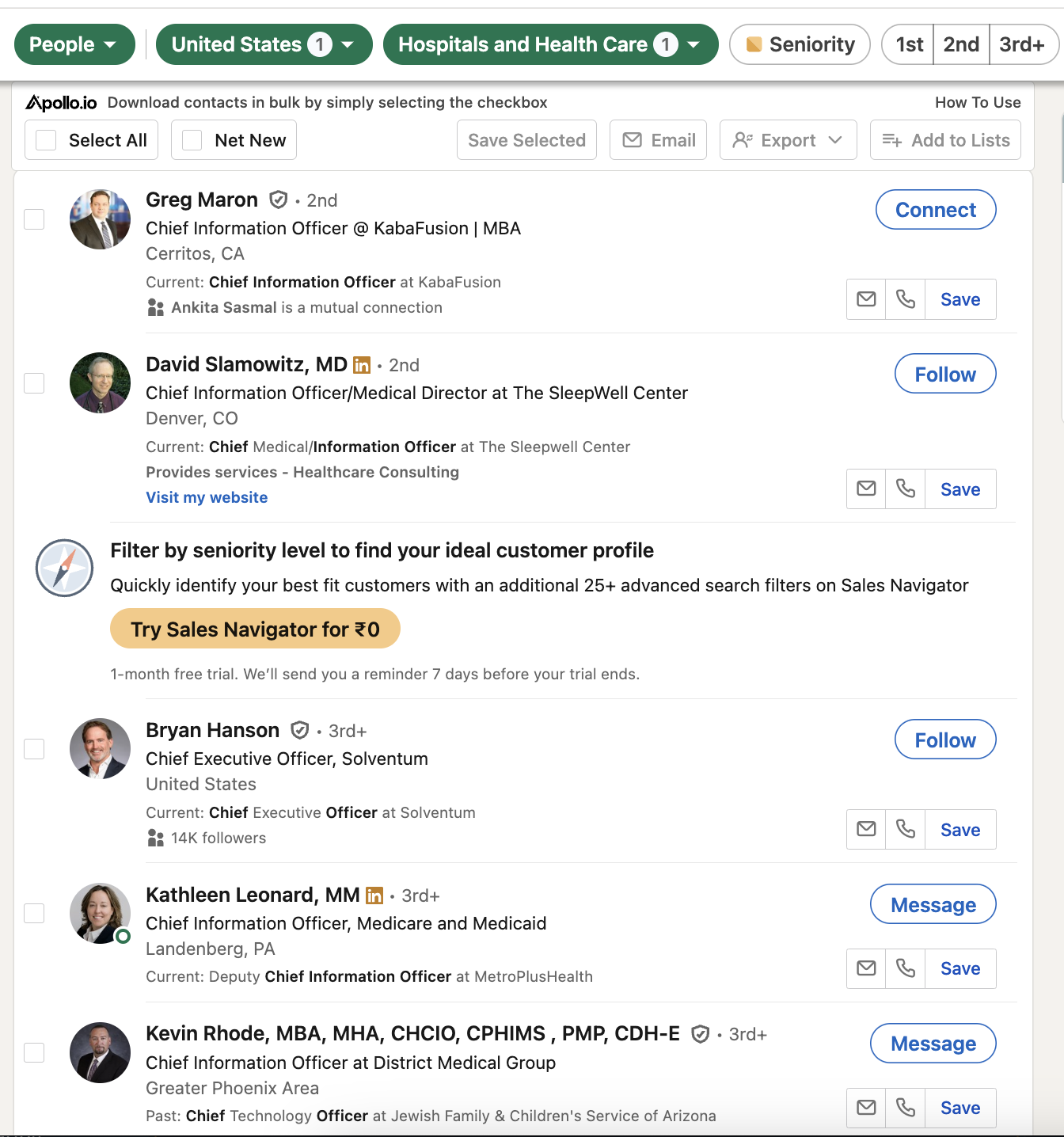
Now you can use any tool like Anymail Finder to extract their email addresses and phone numbers to a excel sheet like below.
This way you can find the relevant prospect information to build a prospect list from scratch in a google sheet or excel sheet.
❗Note of caution: This is not a recommended method since you may not find important prospect information such as phone numbers for all the prospects. Also, there is a high chance that LinkedIn may shadow ban your account for scrapping off data using a third party tool. So, use it on your own risk 🙂
Using a specific lead finder tool works better in this case to automate the entire process and source prospect data more ethically.
Using a lead finder tool to find contact information
This is a more viable, scalable and accurate process for finding contact information.
You can use the lead finder tool by SmartReach.io to find contact details in few clicks.
Just select whatever the criteria your buyer personas fall (such as industry, team size, company type, first name, last name etc.) inside the SmartReach lead finder and you will get your prospect information such as their contact number and professional email addresses.
Here’s how it looks like –

Now you can directly export the prospect data into your email, cold calling or multichannel outreach campaigns from here. (We will cover this part later in this article)
Prospecting + Data enrichment + Outreach – all within a single platform under a single subscription plan. (Check out the pricing)
This is the basic way of building a prospect list from scratch as a beginner for sales outreach.
Most businesses use tools like Clay.com or Persana.ai to enrich healthcare lead data so that the content seems more personalised.
If you want a more in-depth guide you can check out “How to Create A Winning Sales Prospect List – A Comprehensive Guide”.
Step 3) Set-up and run the outreach process
Once your prospect list is ready, it’s time to launch your outreach. For healthcare lead generation, a multichannel approach works best – combining email, LinkedIn, phone calls, and messaging apps to maximize touchpoints.
There are different channels you can you can run your outreach on, e.g., –
- Emails
- Calling
- Text messages
Some unconventional channels have also recently emerged fairly successful in B2B such as Instagram and Slack.
For a successful healthcare outbound lead generation process, you should combine all the different channels for outreach.
Prerequisities before starting a multichannel cold outreach campaign 👇🏻
- Email warm-up: Put your sending email accounts through at least 14 days of warm-up before you start emailing prospects. SmartReach provides Warm-up Hero for this purpose. (Use Warm-up Hero)
- Set-up your secondary domains. Set up separate domains for cold outreach to protect your primary domain reputation.
- Email service provider: Choose an ESP suited for cold email. Outlook is recommended for better deliverability.
- Soft start: Begin with low daily sending volumes and increase gradually each week.
- Email validation: SmartReach.io automatically validates email addresses with its Spam Test Report. Unlimited free email validation is included.
- Messaging: Write value-driven messages specific to each buyer persona. SmartReach’s Content AI can help you draft personalized email copy during sequence setup.
- LinkedIn prep: Connect with prospects first. Engage with their content (like, comment, share) before sending outreach messages.
- LinkedIn caution: Do not fully automate LinkedIn messaging. LinkedIn may ban accounts that use third-party automation tools. Use semi-automated outreach instead.
- Don’t fully automate LinkedIn activities such as messaging, profile view etc. LinkedIn may ban your account for automating tasks using third party tools. Instead, go for semi-automated LinkedIn outreach tasks. .
- Calling scripts: Prepare 3-4 different call scripts based on your buyer personas with clear talking points.
Let’s see how SmartReach helps you with a multichannel outbound set-up for healthcare lead generation.
Check out this youtube video to get the step by step process for setting up a multichannel campaign using SmartReach.io 👇
Here’s a basic outreach flow that healthcare companies follow 👇🏻
SmartReach.io allows you to run single channel campaigns as well as multi channel campaigns with channels such as email, LinkedIn, Calling, Whatsapp and text messages.
Below is a sample multichannel campaign flow that you can follow.
Step 1) LinkedIn connection request.
If accepted, engage with the prospect’s content and send an InMail within 48 hours.
Step 2) Start email sequence 3-5 days after LinkedIn connection.
Step 3) Make phone call after 2-3 email touches.
If no response, continue email sequences.
Step 4) Use WhatsApp for warm leads or quick follow-ups.
Step 5) Cycle through channels, adjust based on prospect engagement.
Warm leads: Use WhatsApp or SMS for quick follow-ups with leads who’ve shown interest.
Ongoing: Rotate through channels and adjust your approach based on how each prospect engages.
Note: Based on your team size, sales and marketing budget, GTM strategy, channel knowledge you can improvise these steps accordingly.
Key principles to consider for the outreach sequences
- Personalize each touchpoint based on prospect’s recent activities, company news, or industry trends.
- Include easy opt-outs immediately across all channels and maintain a centralized do-not-contact list using SmartReach.io.
- Maintain a consistent outreach cadence across channels.
- Track prospect engagement and adjust approach accordingly.
- Provide value in every interaction with the prospects (insights, solutions, resources etc.)
- Continuously update your ICP and buyer personas based on engagement data and successful conversions.
- Always keep your email deliverability in check. SmartReach provides features such as inbox rotation, spintax, spam test report, unlimited email validation, unlimited email-warm-up, inbox placement and more for saving your emails from landing in SPAM and damaging your sender reputation.
Remember, this is a basic representation. You may have more complex decision points, parallel processes, and feedback loops.
So, consider factors like timing between touchpoints, A/B testing of messages, and personalization based on prospect engagement.
This brings us to the next step – managing your responses from the campaign.
Step 4) Manage your campaign responses
This is an important step in the outbound process.
Effective response management is crucial for converting enquiries and objections into opportunities.
Here, you need a centralized response system that lets your team collaborate with each other.
It will help them address the queries and objections received from running different campaigns on different channels.
Use the “Shared Inbox” feature of SmartReach to manage your all your campaign responses from a single place. It ensure your team never misses important follow-ups. (Here’s the 👉🏼 set-up guide)
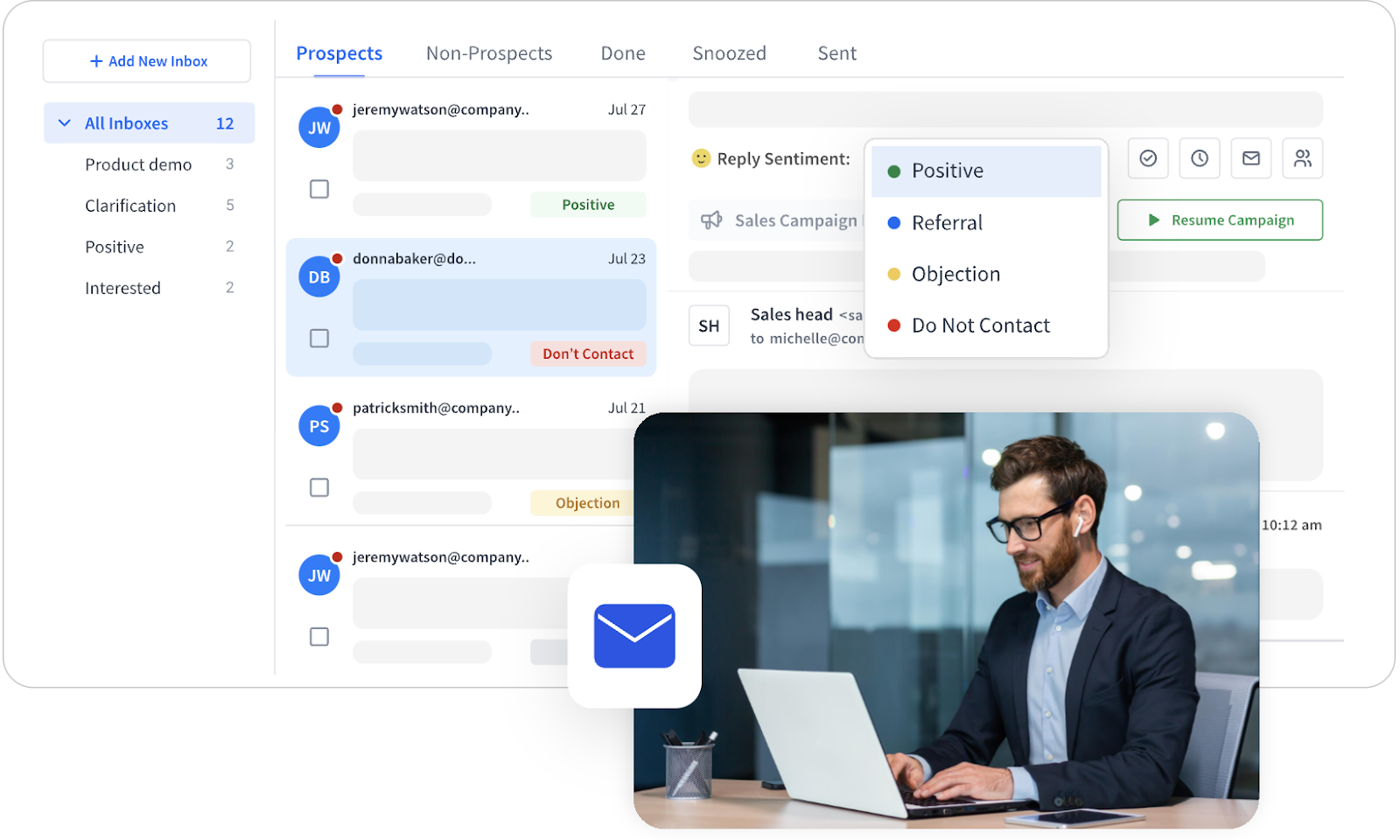
You have the option to categoriae campaign responses to forecast your sales pipeline and opportunities further.
SmartReach’s Shared Inbox feature brings all your campaign responses into one dashboard. Your team can collaborate on replies and make sure no high-priority lead slips through the cracks. (Here’s the setup guide.)
- Positive replies
- Requests for more information
- Not interested
- Out of office
- Unsubscribe requests
Based on the responses, prioritize the follow-up on positive replies and information requests first.
How to handle responses effectively:
- Prioritize positive replies and information requests first
- Assign leads to team members based on their expertise or territory using SmartReach’s roles and permissions
- Respond to positive replies within 24 hours — research shows that about 90% of leads go cold within the first hour, so speed matters
- Set up SmartReach.io notifications to alert team members the moment a high-priority response comes in
- Update your lead status in your sales pipeline regularly
SmartReach.io integrates with popular CRMs to keep your sales data synchronized across tools. This ensures your pipeline stays accurate and your team always knows where each healthcare lead stands.
Step 5) Monitor, analyse and optimise the campaigns according to your goals
The final step in your healthcare lead generation process is continuous measurement and improvement. Track these benchmarks and work toward improving them over time:
Based on the sequences that you have set-up, continuously improve your campaigns by closely monitoring metrics such as –
- LinkedIn connection acceptance rate (aim for >40%)
- LinkedIn response rate (aim for >2%)
- Email open rates (aim for >50%)
- Email reply rate (aim for >3%)
- Call connection rate (aim>15%)
- Overall lead generation rate (based on your revenue goals, lead acceptance criteria and industry benchmarks)
SmartReach.io provides detailed reports and analytics where you can track all the channel metrics in a few clicks.
To track and optimize your email outreach campaigns, you need to monitor –
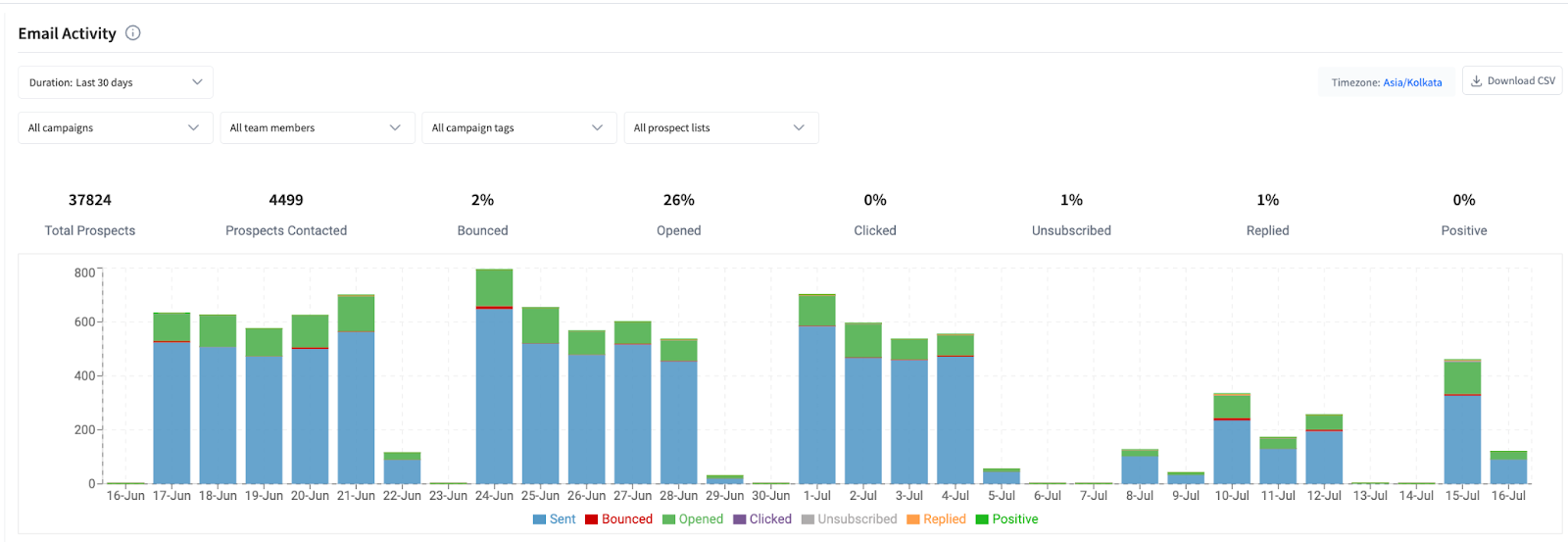
- Email activity report – it captures important email campaign metrics such as open rates (no. of people opened an email), reply rates (no. of people reply to an email), click-through rates(no. of people click an email link), number of positive responses, bounce rates(no. of email fail to deliver at the prospect’s inbox) etc.
- Prospect contacted report – Shows how many prospects you’ve reached across all channels, combined response counts, and response sentiment (positive, objection, do-not-contact, referral, etc.)
- Best time to send report – Identifies when your healthcare prospects are most active so you can schedule outreach at the right times.
- Hot prospects report – Highlights leads showing buying signals so you can prioritize follow-ups.
Apart from that, you need to A/B test different elements throughout the process such as –
- LinkedIn connection message variations
- Email subject lines and body copy
- Call scripts
- WhatsApp message formats
- Call to action placements
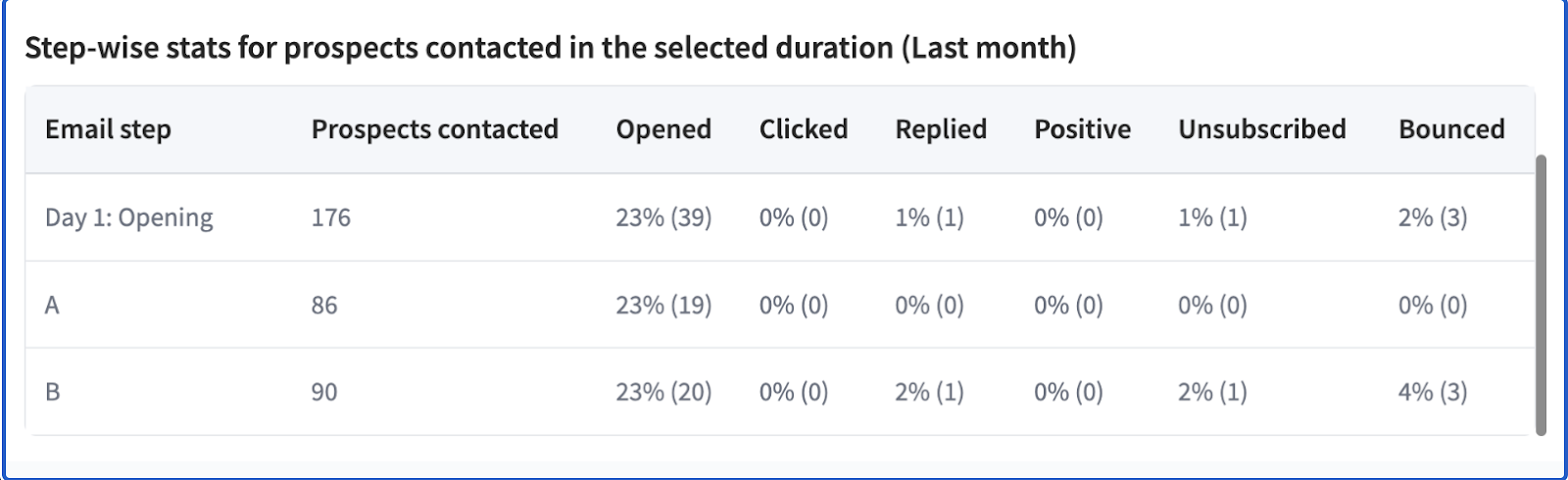
Use different email copies inside your campaign for A/B testing inside SmartReach.
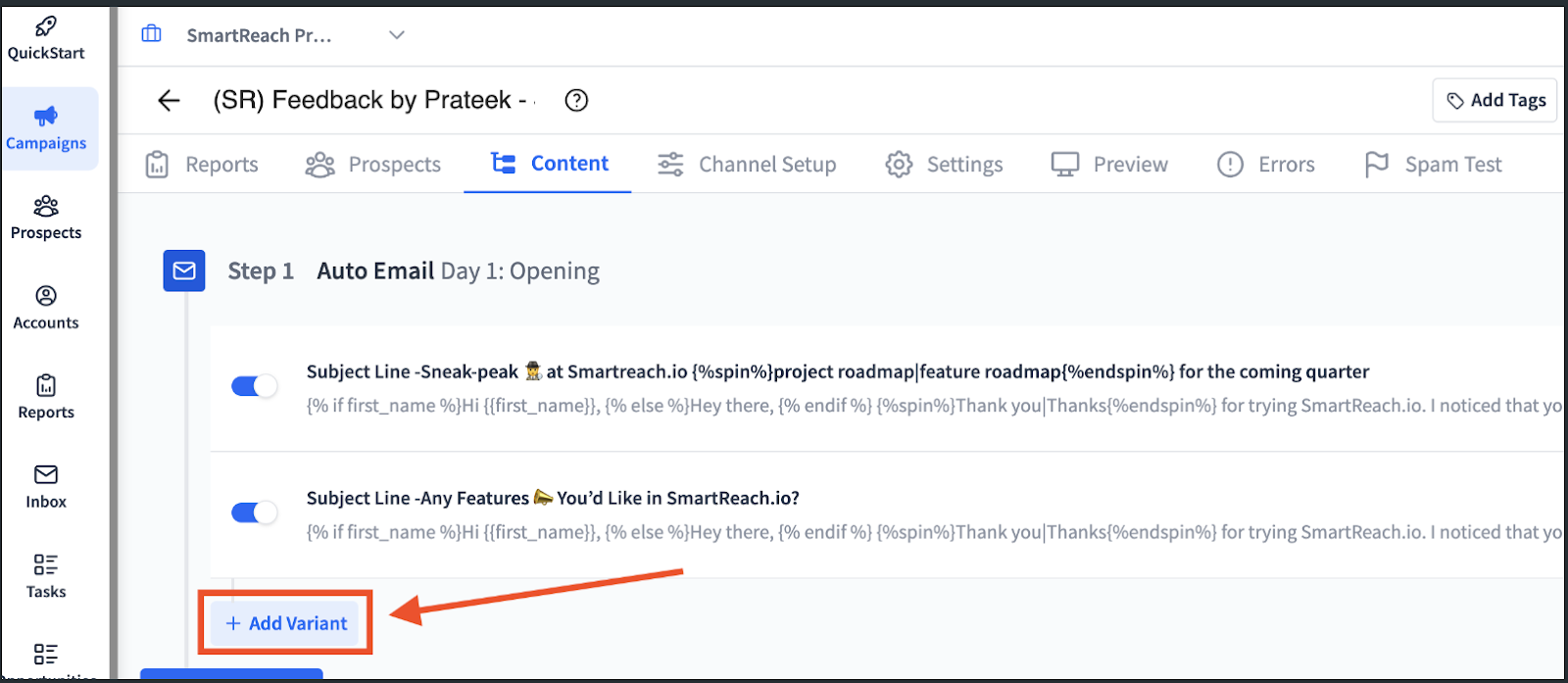
Make sure to track their results to see which email copy is working and take your decision accordingly.
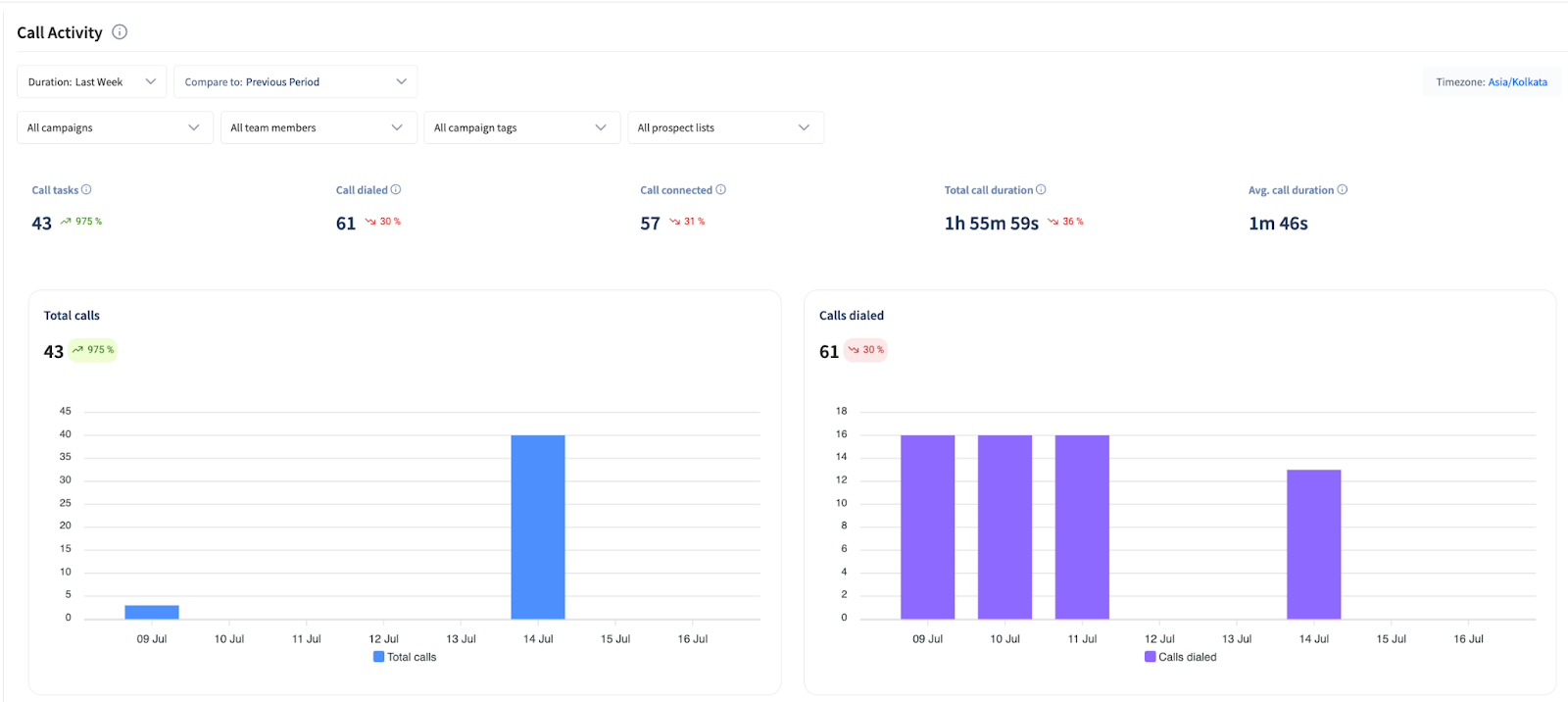
For tracking your calling outreach, use the call activity report. You’ll get an overview of the total calls made, calls connected, total call duration, average call duration.
Remember, the key to successful optimization is continuous iteration, regularly review your campaign performance, gather insights from healthcare reviews, and implement improvements to stay ahead in the competitive healthcare market.
Taking advantage of healthcare reviews and reputation management can enhance trust and credibility.
So, finally this is how you can set-up an automated multichannel cold outreach campaign for effective healthcare lead generation.
Now that you have the full playbook, here’s how to put it into action:
- Start by defining your ICP and buyer personas with as much specificity as possible
- Build a verified prospect list using a lead finder tool or LinkedIn prospecting
- Set up multichannel campaigns that combine email, LinkedIn, calling, and messaging
- Manage all your responses from a centralized inbox so nothing falls through the cracks
- Track performance, run A/B tests, and improve your process every week
SmartReach.io gives you everything you need to run this process, prospecting, email validation, multichannel outreach, response management, analytics, and CRM integrations, all under one platform.
Plans start at $29 per month. Try SmartReach.io free for 14 days (no credit card required) to see how it fits your healthcare lead generation process.
If you have questions about the platform or want help setting up your first campaign, book a free consulting call.
So, how are healthcare companies closing more clients
Effective healthcare lead generation requires strategic implementation, patience and continuous improvement.
Focus on creating a tailored mix of outbound channels that resonates with your specific audience, whether it’s patients, referral sources, or partnering organisations.
Start small, perhaps with LinkedIn outreach and targeted emails, then expand based on performance data.
Set clear, measurable goals like “increase qualified leads by 20% in 3 months” and adjust tactics weekly based on engagement metrics.
Lastly, always prioritize compliance with healthcare regulations in your outreach efforts.
By taking these practical steps, you’ll build a healthcare lead generation system that delivers tangible, sustainable growth for your business.
FAQs
Q: What is healthcare lead generation?
A: Healthcare lead generation is the process of identifying and attracting potential B2B buyers, such as hospitals, clinics, and health systems, who may need your products or services. It typically involves outbound methods like cold email, LinkedIn outreach, and phone calls to reach decision-makers.
Q: How do you generate leads in the healthcare industry?
A: You generate healthcare leads by defining your ideal customer profile, building a targeted prospect list with verified contact data, and running multichannel outreach campaigns across email, LinkedIn, and phone. Personalizing messages for each stakeholder role improves response rates significantly.
Q: What is the best channel for healthcare lead generation?
A: Cold email combined with LinkedIn outreach tends to perform best for B2B healthcare lead generation. Email allows scalable, personalized messaging, while LinkedIn helps build trust with decision-makers. Phone calls work well as a follow-up after initial digital engagement.
Q: Why is lead generation difficult in healthcare?
A: Healthcare lead generation is challenging due to long sales cycles (6-18 months), complex buying committees with multiple stakeholders, strict HIPAA compliance requirements, and a highly competitive market where decision-makers are difficult to reach through traditional advertising.
Q: How long is the average healthcare sales cycle?
A: The average B2B healthcare sales cycle ranges from 6 to 18 months, depending on the product complexity, deal size, and number of stakeholders involved. Enterprise deals with hospital systems often take even longer due to procurement and compliance review processes.
Q: What is a multichannel outreach campaign for healthcare?
A: A multichannel outreach campaign uses multiple communication channels, email, LinkedIn, phone calls, WhatsApp, and SMS – in a coordinated sequence to reach healthcare prospects. This approach increases touchpoints and improves the chances of getting a response from busy decision-makers.