
Lead Generation
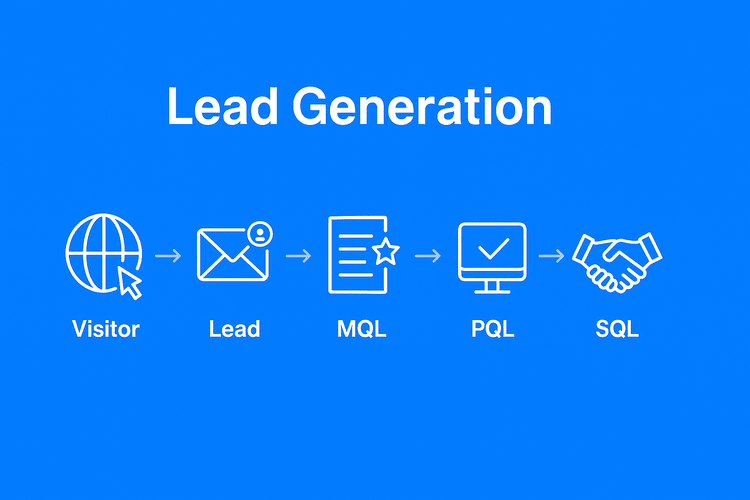
Lead generation is the process of attracting and converting potential customers (prospects) into leads by capturing their interest in your product or service. It involves using marketing tactics to identify prospects, engage them with valuable content, and collect their contact information for follow-up and nurturing.
For B2B companies, lead generation is critical because high-value products rarely sell through direct website purchases. Instead, businesses use lead generation to build relationships, educate prospects, and guide them through the sales funnel until they become sales-qualified leads ready for purchase conversations.
Is your lead generation contributing over 9% of your gross revenue? If not, you’re leaving money on the table. According to statistics, 78% of marketers predict an increase in their demand-generation budget, recognizing lead generation as the power source for sustainable business growth.
If you’re tired of chasing leads that barely convert into customers and wondering how to attract qualified leads that drive your business forward, this comprehensive guide will show you exactly how.
What is Lead Generation?
Lead generation is the process of identifying, attracting, and engaging prospects who have shown interest in your product or service, then converting them into leads by capturing their contact information. A lead is anyone who voluntarily provides their details, such as email, phone number, or LinkedIn profile, indicating they want to learn more about your offering.
This process involves various tactics: creating valuable content (blogs, ebooks, webinars), running targeted ads, optimizing your website for search engines, hosting events, and using social media. The goal is to grab attention, provide value, and motivate prospects to share their information in exchange for something useful.
Once you have their contact details, you can nurture these leads through personalized communication until they become sales-qualified leads ready to purchase.
For B2B companies selling high-value products or services, lead generation serves as a critical bridge. Since web visitors rarely make immediate purchases, lead generation enables businesses to guide and educate potential customers through personalized interactions before engaging them in sales conversations.
What is a Lead?
A lead is someone who has shown interest in your product or service by taking a specific action, whether that’s visiting your website, filling out a form, downloading an ebook, following your social media page, or signing up for a webinar.
Essentially, a lead is a potential customer who has voluntarily provided their contact information and given you permission to follow up.
For example, if someone from your target market downloads a guide on sales automation and signs up for your newsletter, they’re signaling interest in learning more. They’ve shared their contact details, indicating they’re open to further communication. This person is now a lead for your company.
Your job is to nurture this lead through personalized engagement and valuable content until they become a sales-qualified lead ready to make a purchasing decision.
Types of Leads
Leads play a crucial role in the journey from website visitors into loyal customers. However, not all leads are identical.
Leads can be categorized based on,
- Level of engagement and their readiness to buy
- Qualification and their stage in the sales funnel
Let’s understand each category of leads.
Leads Based on Engagement
Cold Lead: A cold lead is a prospective customer who has not expressed any interest in your product and may not even be aware of your company’s existence. Cold leads sit at the top of the sales funnel and require significant nurturing and education before they’re ready to consider a purchase.
Warm Lead: Warm leads have shown some interest by engaging with your content, such as reading blog posts, downloading resources, or signing up for updates. They’re not yet ready to buy but are definitely curious about what you offer and warming up to your solution.
Hot Lead: Hot leads have demonstrated clear buying intent. They’ve visited your website, requested a demo, inquired about pricing, or asked specific questions about implementation. These leads show strong interest and readiness to make a purchasing decision soon.
Leads Based on Qualification
Marketing Qualified Leads (MQL)
Marketing Qualified Leads (MQLs) are prospects who have engaged with your marketing efforts and shown interest in your product, making them more likely to become customers than other leads. They’re identified by actions like visiting your website, downloading guides, subscribing to newsletters, or engaging with your content.
MQLs are curious about what you offer but may still be in the research phase, comparing options without an immediate plan to purchase. They need further nurturing before they’re ready for sales conversations.
Product Qualified Lead (PQL)
Product Qualified Leads (PQLs) have experienced your product firsthand through a free trial, freemium version, or product demo.
They’re further along in the buyer’s journey because they’ve tested the value of your offering and taken actions indicating interest in becoming paying customers, such as using key features, requesting additional functionality, or asking about pricing tiers.
PQLs are identified by measurable product engagement, making them more likely to convert than MQLs since they’ve already experienced the product’s value.
Sales Qualified Lead (SQL)
A Sales Qualified Lead (SQL) is a prospect who has been thoroughly researched, vetted, and approved by the sales team as ready for direct sales engagement. SQLs demonstrate clear buying intent, understand the product or service, have the budget and authority to make purchasing decisions, and match the company’s ideal customer profile.
SQLs are recognized by their direct interactions with the sales team, their comprehension of how your solution addresses their needs, and their readiness to move forward with a purchase conversation.
MQL Vs. PQL Vs. SQL
This difference would give you a clear idea about the three types of leads.
| Criteria | MQL (Marketing Qualified Lead) | PQL (Product Qualified Lead) | SQL (Sales Qualified Lead) |
| Definition | Shows initial interest in the product/service through marketing efforts (e.g., downloads, subscriptions) | Shows interest after experiencing the product through a trial or free version(e.g free trial, engaging with feature) | Shows intent to buy, engaged directly with sales channels (e.g., demo requests, detailed product inquiries) |
| Stage in Buyer’s Journey | Early stage, exploring options | Mid-stage, experienced the product | Further down the funnel, closer to making a purchase |
| Interaction Type | Marketing interactions (e.g., website visits, content downloads) | Product usage or trial experience | Sales interactions (e.g., demo requests, direct inquiries) |
| Readiness to Buy | Shows interest but not fully ready to purchase | More likely to convert due to product experience | More inclined and likely to buy soon |
| Marketing/ Sales Handoff | Passed from marketing to sales for further nurturing | Passed from product/user experience to sales for conversion | In the hands of sales for closing the deal |
Now that we have understood the difference between a sales-qualified lead and the other types of leads. Let’s jump into the importance of lead generation.
Why is Lead Generation Important?
Effective lead generation is the difference between reactive selling and proactive growth. When prospects are genuinely interested in your offering, helping them buy feels natural; you’re solving their problem. But pushing products on uninterested prospects feels forced and damages your reputation.
That’s why quality lead generation matters: it helps you connect with people who actually need your solution, not waste time on those who don’t.
Some of the benefits of lead generation are:
- Increased sales opportunities which means more prospects and more chances to sell your product. Lead generation isn’t just about finding customers; it’s about creating more opportunities to make sales and grow your business.
- Targeted marketing is like knowing what your prospects love and showing them exactly what they want. Instead of trying to talk to everyone, you get to target only a specific group of people, where the chance of conversion is higher.
- Building relationships is when you turn a prospect into a long-lasting friend for your business. When you get to know potential customers through lead generation, it’s like laying the foundation for long-lasting relationships
- Cost efficiency means showcasing your product in front of your target audience without spending a fortune. It’s a smart move that makes every bit of effort count, giving you more bang for your buck.
- Enhanced Brand Awareness is when your prospects get to know your brand, what you offer, and why it’s the right fit for them. This bigger brand presence means more chances for future connections and recommendations.
- Improve your sales team efficiency and productivity by providing a sales pipeline full of leads that are ready to close. With lead generation your reps can put their energy into closing those deals and building rapport with potential customers.
- Strengthen your brand’s reputation and credibility by consistently pulling in new sales-qualified leads. When you’ve got that consistency going, you are the cool kid on the block. It’s that extra oomph that makes you super appealing to not just customers, but also potential partners who want to join your winning team!
- Provides a competitive advantage. Lead generation is a big competitive game where everyone’s trying to stay ahead. By keeping that steady flow of high-quality leads and nurturing them, you’re not just keeping up, but also leading the pack.
- Drives Innovation and Market Adaptability. Lead generation helps businesses to get new product or feature ideas based on your customers’ needs & requirements. With such info and recommendations at your fingertips, you are not just keeping up with the trends, you are setting them.
What is the Lead Generation Process?
Lead generation isn’t just about collecting contact information, it’s a strategic process of nurturing relationships, building trust, and converting prospects into loyal customers.
It combines marketing and sales tactics, with each step carefully designed to guide potential customers through your sales funnel.
The lead generation process typically involves these six key steps:
Step 1: Define the Target Audience
This is where you get to know your ideal customer inside out. You get an understanding of who they are, what they like, what is their pain point, what they love buying, etc.
Armed with this info, your marketing transforms into a personalized conversation that strikes the right chords with your ICP. It’s like sending out an invitation they can’t resist saying “yes” to!
Step 2: Identify Lead Generation Channels
When it comes to finding potential customers, you have numerous options. You can use content marketing by publishing valuable content like blogs, newsletters, and ebooks. Prospects willingly share their contact details in exchange for useful resources.
Social media platforms allow you to share engaging posts, reels, and ads. Search engine optimization (SEO) is fundamental, your website speaks the same language as search engines, helping them recommend your content to people searching for what you offer.
Step 3: Create compelling lead magnets
Lead magnets are valuable resources your company offers in exchange for a prospect’s email or LinkedIn profile. Lead magnets can take many forms: free ebooks, whitepapers, webinars, masterclasses, templates, or toolkits.
Discounts and coupons are universally appealing. Offering them can motivate prospects to think, “I should check this out.”
Free trials or consultations provide hands-on experience, allowing prospects to test your product or service firsthand before making a commitment.
Step 4: Capture Lead Data
You need to have SEO-optimized landing pages with clear call-to-action buttons or forms. When your prospects click on these, they have to enter their contact details like email, LinkedIn profile or phone number.
Once you have found a way to grab people’s attention and got something awesome to offer them, the next is to get in touch with them.
Step 5: Nurture & Qualify Leads
Once you have contact details, maintain ongoing communication with your leads. Send them valuable resources like helpful tips, relevant case studies, or special offers tailored specifically to them. Personalize your emails or LinkedIn messages so prospects feel you’re speaking directly to their needs.
This nurturing process builds trust and understanding while helping you identify which leads are most qualified and ready for sales conversations.
You can automate the entire lead nurturing process using a sales engagement platform like SmartReach.io. Tools like SmartReach.io enable you to create multichannel outreach sequences using email, LinkedIn, WhatsApp, calls, and messages.
Multichannel sales engagement helps you reach a wider audience, increase engagement rates, build stronger relationships, and boost conversions.
Step 6: Measure and optimize
The last step of the lead generation process is to keep a close eye on the entire process and check how your prospects are responding. If any rectification is needed for the process.
You have to keep a check. on how many potential customers are coming in, how many of them are turning into actual customers, and how much it costs to get each new customer. By doing this, you can figure out what’s working super well and what might need a little tweak.
With these insights, you can make your strategies even better.
How to Qualify a Lead after Lead Generation?
Lead qualification determines which prospects are most likely to convert into paying customers, allowing you to focus your efforts strategically.
By taking time to thoroughly evaluate leads, you identify those with the highest purchase intent and can allocate resources accordingly, dramatically improving your chances of hitting sales targets.
Here’s how to effectively qualify leads:
Set well-defined lead qualification criteria.
You need to set some ground rules while defining your ideal customer. Start by jotting down what your perfect customer looks like.
Think about the industries they’re in, their job titles, how big their company is, what kind of budget they’re working with, and who holds the decision-making power.
Gather data on leads.
You can start digging for info on each lead. Check out their company website, scroll through their social media profiles, and peek into industry news about them.
Don’t forget to check if you had any past conversations with them. The more you know about their needs, challenges, and how they make decisions, the better you can swoop in with the perfect solution.
Ask the right Questions to qualify.
It’s time to chat with your prospects. Ask them questions that really get them talking – things like what keeps them up at night, what they’re dreaming of achieving, and where they feel the pinch in their day-to-day.
Open-ended questions will help you figure out if your prospects are your perfect match or not.
Access lead fitment or suitability.
Take a good look at your leads and see how well they fit with your ideal customer profile.
Check out their stats – things like who they are, what industry they’re in, how deep their pockets go, and whether they’re the ones calling the shots.
Consider all the information you had gathered during your interaction with them.
Lead Scoring.
Here each of your leads gets a score based on how well they match up with what you’re looking for. We have described the lead scoring in depth, in the below section
Lead prioritization.
Now it’s time to pick your front-runners. Now you use the top scorer leads and focus your energy on those high scorers.
By showering them with attention, you are nurturing the ones most likely to turn into your next loyal customers.
Regularly update evaluation criteria.
As your business grows and the market changes, take a moment to revisit your criteria. As your business grows and the market does its thing, take a moment to revisit your criteria.
Get into the details of your sales data. Adapting to what’s happening around you keeps your lead qualifications sharp and totally in sync with where your business is heading.
Leverage Technology.
Get your hands on some lead qualification software or CRM tools that would make your life easier. You can use these tools for sorting, organizing, and understanding all that lead data.
They do the heavy lifting, so you can make those smart qualification calls faster than a snap.
Align Sales and Marketing.
Get along with your marketing team and make sure you are on the same page. Share those lead qualification criteria and processes, like swapping notes with your teammates.
When sales and marketing collaborate, time doesn’t get wasted on leads that don’t fit the bill.
Nurture Unqualified Leads.
Some of your leads might not be all suited up and ready to buy just yet, but hey, they’ve got potential.
Nurture them with top-notch content and those personalized touches that make them feel special.
It’s like guiding them step by step through your sales journey until they’re all set to make that buying move.
Measure and Optimize.
Keep an eye on how well your lead qualification is performing. Look at things like how many leads actually turn into customers, how long it takes for them to make that leap, and how much they stick around once they’re on board.
Then you can make a decision on where a tweak is needed.
Remember, effective lead qualification is an ongoing process that requires continuous refinement and adaptation to ensure you are investing your time and resources in the leads that matter most.
Lead Scoring
Lead scoring is a methodology that assigns point values to leads based on their interactions with your brand, helping you identify and prioritize the most promising prospects. This systematic approach ensures your sales team focuses on leads most likely to convert.
You need first to define the criteria based on which you will be keeping track of. This can include website visits, email opens, content downloads, or specific interactions with your sales team.
Then you can assign points to each criterion based on its significance. For instance, a webinar signup might be worth more points than a general website visit.
You should also decide on the score threshold that qualifies a lead for further engagement. Leads surpassing this score are considered ‘hot’ or ‘sales-ready.’
You should keep track of lead interactions and add up the points as they engage with your content, respond to emails, or interact with your sales team.
You should regularly review and refine your scoring criteria based on how well these scores predict actual conversions.
When a lead reaches the predetermined score threshold, it’s time to pass them on to the sales team for direct engagement.
How does Lead Generation Work?
You can start lead generation by understanding your ideal customers and then offer something tempting to grab their attention. Using different strategies, you can get their information. Let’s understand those strategies.
Lead generation strategies in digital marketing
Lead generation via digital marketing is the means to attract potential customers through online channels such as websites, social media, and online advertising.
There are various strategies which include sales engagement outreach, email marketing, blogging, web page optimization, mobile traffic optimization, Google Ads, personalized content, social media marketing, giveaways, marketing partnerships, cold outreach, content marketing, search engine optimization (SEO), and A/B testing.
If you are interested in getting an in-depth understanding on each process, do check our blog on lead generation strategies in digital marketing
B2B Lead Generation Strategies
B2B lead generation strategies explore methods like sending emails to people who might be interested, using social media like LinkedIn to connect with them, and even making phone calls. You can also use newer methods like reaching out through WhatsApp and text messages.
You should also emphasize the importance of personalization, valuable content, and tapping into emerging trends like video outreach and referral programs.
If you are interested in building a robust pipeline of sales-qualified leads, then check out our blog on B2B lead generation strategies for sales teams.
Remember: for effective lead generation, quality matters more than quantity. High-quality leads are significantly more likely to purchase and progress through your sales process to become sales-qualified leads.
Identify which leads are highest quality, then nurture them consistently with useful resources and relationship-building. These quality leads represent your future customers and revenue growth.
FAQs – Lead generation
What is lead generation in simple terms?
Lead generation is the process of attracting potential customers and capturing their contact information to nurture them into sales opportunities. It involves using marketing tactics like content creation, social media, and SEO to identify interested prospects, collect their details, and guide them toward becoming paying customers.
What are the main types of leads?
Leads are categorized by engagement (cold, warm, hot) and qualification level (MQL, PQL, SQL). Cold leads show no interest, warm leads engage with content, and hot leads demonstrate buying intent. Marketing Qualified Leads show initial interest, Product Qualified Leads have tried your product, and Sales Qualified Leads are ready to purchase.
How do you qualify a lead?
Lead qualification involves evaluating prospects against specific criteria: their level of interest, budget, decision-making authority, needs alignment with your solution, and purchase timeline (BANT framework). Use lead scoring to assign points based on demographic fit and behavioral engagement, then prioritize high-scoring leads for sales follow-up to maximize conversion efficiency.
What is the difference between MQL and SQL?
Marketing Qualified Leads (MQL) have engaged with marketing content and show initial interest but aren’t ready to buy. Sales Qualified Leads (SQL) have been vetted by sales, demonstrate clear buying intent, have budget and authority, and are ready for direct sales conversations. SQLs are further along the buyer’s journey than MQLs.
What are the best lead generation channels?
Top lead generation channels include website/blog with SEO optimization, content marketing (ebooks, webinars), email marketing campaigns, social media platforms (especially LinkedIn for B2B), paid advertising (Google Ads, social ads), events and webinars, referral programs, and sales outreach. The most effective channels depend on your target audience and industry.
How do you measure lead generation success?
Measure lead generation success by tracking metrics including: number of leads generated, lead conversion rates (visitor-to-lead, MQL-to-SQL, SQL-to-customer), cost per lead, lead quality scores, source/channel performance, time to conversion, and revenue generated from leads. Use analytics tools to monitor these KPIs and optimize your strategy based on data insights.
What is lead scoring and why is it important?
Lead scoring assigns point values to leads based on demographic fit and behavioral engagement (website visits, email opens, content downloads). It helps sales teams prioritize high-potential prospects, improve conversion efficiency, and focus resources on leads most likely to purchase, ultimately shortening sales cycles and increasing revenue per lead.
How long does the lead generation process take?
The lead generation timeline varies significantly based on sales cycle complexity, industry, and lead source. Simple B2C products may generate leads in days, while complex B2B solutions can take weeks or months. From initial contact to becoming a sales-qualified lead, B2B prospects typically require 3-6 months of consistent nurturing and engagement.