Product-Led Growth Marketing: 6 Strategies for SaaS

All marketers eventually reach the same frustrating wall.
You spend hours on campaigns, streamline every advertisement, refine targeting, and still lose qualified leads as the product experience does not do enough of the heavy lifting. Potential customers desire evidence rather than assurances.
They desire simplicity, not complexity. They desire value, not blurred positioning. And as expectations grow, traditional marketing rarely builds the momentum brands often need.
This is where Product-Led Growth (PLG) transforms the whole landscape. Rather than using persuasion, product-led growth marketing converts your product into an engine that attracts, activates, and transforms users.
What is product-led growth marketing?
Product-led growth marketing is a SaaS strategy where your product itself drives customer acquisition, activation, and expansion rather than traditional sales-led tactics. Users experience value through free trials, freemium models, or self-serve onboarding before committing, reducing customer acquisition costs while accelerating growth.
This article deconstructs how to support that model with practical and connected strategies that provide a seamless experience from initial touch to adoption.
How to strengthen user acquisition with product-led entry points
The first step in product-led growth strategy is providing the user with instant access to the value your product offers. Although channels such as content, paid campaigns, and link building for SAAS remain significant, their role changes.
Instead of persuading the users to believe in your solution, your task is to open the door so they can experience it themselves.
Start by restricting your points of entry. Free trials, freemium models, and self-serve onboarding minimize friction and accelerate the movement a user interacts with value.
Furthermore, create messages that lead prospects directly to in-app experiences, instead of lengthy marketing funnels. As you refine these entry points, ensure each touch moves the user towards action, not information overload.
Additionally, position actual issues that your product addresses on the landing page and present the exact features users will explore after registering. This congruency between expectation and experience is the source of PLG momentum.
Freemium vs. Free Trial Entry Points: The choice between freemium and free trial models significantly impacts your product-led growth marketing success. Freemium works best when your core value proposition is immediately obvious and usage naturally expands over time, think Slack or Notion.
Free trials suit products with deeper functionality that requires time to demonstrate ROI, typically converting at 15-25% compared to freemium’s 2-5%. Consider your product complexity, sales cycle length, and target customer segment when choosing your entry strategy.
In-app messaging strategies to guide and convert users

Users require guidance once they enter your product. Even the most self-evident tools benefit from conceptual, personalized directions. This is where in-app messaging becomes a fundamental PLG marketing feature.
Begin with onboarding flows that introduce minimal steps needed to achieve initial value. Avoid overwhelming users, and instead provide gradual assistance with the help of tooltips, checklists, and contextual hints. Moreover, segment messaging based on behavior. Users who get stuck on setup require a different prompt compared to users exploring advanced features.
As users continue interacting with the platform, automate milestone-based messages that can motivate them to use the platform extensively. This creates a narrative within your product where each interaction pushes the user towards their next breakthrough.
When done regularly, in-app messaging reduces time-to-value and increases feature discovery without relying on external campaigns.
While in-app messaging handles inside-the-product guidance, your product-led growth strategy needs to coordinate with outside-the-product touchpoints. When users disengage from your app, automated email sequences can trigger re-engagement based on inactivity patterns, bringing them back before churn occurs.
For instance, if a user explores your pricing page but doesn’t upgrade, you can automatically send a case study showcasing ROI within 48 hours, recovering 15-25% of at-risk conversions.
Build user activation campaigns that trigger fast wins
Activation is the critical point in product-led growth marketing, the movement users understand the importance of your product. To accelerate this happening, create campaigns aimed at providing fast, meaningful wins.
Begin by determining the most important actions that are the pointers of early success. These actions become your activation markers, and your campaigns should guide users toward them.
Lifecycle emails are critical here, tools like SmartReach.io automate behavior-triggered sequences that nudge users when they stall. For example, if a user completes onboarding but doesn’t send their first campaign, SmartReach can trigger a micro-video tutorial within 24 hours, reducing drop-off by up to 40%.
Employ lifecycle emails, micro-videos, and in-app tasks to display the fastest way to results. Moreover, include personalization throughout the activation process. SmartReach’s dynamic email variables let you customize messages by industry, role, or past action, creating relevance that enhances completion rates. As users advance, continually remove friction and provide smart prompts that keep them moving.
These campaigns transform marketing from awareness creation to experience shaping, which is the key to PLG success. Track your activation rate closely; if users don’t reach their “aha moment” within the first 3-7 days, no amount of downstream marketing will fix retention issues.

Product-led growth thrives when your product naturally motivates users to spread the word. Viral loops increase growth without requiring increases in marketing spend, making them one of the strongest elements of a product-led strategy.
Start by defining where sharing makes sense within your product. It is not just about referral links. It is about movements where users invite other team members, collaborate, or share work created within your platform. These organic touchpoints become engines of growth.
Step 1: Identify Natural Sharing Moments – Map your user workflow to find where collaboration or sharing adds value. Shared dashboards, project invites, and workflow approvals work better than generic “invite a friend” buttons.
Step 2: Remove Friction from Invitations – Make sharing one-click simple. Pre-populate invitation messages with context about what the invitee will see or access.
Step 3: Build Value for Both Parties – The best viral loops occur when the user experience is enhanced by sharing. Shared dashboards, collaboration invites, and workflow approvals generate viral lift without feeling like a marketing push.
Step 4: Measure Your Viral Coefficient – Track your K-factor (average number of new users each existing user brings). A K-factor above 1.0 means exponential growth; below 1.0 means you need paid acquisition to supplement organic growth.
Additionally, refine incentives. Although rewards are helpful, focus on making the product more valuable when used collaboratively rather than relying solely on referral bonuses.
Balancing product-led growth with traditional marketing
Product-led growth marketing does not replace traditional marketing, it enhances it. It is important to know how the two methods complement one another. Traditional marketing creates awareness and credibility, whereas PLG increases evidence through hands-on experience.
To strike the right balance, map your user experience and determine where marketing can add clarity that the product alone can not provide.
Thought leadership demystifies the problem space. Paid campaigns expand reach. Case studies provide social evidence. And SEO guarantees consistent discovery.
Meanwhile, your product demonstrates value, educates users through interaction, and drives expansion internally. When these two engines combine, you create an integrated ecosystem where messaging outside the product aligns with the experience inside it.
Product-led growth vs. Sales-led growth
| Aspect | Product-Led Growth | Sales-Led Growth |
| Acquisition Channel | Self-serve trials, freemium | Outbound sales, demos |
| Customer Journey | User-driven exploration | Sales-guided evaluation |
| Time to Value | Minutes to hours | Days to weeks |
| Best For | Low-touch SaaS, quick wins | Complex enterprise tools |
| Typical CAC | $50-$200 | $500-$2,000+ |
| Sales Cycle | Days to weeks | Weeks to months |
| Scalability | High (product scales) | Medium (headcount scales) |
| Examples | Canva, Slack, Notion | Salesforce, SAP |
The Hybrid Approach: Most successful SaaS companies blend both models. Use product-led growth for SMB acquisition and self-serve expansion, while layering sales support for enterprise accounts requiring custom onboarding, security reviews, and contract negotiations.
Moreover, work in cooperation with product teams. Marketing should be aware of feature releases, user behavior data, and friction points. This alignment ensures that messaging, campaigns, and content support the value that the users discover when interacting with the product.
Product-led growth metrics: Track experience, not just traffic
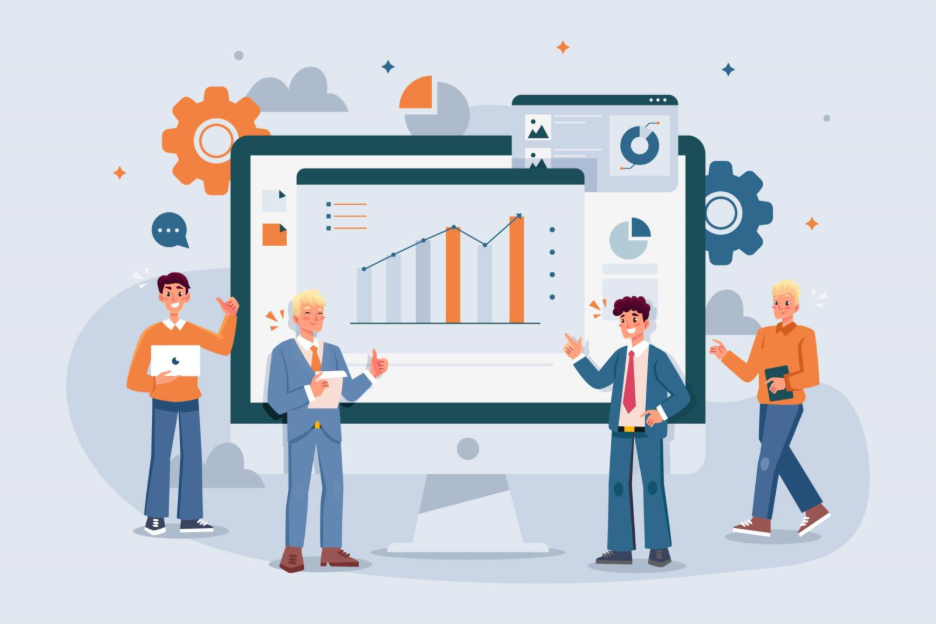
The success of product-led growth marketing depends on the ability to understand how users move through the product, rather than how many arrive at your website. This change requires a measurement system that is based on behavioral cues and experience measures.
Start by identifying the key PLG metrics, including:
- Activation Rate – Percentage of users completing core actions that signal product value
- Product-Qualified Leads (product-qualified leads (PQLs) – Users showing high engagement signals indicating purchase readiness
- Feature Adoption – Percentage of users engaging with key features
- Time-to-Value (TTV) – How quickly users reach their first meaningful outcome
- Retention Rate – Percentage of users returning over time (cohort-based)
- Net Revenue Retention (NRR) – Revenue expansion from existing customers through upsells and expansion
These indicators reveal whether your product is strong enough to sustain growth internally.
Then implement tools that monitor user behavior in detail. Heatmaps, session recordings, funnel tracking, and cohort analysis provide insight into the areas where users struggle or thrive. These insights allow quick experimentation and optimization across onboarding, in-app messaging, and viral loops.
Additionally, connect your product analytics with your email automation stack. When you integrate tools like SmartReach.io with your CRM, you can trigger campaigns based on in-product behavior, such as sending educational content when users hit feature adoption milestones, or escalating to sales when PQLs reach threshold scores.
This closed-loop system ensures every user action has a corresponding marketing response, turning your PLG engine into a self-optimizing machine.
Share these insights across teams. Product-led growth marketing is a cross-functional model, and every improvement in the product experience multiplies your marketing impact. When measurement focuses on experience, rather than vanity metrics, your entire organization becomes aligned around delivering value.
Final thoughts
Product-led growth marketing has turned marketing from persuasion-based to experience-based marketing. When your product becomes the core of your strategy, every moment of interaction with a user becomes a chance to teach, convert, and induce loyalty.
By strengthening onboarding, helping users through activation, maximizing the viral loops, balancing conventional tactics, and quantifying what truly matters, you create a system where growth is a part of the product itself.
This shift not only changes the way you market, but it also changes the way you build, communicate, and deliver value.
Frequently asked questions about product-led growth marketing
What is product-led growth marketing?
Product-led growth (PLG) marketing is a strategy where your product itself drives customer acquisition, activation, and expansion rather than traditional sales-led tactics. Users experience value through free trials, freemium models, or self-serve onboarding before committing. For example, Slack’s viral loop grew users by 30% monthly because teams naturally invited colleagues. PLG reduces customer acquisition costs (CAC) by letting the product demonstrate value directly.
What is the difference between product-led growth and sales-led growth?
Product-led growth (PLG) uses the product as the primary acquisition channel, with users self-serving through trials or freemium tiers. Sales-led growth relies on outbound prospecting, demos, and sales teams to close deals. PLG works best for low-touch SaaS with quick time-to-value (e.g., Canva, Notion), while sales-led suits complex enterprise tools requiring customization. PLG typically has lower CAC ($50-200) versus sales-led ($500-2,000+).
How do you measure product-led growth success?
Key PLG metrics include activation rate (users completing core actions), product-qualified leads (PQLs showing high engagement), feature adoption, retention rate, and net revenue retention (NRR). Track time-to-value (TTV), how fast users experience your product’s benefit. For example, if 40% of trial users activate within 3 days and 20% convert to paid, your PLG funnel is healthy. Tools like Amplitude or Mixpanel track in-product behavior.
Viral loops occur when existing users invite new users as part of normal product usage, creating compounding growth. Examples include Dropbox’s referral program (extra storage for invites) or Zoom’s meeting links that expose non-users to the product. The viral coefficient (K-factor) measures this: if each user invites 1.5 others who sign up, you achieve exponential growth. Successful viral loops feel natural, not forced.
How long does it take to see results from product-led growth?
Early PLG traction appears within 3-6 months as freemium users activate and convert, but compounding growth takes 12-18 months. Unlike sales-led models with immediate pipeline visibility, PLG builds momentum gradually through viral loops and word-of-mouth. Benchmark: aim for 20-30% activation rate in month 1, 5-10% trial-to-paid conversion by month 3, and positive viral coefficient (K>1) by month 12.
What tools are best for product-led growth marketing?
Essential PLG tools include product analytics (Amplitude, Mixpanel, Heap) to track user behavior, in-app messaging platforms (Appcues, Pendo, Intercom) for onboarding, and customer data platforms (Segment) to unify data. Email automation tools like SmartReach handle lifecycle campaigns, while collaboration platforms (Miro, Figma) enable natural viral loops. PLG stacks also need experimentation tools (LaunchDarkly, Optimizely) for A/B testing onboarding flows.