Must Know Cold Email Statistics for Killer Outreach

Cold emails remain one of the most powerful tools for B2B sales outreach, but only when executed with precision. The days of generic, mass-blasted templates are over.
Today’s prospects have learned to filter out noise, which means your cold email strategy must be data-driven and meticulously crafted.
So, are cold emails still effective? Absolutely. However, success hinges on understanding the benchmarks that separate high-performing campaigns from those that land in spam folders.
From achievable response rates and optimal send times to the psychology behind subject lines and follow-up sequences, knowing industry standards can dramatically improve your results.
In this comprehensive guide, we’ll dive deep into the latest cold email statistics, backed by extensive research and real-world data, to help you benchmark your performance and optimize every element of your outreach strategy.
Whether you’re launching your first cold email campaign or refining an existing one, this guide provides actionable insights to cut through inbox clutter and drive meaningful conversations with prospects.
General cold email statistics
Understanding baseline cold email metrics is essential for evaluating your campaign performance. Let’s explore the most commonly measured statistics that define successful cold emailing in today’s landscape.
Key benchmark overview:
| Metric | Industry Average | Good Performance | Excellent Performance |
| Open Rate | 24% | 30%-40% | 45% |
| Response Rate | 8.5% | 12-15% | 20% |
| Click-Through Rate | 2.3% | 3-5% | 7% |
| Bounce Rate | 2-5% | <2% | <1% |
| Unsubscribe Rate | 0.17% | <0.3% | <0.1% |
These benchmarks vary based on industry, target audience, and email quality. B2B cold emails typically see higher engagement rates compared to B2C, as business professionals are more receptive to relevant outreach that addresses their pain points.
1. Open rates
Open rates are a crucial metric for cold emailing.
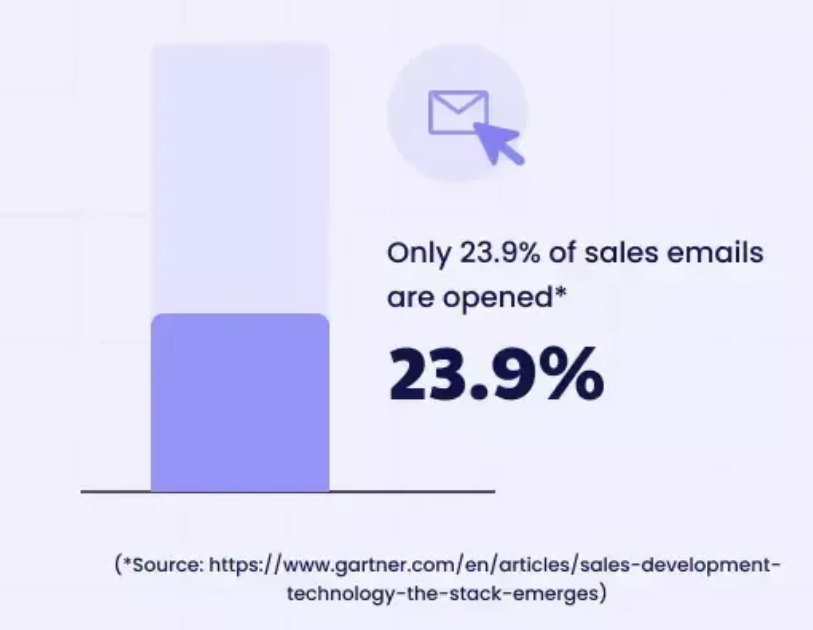
A high open rate indicates that your audience is actually engaging with your emails, which is a sign of a successful campaign. But what is the average open rate for cold emails?
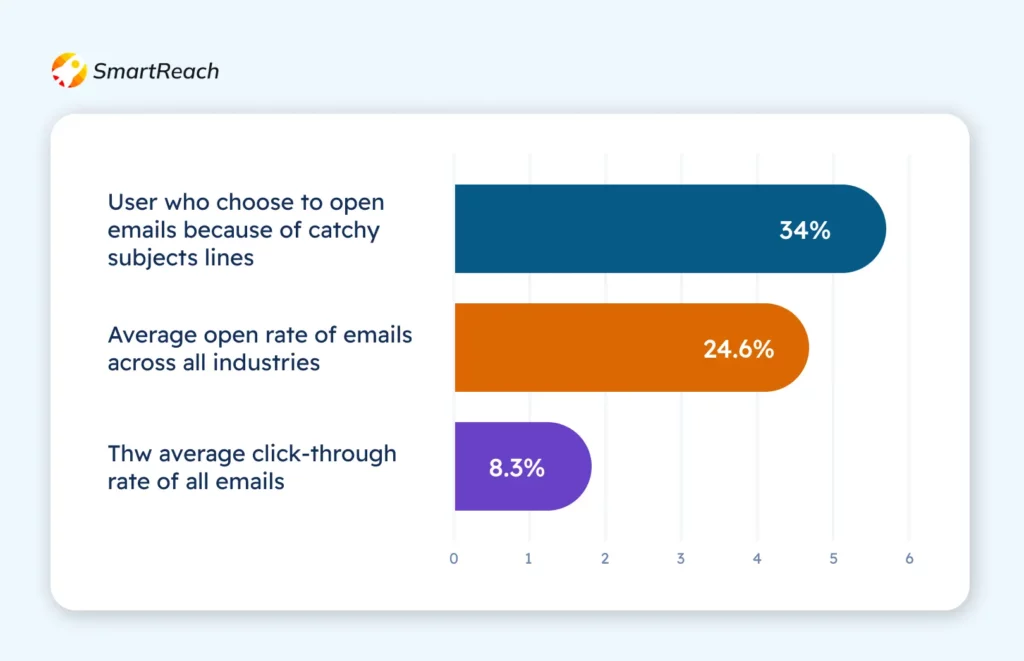
Typically, the average open rate for cold emails hovers around 24%.
Consider when people are most likely to check their inboxes. Sending your emails at the optimal time can significantly boost your open rates.
Dive into your data and analytics to pinpoint the best times to send your cold emails and enhance your campaign’s effectiveness.
Factors that typically impact email open rates are:
- Sender Name Recognition: Emails from recognizable names or companies see 15-25% higher open rates
- Subject Line Quality: Accounts for 33% of open rate decisions
- Send Time Optimization: Strategic timing can improve opens by 10-20%
- Email Deliverability: Proper authentication (SPF, DKIM, DMARC) ensures inbox placement
- Sender Reputation: Consistent sending patterns and low bounce rates build trust with email providers
- Mobile Optimization: 46% of emails are opened on mobile devices
| Industry | Average Open Rate | Notes |
| SaaS/Technology | 21-26% | Highly competitive inbox environment |
| Financial Services | 26-30% | Higher due to professional context |
| Healthcare | 22-25% | Varies by recipient type (providers vs. administrators) |
| Manufacturing | 24-28% | Less inbox competition |
| Marketing Agencies | 20-23% | Saturated market |
Pro Tip: Boosting your open rates
Consider when people are most likely to check their inboxes. Analyzing your campaign data helps pinpoint optimal send times for your specific audience.
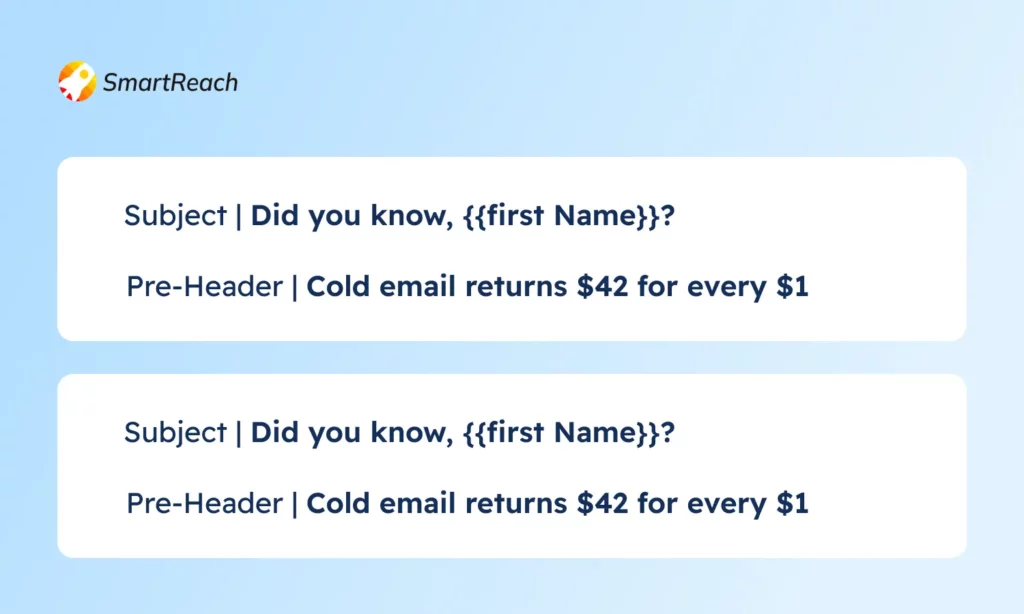
Emails with a preheader can boost open rates by 10%. Preheaders act as a sneak peek, providing context before recipients decide to open. Craft compelling preheaders that complement your subject line and create curiosity.
2. Response rate
While open rates indicate initial interest, response rates measure actual engagement, the metric that matters most for cold email ROI.
Average Cold Email Response Rate: 8.5%
This means only 8-9 out of every 100 cold emails receive a reply. Before you get discouraged, remember that success in cold emailing is a numbers game combined with strategic optimization.
Why Response Rates Matter More Than Opens:
- Opens show curiosity; responses show intent
- A 5% response rate can still generate significant pipeline if your outreach volume and targeting are optimized
- Response quality matters, not all replies are positive, but objections can provide valuable feedback
Response Rate Benchmarks by Campaign Type:
| Campaign Type | Average Response Rate | Notes |
| Highly Personalized (1:1) | 15-25% | Time-intensive but highest ROI |
| Semi-Personalized (Segmented) | 10-15% | Balanced approach |
| Template-Based | 3-8% | Volume play with lower conversion |
| Re-engagement Campaigns | 5-10% | Targeting previous non-responders |

Improving your response rates
Success hinges on strategy, timing, and experimentation. Sending one email per week for four weeks can boost response rates by 20% compared to a single email blast.
Think of it like nurturing seedsyou can’t expect instant results. Strategic persistence pays off.
Quick Response Times = Higher Interest
When prospects reply quickly (within 24-48 hours), it typically signals genuine interest. Prioritize these leads in your sales follow-up process.
3. Subject line stats
Subject lines play a crucial role in determining email open rates. They serve as the first impression of your email and can significantly influence whether recipients choose to open it.
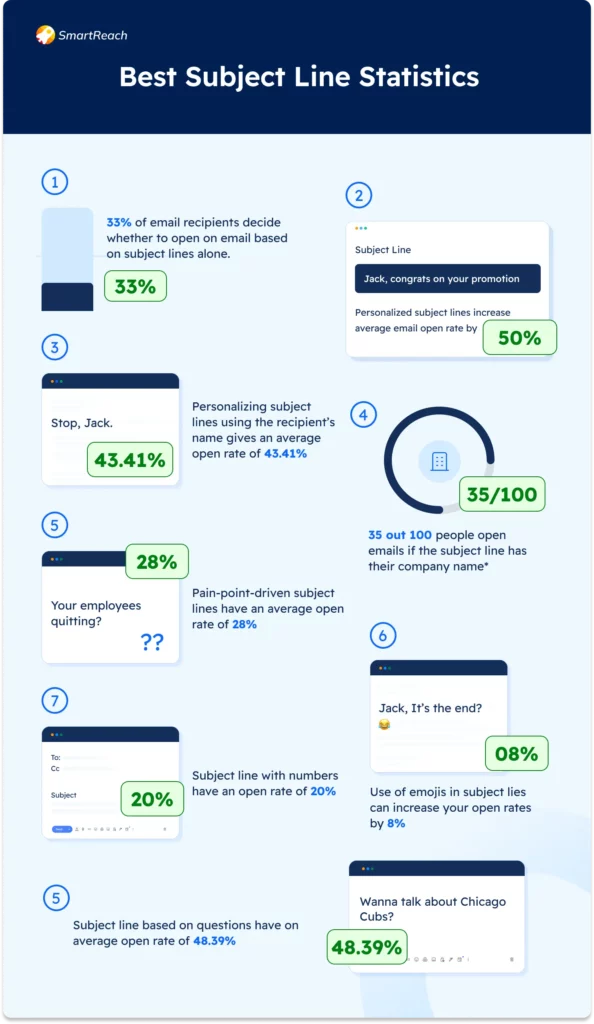
The Subject line impact:
33% of recipients decide to open emails based solely on the subject line. This single element can make or break your campaign before prospects even see your message.
Subject line best practices backed by data:
| Subject Line Type | Open Rate Impact | Example |
| Personalized (with name) | +26% increase | “{{FirstName}}, quick question about {{Company}}” |
| Question-Based | +10-15% increase | “Struggling with lead generation?” |
| Curiosity-Driven | +8-12% increase | “This might interest you…” |
| Urgency/Scarcity | +5-10% increase (use sparingly) | “Limited spots available” |
| Straightforward/Value | Baseline performance | “Increase your conversion rate by 40%” |
Personalized subject lines boost open rates by up to 26%. This means incorporating the recipient’s name, company, or specific pain points directly into the subject line.
Subject Line Length Guidelines:
- Optimal Length: 6-10 words or 40-60 characters
- Mobile Display: First 30-40 characters are visible on mobile
- Avoid Spam Triggers: ALL CAPS, excessive punctuation!!!, and words like “FREE” or “GUARANTEED”
What NOT to Do:
❌ Generic subject lines like “Quick question” or “Following up”
❌ Overly salesy language that triggers spam filters
❌ False urgency or misleading claims
❌ Using too many emojis (1 maximum, if any)
However, use personalization wisely. Over-personalizing (e.g., mentioning too many specific details) can feel creepy rather than thoughtful. Strike a balance between relevance and respect for privacy.
4. Follow-up stats
Sending the initial cold email is like knocking on a door; sometimes, there’s no immediate response. That’s when follow-up emails become essential.
Sending at least three follow-up emails can boost the response rate by 28%.
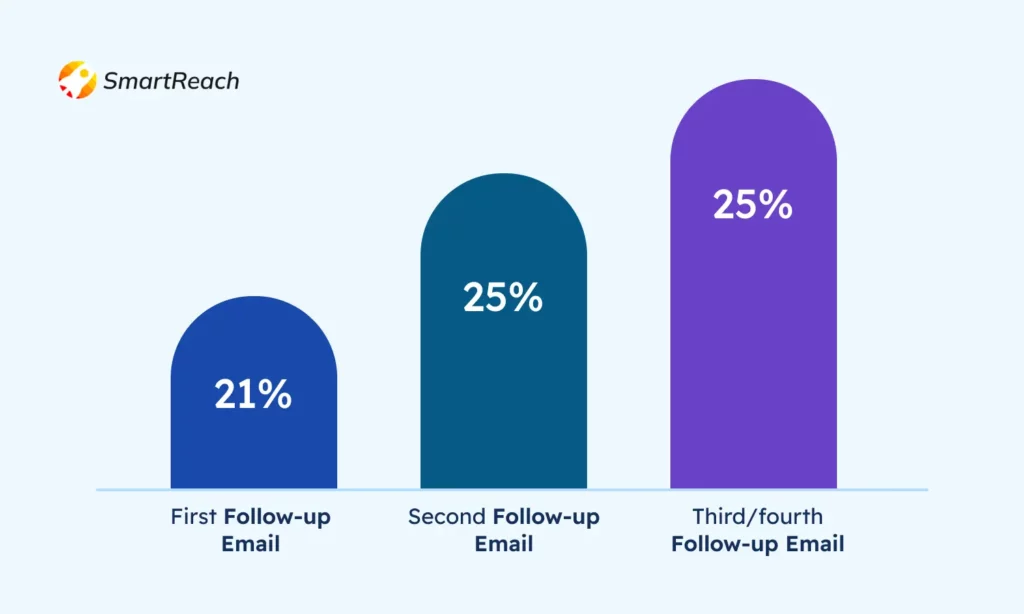
The Follow-Up Breakdown:
| Follow-Up Sequence | Response Rate Lift | Optimal Timing |
| First Follow-Up | +21% lift | 3 days after initial email |
| Second Follow-Up | +25% cumulative lift | 7 days after initial email |
| Third Follow-Up | +28% cumulative lift | 14 days after initial email |
| Fourth+ Follow-Ups | Diminishing returns | Use sparingly for high-value prospects |
Why Follow-Ups Work:
- Timing Matters: Your first email might arrive when a prospect is busy, on vacation, or dealing with competing priorities
- Persistence Signals Value: Multiple touchpoints demonstrate genuine interest in solving their problems
- Different Angles: Each follow-up can present new value propositions or insights
Strategic Follow-Up Timing:
The optimal cadence is every 3 days, then 7 days, then 14 days, which can achieve a 40% higher response rate compared to following up only once every seven days.
This escalating rhythm respects the prospect’s time while maintaining visibility.
Follow-up Email Content Strategies:
- First Follow-Up: Reference your initial email, add new value (case study, relevant article)
- Second Follow-Up: Change the angle, ask a different question or present an alternative value
- Third Follow-Up: The “breakup” email, politely acknowledge they may not be interested, leave the door open
- Bonus Fourth Follow-Up: Months later, with significant new information (product update, relevant industry news)
5. Best timing and date statistics
When you send your cold email can be just as important as what you write. Strategic timing capitalizes on recipient behavior patterns.
Optimal Send Times
Best Time to Send: 1 PM – 4 PM
According to Yesware research, this afternoon window aligns with post-lunch and mid-afternoon breaks when professionals check their inboxes between meetings or tasks.
Day-by-Day Performance Analysis:
| Day | Open Rate | Click-Through Rate | Best For |
| Monday | 22% | 2.35 | Fresh week energy, cleared inboxes |
| Tuesday | 21.8% | 2.4% (highest) | Peak productivity day |
| Wednesday | 21.8% | 2.3% | Mid-week focus |
| Thursday | 21.7% | 2.3% | Planning for week’s end |
| Friday | 21.6% | 2.2% | Winding down, lower urgency |
| Saturday | 18.5% | 1.8% | Avoid unless B2C |
| Sunday | 17.2% | 1.6% | Avoid unless B2C |
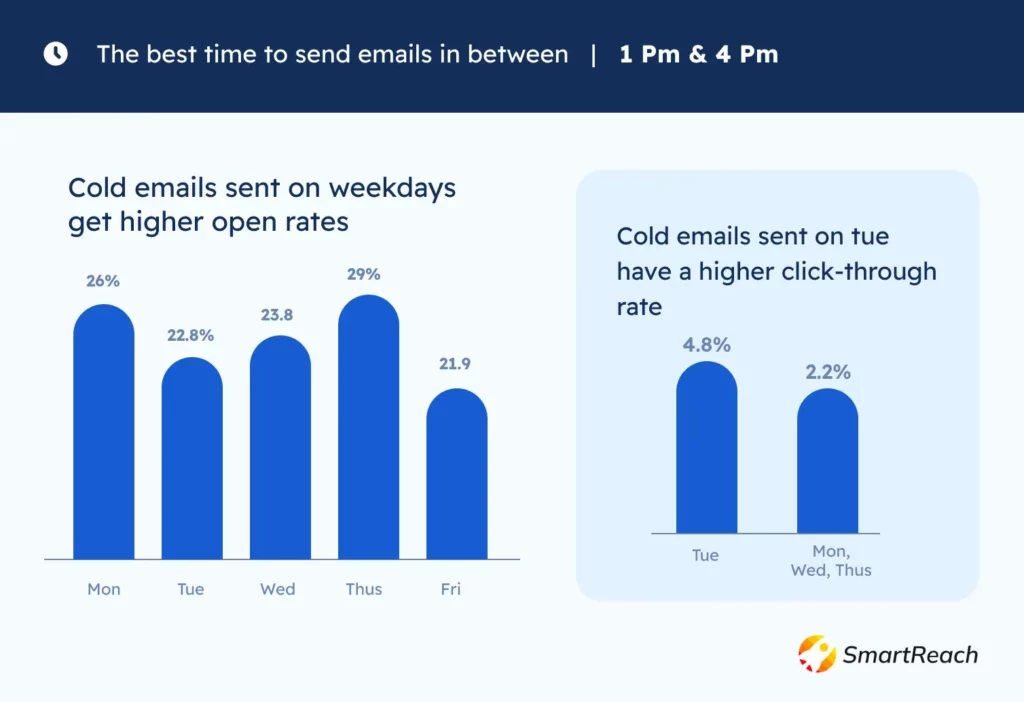
TAKEAWAY: Avoid sending cold emails on weekends. For optimal results, schedule them for Monday or Tuesday between 1 PM and 4 PM.
Time Zone Considerations:
When targeting prospects across multiple time zones:
- Schedule emails to arrive during the recipient’s local business hours
- Use email automation tools that support time zone detection
- For national campaigns, consider sending in batches (East Coast morning, West Coast afternoon)
6. Average unsubscribe rate
Your unsubscribe rate reflects how many recipients choose to opt-out of receiving further emails from you.
A high unsubscribe rate might indicate that your content isn’t resonating with your audience, or you may be targeting the wrong recipients. This suggests the need for adjustments in your messaging or audience selection.
On average, the unsubscribe rate is 0.17%.
This means that for every 1,000 emails sent, about 1 or 2 recipients, or 0.17%, will unsubscribe.
Understanding Unsubscribe Rates:
| Unsubscribe Rate | Status | Action Required |
| <0.2% | Excellent | Maintain current strategy |
| 0.2-0.5% | Good | Monitor trends, minor adjustments |
| 0.5-1.0% | Warning zone | Review targeting and messaging |
| 1.0% | Critical | Immediate strategy overhaul needed |
Why People Unsubscribe from Cold Emails:
- Irrelevant Targeting: Emailing prospects who don’t fit your ideal customer profile
- Too Frequent: Sending follow-ups too aggressively
- Low Value: Generic messages that don’t address recipient needs
- Poor List Hygiene: Outdated contact data or incorrect job titles
- Misleading Subject Lines: Clickbait that doesn’t match email content
If your unsubscribe rate exceeds 0.5%, it’s time to evaluate your targeting strategy and message relevance. An unsubscribe rate below 0.5% indicates healthy campaign performance.
Pro Tip: Turning Unsubscribes Into Insights
Consider adding an optional feedback question when recipients unsubscribe: “What could we have done differently?” This qualitative data can reveal targeting misalignments or messaging issues you wouldn’t otherwise discover.
7. CTAs that impact your CTR
Your CTA guides recipients toward the next step in your sales process. A strong CTA can dramatically improve conversion rates.
A clear, compelling CTA can boost Click-Through Rates by up to 42%.
High-Performing CTA Types for Cold Emails:
| CTA Type | Conversion Impact | Example |
| Question-Based | Highest engagement | “Does this sound relevant to your Q1 goals?” |
| Calendar Link | Direct booking | “Grab 15 minutes on my calendar here →” |
| Resource Offer | Value-first | “Download our free cold email template” |
| Soft Ask | Low pressure | “Would you be open to a brief conversation?” |
| Binary Choice | Easy decision | “Yes or no, is this worth 10 minutes?” |
CTA Writing Framework:
Effective CTAs follow these principles:
- Be Specific: “Schedule a 15-minute demo” beats “Learn more”
- Use Action Verbs: Download, Schedule, Get, Start, Book, Claim
- Create Urgency (carefully): “Limited spots this week” (only if true)
- Reduce Friction: Make the next step incredibly easy
- Align with Email Goal: Match CTA to the email’s core message
CTA Placement Best Practices:
- Primary CTA: Place in the final paragraph before your signature
- Secondary CTA (optional): Can appear mid-email if it’s a long message
- Avoid Multiple CTAs: Stick to one clear next step to avoid decision paralysis
Example of a Strong CTA:
“If improving your cold email response rate by 30%+ interests you, let’s schedule a quick 15-minute call this week. You can book directly here: [calendar link].”
The importance of A/B testing in your cold email open rates
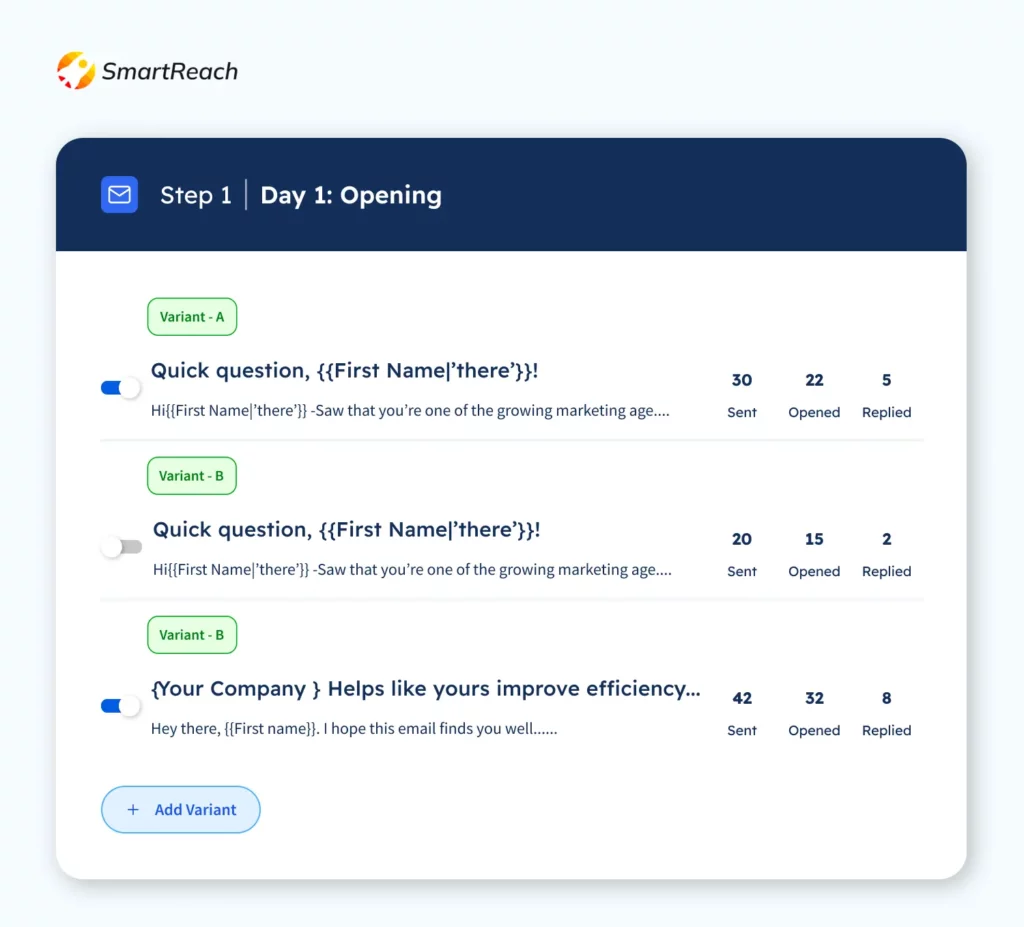
Certainly! A/B testing is a proven method to enhance open rates in cold email campaigns. It involves sending two different versions of your email (Version A and Version B) to a subset of recipients to determine which performs better. Elements such as subject lines, sender names, content, and sending times can all be tested.
What is A/B testing?
A/B testing involves sending two versions of your email (Version A and Version B) to different segments of your list to determine which performs better. You can test virtually any element:
- Subject lines
- Sender names
- Email body copy
- CTAs
- Send times
- Personalization levels
The impact of A/B testing:
Testing subject lines alone can boost open rates by up to 49%.
This single optimization technique can nearly double your email’s visibility, making it one of the highest-ROI activities in cold email marketing.
A/B testing framework for cold emails:
| Test Element | What to Test | Expected Impact | Test Duration |
| Subject Line | Length, personalization, question vs. statement | 20-49% open rate lift | 3-7 days, 200+ sends per variation |
| Sender Name | First name only vs. Full name vs. Company | 10-25% open rate lift | 5-7 days |
| Email Length | Short (50-100 words) vs. Long (200+ words) | 15-30% response rate change | 7-14 days |
| CTA Type | Question vs. Calendar link vs. Resource offer | 20-40% CTR lift | 7-10 days |
| Personalization Level | Generic vs. Moderate vs. Hyper-personalized | 15-35% response rate change | 7-14 days |
A/B Testing Best Practices:
- Test One Variable at a Time: Isolate what’s driving performance changes
- Ensure Statistical Significance: Minimum 100-200 emails per variation
- Run Tests Long Enough: At least 3-7 days to account for day-of-week variations
- Document Results: Build a knowledge base of what works for your audience
- Re-test Periodically: Audience preferences evolve; revisit tests quarterly
Common A/B Testing Mistakes to Avoid:
- Testing too many variables simultaneously
- Ending tests too early (sample size too small)
- Not accounting for external factors (holidays, news events)
- Failing to implement winning variations across campaigns
Why should you embrace A/B testing? Because assumptions cost you conversions. What works for one audience may flop for another, and only experimentation reveals what truly resonates.
TAKEAWAY: “Hope this finds you well” works, but if overused, it loses its impact. Personalize your pleasantry with something relevant to the prospect. For example, “Hey Zac, I hope all is well, especially after what happened with the Cubs. As a fellow Cubs fan, I can only hope they overcome their 9-game losing streak soon.”
The follow-up email intro, “I never heard back,” can lower your chances of booking a meeting by 14%. Prospects are not obligated to respond to your cold emails, and making them feel guilty for not responding gives them another reason to ignore you.
TAKEAWAY: Avoid guilt-tripping your email recipients. Instead, use humor or a pattern-interrupting introduction for your follow-ups. For more pattern-interrupting prompts, check out our blog.
Personalization & segmentation in cold emails
Generic cold emails are dead. Today’s prospects expect relevance, and personalization is the key to cutting through inbox noise.
The Business Case for Personalization
Segmented cold email campaigns achieve a 14.31% higher open rate compared to non-segmented campaigns.
But personalization goes beyond just inserting a first name, it’s about demonstrating genuine understanding of the recipient’s context, challenges, and goals.
| Personalization Level | Description | Open rate impact | Time Investment |
| Basic | First name, company name | +5-10% | Low (automated) |
| Moderate | +Job title, industry, location | +15-20% | Medium (semi-automated) |
| Advanced | +Recent company news, specific pain points | +25-35% | High (manual research) |
| Hyper-Personalized | + Custom video, tailored case studies, referenced social posts | +40-60% | Very high (1:1 approach) |
Segmentation strategies that work:
Effective segmentation divides your prospect list into targeted groups based on shared characteristics:
By Industry:
- SaaS companies face different challenges than manufacturing firms
- Tailor messaging to industry-specific pain points and use cases
By Company Size:
- Enterprise prospects care about scalability, security, integrations
- SMBs prioritize ease of use, cost-effectiveness, quick implementation
By Job Role:
- C-suite executives want strategic, ROI-focused messaging
- Managers need tactical solutions to daily challenges
- Individual contributors seek efficiency tools
By Engagement Level:
- Hot leads (opened multiple emails): Direct CTA for meeting
- Warm leads (opened once): Value-driven follow-up
- Cold leads (no opens): A/B test subject lines
Personalization best practices:
- Research Before Sending:
- Review LinkedIn profile and recent posts
- Check company news, funding rounds, leadership changes
- Identify mutual connections or shared interests
- Reference Specific Details:
- ✅ “I saw your post about scaling sales teams…”
- ✅ “Congrats on your Series B funding announcement…”
- ❌ “I noticed you’re in the tech industry…”
- Tailor Value Propositions:
- Show how your solution solves their specific problem
- Use industry-specific terminology
- Reference competitors or tools they likely use
- Use Dynamic Content:
- Cold email tools can automatically insert personalization tokens
- Create templates with placeholder variables for easy scaling
Does cold email help you generate better ROI?
When executed effectively, cold email campaigns can yield a significant ROI. They offer a cost-effective means to connect with potential customers and generate leads.
Cold emails can achieve an ROI up to 4400% higher than other marketing channels.
To maximize ROI from cold emails, personalize them extensively. Tailor messages to resonate with recipients, focusing on their company’s achievements or challenges they’ve expressed.
Segment your email list based on job roles or locations to send targeted content aligned with their interests. When emails feel tailored to the recipient, they are more likely to engage, ultimately enhancing your cold email campaign’s ROI.
ROI calculation framework:
ROI = (Revenue Generated – Campaign Costs) ÷ Campaign Costs × 100%
Example Scenario:
- Campaign Cost: $500 (tool subscription + 10 hours @ $50/hour labor)
- Emails Sent: 1,000
- Response Rate: 8.5% (85 responses)
- Meetings Booked: 17 (20% of responses)
- Deals Closed: 3 (18% close rate)
- Average Deal Value: $8,000
- Revenue Generated: $24,000
ROI = ($24,000 – $500) ÷ $500 × 100% = 4,700% ROI
Maximizing cold email ROI:
To achieve these results, focus on:
- Hyper-Targeted Prospecting: Quality > quantity. 100 well-researched prospects beat 1,000 random contacts
- Deep Personalization: Reference company-specific information, recent achievements, or challenges
- Value-First Approach: Lead with insights, not sales pitches
- Consistent Follow-Up: 80% of sales require 5+ touchpoints
- Continuous Optimization: A/B test regularly, refine based on data
TAKEAWAY: Cold email ROI compounds when you focus on personalization, segmentation, and value delivery.
While the average 8.5% response rate might seem modest, even a handful of qualified meetings can generate significant revenue, especially for high-ticket B2B products or services.
Should you use segmentation for your cold email?
Segmentation is crucial for optimizing cold email campaigns. By categorizing your email list based on recipient characteristics or interests, you can tailor messages that resonate more effectively with each group.
Segmented cold email campaigns achieve a 14.31% higher open rate, demonstrating their impact on engagement.
Start by understanding your audience and segmenting your list accordingly. Craft personalized messages for each segment and continually refine your groups based on recipient responses.
This approach ensures your emails remain highly relevant and effective, leading to improved outcomes for your email marketing efforts. Take the time to know your audience and personalize your messages, it pays off in better engagement and campaign performance.
Length of your cold email
In our attention-scarce world, brevity wins. But how short is too short?
Optimal Length: 50-125 words
Emails within this concise range tend to garner the highest response rates. Prospects are busy; respecting their time by getting to the point quickly demonstrates professionalism.
Length vs. Response Rate Data:
| Word Count | Average Response Rate | Best Use Case |
| <50 words | 6-7% | Very high-intent prospects, quick questions |
| 50-75 words | 10-12% | Optimal for most cold outreach |
| 75-125 words | 8-10% | When context/credibility needed |
| 125-200 words | 5-7% | Complex offerings, detailed value props |
| 200+ words | 3-5% | Avoid for initial outreach |
How to write concise, impactful cold emails?
- Compelling Subject Line: Capture attention immediately (6-10 words)
- Strong Opening: Address the recipient by name, establish relevance (1 sentence)
- Clear Value Proposition: State how you can help (2-3 sentences)
- Specific CTA: One clear next step (1 sentence)
- Professional Signature: Keep it simple
Example Structure (87 words):
| Subject: Quick question about [specific challenge] Hi [First Name], I noticed [specific observation about their company]. Many [job title]s at [similar companies] struggle with [specific pain point]. We helped [similar company] achieve [specific result] in [timeframe] through [brief solution description]. Would you be open to a 15-minute conversation to explore if we could deliver similar results for [their company]? Best, [Your Name] |
When Longer Emails Make Sense:
While brevity usually wins, longer emails (150-300 words) can work for:
- Complex B2B solutions requiring more context
- Warm introductions (mutual connection mentioned)
- Follow-ups where you’re adding substantial new value
- High-value prospects worth extra personalization
TAKEAWAY: Respect your prospect’s time with emails between 50-125 words. Focus on clarity and relevance. choose every word carefully to create a compelling message that piques interest without overwhelming the reader.
Final words
Before diving into your next cold email strategy, here’s a tactic: approach every cold email statistics with caution! While these insights are backed by data, blindly adhering to them may not guarantee identical outcomes.
The effectiveness of your cold emails hinges on various factors such as industry dynamics and your specific audience. Therefore, it’s prudent to compare these statistics with your own campaign data.
For instance, if your past campaigns have shown higher open rates on weekends, despite general advice to the contrary, stick with what works best for your audience.
FAQs
Q: What is the success rate of cold emails?
The average open rate for cold emails ranges from 21-24%, meaning about 1 in 4 recipients open your email. However, “success” ultimately depends on your goal, if it’s booking meetings, factor in the 8.5% response rate and subsequent conversion rates through your sales funnel.
Q: What is the average cold email response rate?
The average response rate is 8.5%, meaning roughly 8-9 out of every 100 cold emails receive a reply. This includes both positive and negative responses. High-performing campaigns with strong personalization can achieve 15-20% response rates.
Q: What are the statistics for cold email follow-up?
Studies show the first follow-up email can boost response rates by 21%. A second follow-up increases it by an additional 25%, and a third by 28% cumulatively. Most responses come from the 2nd or 3rd email, not the initial outreach.
Q: What is a good open rate for cold emails?
While the average is 24%, a “good” open rate for cold emails is 30-40%. Rates above 45% indicate exceptional subject line optimization, strong sender reputation, and well-targeted prospect lists. Below 20% suggests immediate optimization is needed.
Q: What is a good cold email response rate?
A response rate of 12-15% is considered good for cold emails, nearly double the 8.5% average. Rates above 20% indicate highly personalized, well-targeted campaigns with compelling value propositions and effective follow-up sequences.
Q: How many follow-up emails should I send?
Send at least 3 follow-up emails (4 total touchpoints including the initial email) to maximize response rates. The optimal cadence is every 3 days initially, then 7 days, then 14 days, balancing persistence with respect for prospect time.
Q: When is the best time to send cold emails?
The optimal time is between 1 PM and 4 PM on Monday or Tuesday. This timing aligns with post-lunch periods when professionals check email between meetings. Adjust based on your audience’s time zone and monitor analytics for refinement.
Q: What is an acceptable unsubscribe rate for cold emails?
An unsubscribe rate below 0.5% is acceptable, with the industry average at 0.17%. Rates above 1% indicate poor targeting or messaging that isn’t resonating. Low unsubscribe rates suggest you’re reaching the right audience with relevant content.
Q: How long should a cold email be?
The optimal length is 50-125 words, with the sweet spot around 75-100 words. Emails in this range achieve 10-12% response rates on average. Longer emails (200+ words) typically see response rates drop to 3-5% as busy prospects skim or skip them.
Q: Does personalization really improve cold email performance?
Yes, significantly. Personalized subject lines boost open rates by up to 26%, and segmented campaigns achieve 14.31% higher open rates than generic blasts. Beyond basic name tokens, referencing company-specific details or recent achievements dramatically increases response rates.